

August 2026 lunar eclipse: When and where to see the rare 96% “blood moon”

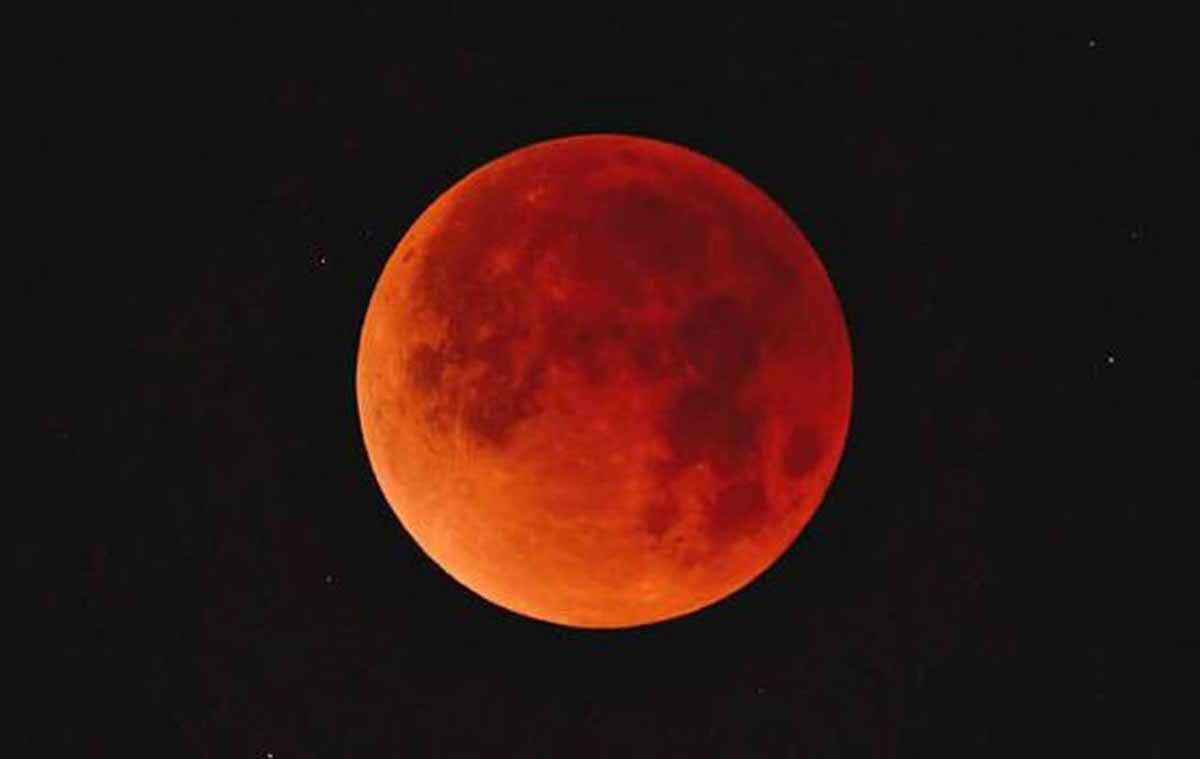
August 2026 partial lunar eclipse turns the Moon crimson. PHOTO: www.express.co.uk
A striking partial lunar eclipse is set to light up skies across large parts of the world on August 27–28, 2026, with Earth’s shadow expected to cover about 96% of the Moon’s visible surface.
The event will be visible from parts of North America, South America, Africa and Europe, giving millions of skywatchers an opportunity to watch the Moon change as it moves through Earth’s shadow.
The August 2026 lunar eclipse will not be a total lunar eclipse. A small portion of the Moon will remain illuminated by direct sunlight, creating an unusual appearance that could make the event particularly memorable for observers.
When Is the August 2026 Lunar Eclipse?
The August 2026 lunar eclipse will take place overnight on August 27 into August 28, depending on the viewer’s location.
According to the reported eclipse timings, the Moon will begin entering Earth’s darkest shadow, known as the umbra, at approximately 10:33 p.m. EDT on August 27, equivalent to 2:33 a.m. GMT on August 28.
The eclipse is expected to reach its maximum at approximately 12:12 a.m. EDT on August 28, or 4:12 a.m. GMT.
The exact time viewers see each stage will depend on their location. Skywatchers are advised to check a reliable local eclipse timetable for precise viewing times.
Why Will the Moon Turn Red?
One of the most striking features of the August 2026 lunar eclipse could be the reddish or orange appearance of the Moon.
During a lunar eclipse, Earth moves between the Sun and Moon. The planet blocks much of the direct sunlight that would normally illuminate the lunar surface.
However, Earth’s atmosphere bends some sunlight toward the Moon. Shorter blue wavelengths are scattered more strongly, while longer red and orange wavelengths can pass through the atmosphere and reach the lunar surface.
This can give the eclipsed portion of the Moon a reddish-orange glow, which is why lunar eclipses are sometimes popularly called Blood Moons.
The term does not mean the Moon itself changes colour permanently. It is simply the result of how sunlight interacts with Earth’s atmosphere during the eclipse.
Will the August 2026 Eclipse Be a Total Lunar Eclipse?
No. The August 2026 event will be a partial lunar eclipse.
The eclipse is expected to be exceptionally deep, with approximately 96% of the Moon’s visible disk entering Earth’s umbra. That means only a thin portion of the Moon will remain outside the darkest part of Earth’s shadow.
This makes the event different from a total lunar eclipse, during which the entire lunar disk passes through the umbra.
The narrow illuminated section could create an unusual visual effect, with most of the Moon appearing dark and reddish while a thin crescent-like section remains brightly illuminated.
READ ALSO
Solar Eclipse 2026: Everything you need to know about the rare August 12 sky event, best viewing locations and safe viewing tips
Where Can You See the August 2026 Lunar Eclipse?
The August 2026 lunar eclipse will be visible from a broad region covering Africa, Europe, North America and South America, provided the Moon is above the horizon during the relevant stages.
Visibility will vary considerably between countries and cities.
Observers in the United Kingdom, for instance, are expected to see the eclipse close to sunrise on August 28, when the Moon will be relatively low in the southwestern sky.
Parts of the western United States will experience maximum eclipse shortly after midnight local time on the night of August 27–28.
For observers in Africa, the precise viewing experience will depend on their location and local sunset and moonrise times.
Can You Watch the Lunar Eclipse Without Special Glasses?
Yes. Unlike a solar eclipse, a lunar eclipse is safe to view with the naked eye.
There is no need for special eclipse glasses when watching the Moon during a lunar eclipse. The Moon is reflecting sunlight rather than directing intense sunlight straight into the viewer’s eyes.
Skywatchers can simply look toward the Moon during the eclipse.
Binoculars or a telescope can make the event even more impressive by revealing lunar craters and the gradual movement of Earth’s shadow across the surface.
How to Watch the August 2026 Lunar Eclipse
The best viewing conditions will generally be an area with a clear view of the sky and minimal obstruction from buildings, trees or mountains.
Moving away from bright city lights can also make the surrounding stars more visible, adding to the experience.
A camera mounted on a tripod can be useful for photographing the eclipse. Smartphone users may also capture the Moon, although photographing a distant, relatively small object in a dark sky can be challenging.
The most important factor remains clear weather. Even a major astronomical event can be difficult to see if clouds cover the Moon.
Why Is the August 2026 Lunar Eclipse Significant?
The eclipse stands out because of the unusually deep partial phase. With roughly 96% of the Moon’s visible face entering Earth’s darkest shadow, observers could see an appearance that closely resembles a total lunar eclipse while a small illuminated section remains.
That combination makes the event particularly interesting for casual observers and astronomy enthusiasts.
The event also offers an accessible opportunity to observe the mechanics of the Earth-Sun-Moon system without specialist equipment.
For people who miss it, the next major lunar eclipse visible from their location could occur under very different circumstances, making local visibility information worth checking ahead of the event.
FAQ About the August 2026 Lunar Eclipse
When is the August 2026 lunar eclipse?
The partial lunar eclipse will occur on August 27–28, 2026, with the date depending on the viewer’s time zone.
What time is the August 2026 lunar eclipse?
The darkest phase is expected to begin around 10:33 p.m. EDT on August 27, with maximum eclipse around 12:12 a.m. EDT on August 28. Local times vary by location.
Is the August 2026 lunar eclipse a Blood Moon?
The eclipse is a partial lunar eclipse, but much of the Moon may take on a reddish-orange appearance. The term “Blood Moon” is commonly used for the red appearance associated with lunar eclipses.
How much of the Moon will be eclipsed in August 2026?
Approximately 96% of the Moon’s visible disk is expected to enter Earth’s umbra at maximum eclipse.
Is the August 2026 lunar eclipse a total eclipse?
No. It is a partial lunar eclipse because a small portion of the Moon will remain outside Earth’s darkest shadow.
Where will the August 2026 lunar eclipse be visible?
The eclipse will be visible from parts of Africa, Europe, North America and South America, depending on local visibility and the Moon’s position above the horizon.
Can I see the August 2026 lunar eclipse from Africa?
Yes, parts of Africa will be within the eclipse’s visibility zone. The exact timing and visibility will depend on the observer’s location.
Can you look directly at a lunar eclipse?
Yes. Lunar eclipses are safe to view with the naked eye. Special protective glasses required for solar eclipses are not necessary.
Do you need binoculars to watch the lunar eclipse?
No. Binoculars are optional. They can provide a closer view of the Moon’s surface and the progression of Earth’s shadow.
Why does the Moon turn red during a lunar eclipse?
Earth’s atmosphere filters and bends sunlight toward the Moon. Red and orange wavelengths are more likely to pass through the atmosphere, giving the eclipsed Moon its characteristic reddish colour.
What causes a lunar eclipse?
A lunar eclipse occurs when Earth passes between the Sun and Moon, causing Earth’s shadow to fall across the lunar surface.
What is the difference between a lunar eclipse and a solar eclipse?
A lunar eclipse occurs when Earth’s shadow falls on the Moon. A solar eclipse occurs when the Moon passes between Earth and the Sun and blocks some or all of the Sun from view.
Will the entire world see the August 2026 lunar eclipse?
No. Only locations on Earth’s night side where the Moon is above the horizon during the eclipse will be able to see it.
What is the best way to watch the August 2026 lunar eclipse?
Find a location with a clear, unobstructed view of the sky. Check the local eclipse timetable beforehand and, if possible, choose an area away from heavy artificial lighting.
Can the August 2026 lunar eclipse be photographed?
Yes. The eclipse can be photographed using a camera, tripod and suitable lens. Smartphones may also capture the event, though getting detailed lunar images can be difficult without additional equipment.