

Women’s rights in governance: Changing the status quo in Nigeria

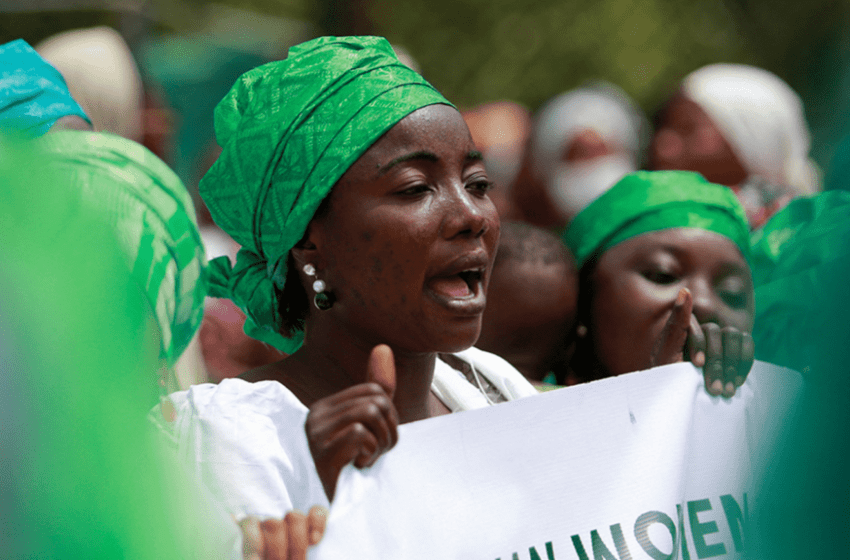
Women inclusion in politics remains a major issue in Nigeria. Photo credit: CJID
By Ede Favour, Awka
Women want to grow, but they lack the opportunity to do so. They want to pursue their political ambitions, but are restricted by what society presents to them, and this often discourages them.
I love to see women grow. I want to see women live out their true potential. I love it when women are fully represented in parliament and in the political system. I don’t like it when women are ruled out, not counted in political affairs, or neglected in positions of power.
I also don’t like it when they are silenced, especially when it concerns their rights. That is what inspired me to write this piece. I may not have the opportunity to stand on big stages or platforms to speak about women’s rights in politics, so I am using what I have—the available resources—to voice out and reach our leaders in the political sector.
It would be a good thing if power is also given to women. I do not want a situation where only men are in power, where only men are ruling. Why can’t women be given a chance? Even if it is not full representation or occupying all positions, at least let women have 60–70% of political positions. Let us see what it can turn out to be.
Men have been leading for a long time—we have seen what they can do, their capabilities and leadership styles. So why not give women a chance to express themselves?
Give them space. Give them the opportunity to lead. Let us observe and take note of the differences between when a man is ruling and when a woman is ruling.
I don’t like a system where only men are in charge. Women should be given the opportunity to become leaders. If a woman becomes an ambassador for Nigeria, it is not bad. If a woman becomes a local government chairman, it is not bad. If a woman handles a key position in this country, it is still not bad. After all, there is no written law or document that says only men should occupy leadership roles.
When God created human beings, the Bible recorded that He made them male and female. He did not specify that only men should lead. We need to move away from that limiting mindset that only men should rule.
If possible, let a woman become the President of Nigeria, and let us see what happens. Men have led for a long time, and we have seen their efforts. Women should also be encouraged by giving them a chance. They should not feel neglected or think they do not matter, or that their future ends in the kitchen.
No, it is not meant to be that way. That is the driving force behind this piece—let us support our women.
I have also found that one major reason women withdraw from politics is finance. Many are not able to meet the financial demands of running for office. Contesting elections is not easy; it requires a lot of money. Some women simply do not have the financial capacity to run campaigns or sustain the electoral process.
Another issue is exclusion. When women try to participate in politics, they are often sidelined or treated as benchwarmers—people without a voice. This discourages many of them from even trying to lead.
That is why I encourage men to support women. If your wife wants to contest an election or pursue a political career, support her. Give her a chance. Stand by her—financially, emotionally, and strategically. Help her organise, campaign, and succeed.
Brothers should support their sisters. Husbands should support their wives. Men should support women—whether they are friends, colleagues, or family.
If women are given a chance to lead, I believe things can improve. The way things are currently in Nigeria, governance will not be the same if women are in power. There will definitely be a difference.
So, I support the motion that says, “Women should be allowed to rule.” I strongly believe that women can be effective leaders. It pains me when women are told, “You are not meant for this,” or reduced to roles that limit their potential.
I want to see women excel and succeed. I want to see women become ambassadors of their country. I want to see women become leaders—not just leaders, but better leaders.
I strongly believe, like a burning fire within me, that there will be positive change when women are in power. I hope this piece serves as an eye-opener, especially to those in the political system. And if I am ever given the opportunity to speak on bigger platforms, I will confidently defend this position—that women should be allowed to lead.
While finance is a challenge, it should not be a barrier. Women should be supported at every step. There are individuals and structures that can help make things easier. Finance should not stop women from being seen or heard.
Looking at past administrations, only a few women have been visible in leadership. Another issue is that many women feel the system is not in their favour, which discourages them. They wonder why they should invest time and resources when they may not receive support.
This is why many step back—not because they are not capable, but because they are discouraged.
Once again, I want to see women excel and succeed. I want to see women become ambassadors. I want to see women become leaders—not just leaders, but better leaders.