

Why are some groups asking INEC to disqualify Kingsley Chinda as Rivers APC candidate?

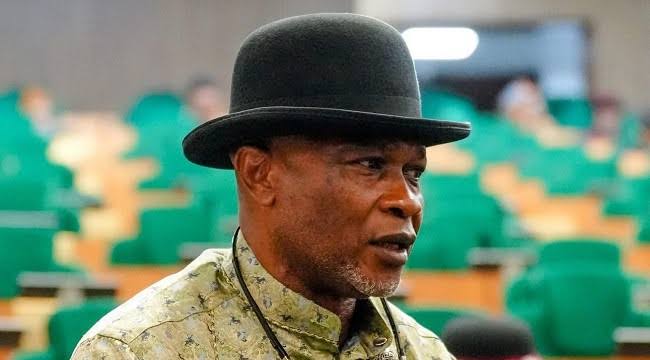
The emergence of Kingsley Chinda as the All Progressives Congress (APC) governorship candidate in Rivers State has become the subject of fresh legal controversy ahead of the 2027 election.
Chinda, a member of the House of Representatives, won the Rivers APC governorship primary on May 21, 2026, after other aspirants withdrew from the contest. He was the sole aspirant left in the race when the primary was held.
However, the Association of Legislative Drafting and Advocacy Practitioners (ALDRAP) has asked the Independent National Electoral Commission (INEC) to disqualify him.
The demand followed a September 24 Supreme Court judgment concerning provisions of the Electoral Act 2026 on political party membership registers and candidate nominations.
But why has Chinda’s candidacy become controversial, and what exactly are the groups challenging?
Who is Kingsley Chinda?
Chinda represents Obio/Akpor Federal Constituency of Rivers State in the House of Representatives.
Before his emergence as the APC governorship candidate, he was a member of the Peoples Democratic Party (PDP) and served as minority leader of the House.
He is also associated with Nyesom Wike, the Minister of the Federal Capital Territory and former Rivers State governor.
Chinda later joined the APC and contested the party’s governorship primary.
According to the Rivers APC, Chinda registered as an APC member on April 27, 2026, which the party says was 24 days before the May 21 primary. The party argues that this satisfied the applicable 21-day requirement.
What is the main issue over his APC membership?
One of the central questions is whether Chinda was already legally an APC member when he participated in the party’s screening and primary.
Chinda was screened by the APC before the primary and eventually emerged as the party’s candidate on May 21.
However, his defection from the PDP to the APC was formally announced on the floor of the House of Representatives on June 2.
That timing has provided the basis for a separate legal challenge.
The disagreement is therefore not simply about whether Chinda eventually joined the APC. It is about when his defection and membership of the APC legally took effect and whether he could participate in the party’s nomination process before that point.
A Federal High Court in Port Harcourt is already handling a suit filed by Samuel Amatonjie.
The case challenges Chinda’s eligibility to participate in the APC screening and primary, arguing that his defection from the PDP had not been completed before those processes.
The court has fixed November 4, 2026, for hearing.
What does the Electoral Act say about party membership?
The controversy also involves provisions of the Electoral Act 2026 dealing with political party membership registers.
Under the electoral framework, political parties are required to maintain membership registers and submit them to INEC within the prescribed period before their primaries.
INEC’s 2026 regulations state that a political party must submit its membership register to the commission not later than 21 days before a party primary, congress or convention. The regulations also state that only members whose names appear in the submitted register can vote or be voted for at such exercises.
The full Electoral Act 2026 is available through the National Assembly, while INEC has also published its 2026 election regulations and guidelines.
This is significant because the Rivers APC says Chinda registered with the party on April 27, 24 days before its May 21 primary.
However, those challenging his candidacy are asking questions about the membership records submitted to INEC and whether Chinda’s status met all applicable legal requirements at the relevant time.
What did the Supreme Court rule?
On September 24, the Supreme Court restored Sections 77(5), 77(6), 77(7) and 84(2) of the Electoral Act 2026.
The provisions had previously been struck down by the Court of Appeal.
The Supreme Court held that the provisions were not inconsistent with the 1999 Constitution and restored the Federal High Court’s earlier decision in the case.
The judgment concerned the validity of the statutory provisions. It did not specifically name Chinda or declare him disqualified from the Rivers governorship race.
That distinction is at the heart of the current argument.
ALDRAP says the judgment raises consequential questions about Chinda’s nomination, including the applicable membership-register requirements and the records submitted to INEC.
The group subsequently asked INEC to convene a meeting involving ALDRAP, the APC and Chinda to explore an out-of-court resolution of its pending case.
Who is asking for Chinda’s disqualification?
The most prominent organisation making the demand is ALDRAP.
The association is already involved in litigation concerning Chinda’s nomination and aspects of the APC’s screening and appeal process.
It has challenged the participation of individuals involved in the APC screening and appeal process, alleging that their relationships with Chinda created a reasonable apprehension of bias.
ALDRAP’s current request to INEC therefore goes beyond the question of party membership. It also seeks answers concerning the legality of the nomination process and the effect of the Supreme Court’s judgment on the process.
There is also a separate case filed by Amatonjie in Port Harcourt challenging Chinda’s participation in the APC screening and primary.
Why is another group defending Chinda?
The Parliament Support Network (PSN) has rejected the calls for Chinda’s disqualification.
The organisation argues that the Supreme Court judgment did not specifically invalidate Chinda’s nomination.
It has also relied on the Rivers APC’s position that Chinda registered with the APC 24 days before the primary, compared with the 21-day period referenced in the applicable rules.
PSN described the campaign for Chinda’s disqualification as politically motivated.
That is the group’s characterisation of the dispute, rather than a judicial finding that the challenge is politically motivated.
The organisation has urged INEC and the courts to determine the matter according to the applicable law and evidence.
Has Chinda been disqualified?
No.
There is currently a demand for his disqualification and there are court cases challenging aspects of his nomination and eligibility.
But neither the Supreme Court’s September 24 judgment nor the latest court proceedings have resulted in a final ruling disqualifying Chinda from the Rivers governorship race.
The Supreme Court judgment itself did not determine Chinda’s individual candidacy.
The pending cases will therefore be important in determining how the legal arguments apply to the specific facts surrounding his nomination.
What happens next?
The immediate focus is on the court proceedings and the records surrounding Chinda’s APC membership and nomination.
The Federal High Court in Port Harcourt has scheduled the separate defection-related case for November 4.
ALDRAP’s Federal High Court case in Abuja is also pending.
Among the questions that may have to be resolved are when Chinda’s APC membership became effective, what membership register the party submitted to INEC, whether he satisfied the requirements applicable to the May 21 primary and whether his participation complied with the constitutional rules governing defection by elected lawmakers.
Until those questions are resolved by the appropriate authorities, calls for disqualification remain claims and legal challenges rather than an established disqualification.
For voters following the 2027 Rivers governorship election, the key distinction is between what the Supreme Court actually decided, what the challengers are asking the courts and INEC to determine, and what the APC and Chinda’s supporters say about his eligibility.