

Chicago Tornado warning: Nearly 300,000 without power as severe storms slam region with damaging winds

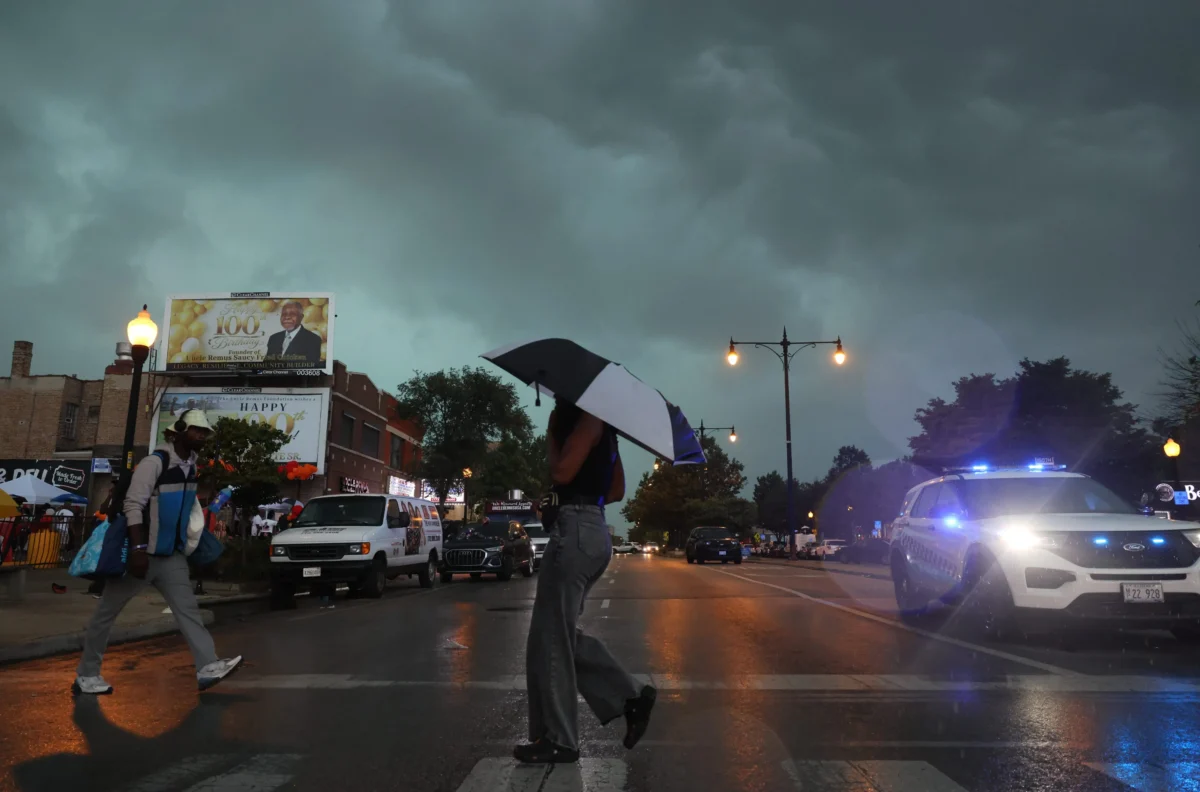
A line of severe storms rolls into Chicago’s Austin neighborhood from the west along West Madison Street on Aug. 11, 2026. (Brian Cassella/Chicago Tribune)
The Chicago area was hit by another round of severe storms Tuesday, with tornado warnings issued across parts of northeastern Illinois as powerful winds, heavy rain and widespread outages disrupted communities still recovering from earlier storms.
The latest weather event brought renewed concerns about tornadoes, damaging winds, flooding, downed trees and power outages across the Chicago region. By Tuesday afternoon, hundreds of thousands of customers in northern Illinois and northwest Indiana were without electricity.
The National Weather Service issued tornado warnings covering several counties around Chicago as the fast-moving storms moved through the region. The warnings included Cook, Will, DuPage and Lake counties, while portions of northwest Indiana were also placed under tornado warnings.
Chicago Tornado Warning Issued as Severe Storms Move Through Region
The National Weather Service warned residents that the storms could produce extremely strong winds capable of causing significant damage, even if no tornado funnel developed.
Forecasters warned of straight-line winds reaching around 80 mph in parts of the region. Winds at that strength can uproot trees, damage structures and bring down power lines.
CBS Chicago reported that wind gusts of up to 120 mph were recorded in the southern suburbs of Chicago, highlighting the severity of the storm system moving through the area.
The tornado warnings came as communities were still dealing with damage from severe weather earlier in the week. Residents faced another round of dangerous conditions before cleanup efforts from previous storms had been completed.
Nearly 300,000 Power Outages Reported Across Northern Illinois
One of the most immediate impacts of Tuesday’s storms was the widespread loss of electricity.
WTTW reported that nearly 290,000 ComEd customers were without power in the immediate aftermath of the storms, with Cook and Will counties accounting for a large share of the outages.
CBS Chicago later reported that ComEd was dealing with 275,753 outages in northern Illinois as of 1:15 p.m. Tuesday.
The utility had prepared for the severe weather by positioning approximately 2,000 employees and contractors throughout the region. Crews were placed on standby to respond to damaged equipment, downed power lines and other storm-related emergencies.
ComEd urged residents to stay away from fallen power lines and report them to the utility.
Downed Trees Add to Chicago Storm Damage
Power outages were not the only problem facing residents. Downed trees and damaged streets were also reported across Chicago and surrounding communities.
Chicago’s forestry crews were focused on trees blocking streets, while residents were advised to report tree emergencies through the city’s 311 system.
The latest storms added to a difficult summer for the Chicago region, which has experienced repeated episodes of severe weather, heavy rainfall and damaging winds.
Some residents were still cleaning up from earlier storms when Tuesday’s weather arrived, increasing concerns about the cumulative impact of repeated severe-weather events.
READ ALSO
Heavy Rain Raises Flooding Concerns
Along with damaging winds, heavy rainfall created additional concerns about flooding in Chicago and surrounding communities.
The Metropolitan Water Reclamation District advised residents to reduce water use during heavy rain by temporarily avoiding activities such as running dishwashers and washing machines. The measure can help create additional capacity in the region’s combined wastewater and stormwater system.
The MWRD’s McCook reservoir and tunnel system, which serves central Chicago and 36 municipalities, was reported to be at approximately 95% capacity, holding nearly 5 billion gallons of water.
The Thornton reservoir and tunnel system was holding a similar volume of water but was reported to be at about 57% capacity.
Chicago Storms Raise Memories of the 2020 Derecho
Tuesday’s severe weather also brought comparisons with the August 10, 2020 derecho, one of the most destructive storm events to affect the Chicago region in recent years.
The 2020 derecho produced winds of around 100 mph across parts of the Midwest and was associated with numerous tornadoes. Eleven tornadoes were eventually confirmed in Illinois from that storm system, including an EF-1 tornado in Chicago’s Rogers Park neighborhood.
The wider derecho produced 26 tornadoes and killed four people across the United States, according to the CBS Chicago report. NOAA estimated that the event caused more than $11 billion in damage, making it one of the costliest thunderstorm events in modern U.S. history.
The anniversary added to concerns about another potentially damaging weather event moving through the Midwest.
No Injuries Reported From Latest Tornadoes as of Tuesday
Despite the widespread damage concerns, CBS Chicago reported that no injuries had been reported from the tornadoes as of Tuesday.
Two EF-1 tornadoes had also struck LaSalle County early Monday, with one hitting the town of Ransom and another touching down north of Streator.
The latest Chicago-area warnings should not be confused with confirmation that a tornado struck every location covered by a warning. A tornado warning means dangerous conditions capable of producing or already associated with a tornado have been detected, while a confirmed tornado requires subsequent verification.
Residents in affected areas were urged to continue monitoring official weather alerts and avoid downed power lines and damaged structures.
What Chicago Residents Should Know About the Storm Threat
The latest storm system demonstrates how quickly conditions can change during severe weather in the Chicago area. Strong winds, tornadoes, heavy rain and flooding can occur during the same weather event, creating multiple hazards for residents.
People experiencing a tornado warning should immediately follow instructions from local authorities and weather officials, move to a sturdy interior location away from windows and remain alert for updated warnings.
With widespread power outages and storm cleanup continuing, utility crews and emergency personnel are expected to remain active across northern Illinois as communities assess the latest damage.
The Chicago region’s repeated severe-weather events this summer have also underscored the importance of staying informed when watches and warnings are issued, particularly when storms are capable of producing damaging winds and tornadoes.
FAQ
Is Chicago under a tornado warning?
Yes. The Chicago region was placed under tornado warnings Tuesday morning, August 11, 2026, as fast-moving severe storms moved across northeastern Illinois and surrounding areas. The National Weather Service issued warnings covering parts of the Chicago region.
Was a tornado confirmed in Chicago?
The reports provided for this article describe tornado warnings and severe thunderstorms, but they do not establish that a tornado actually touched down within the city of Chicago during Tuesday’s storms. A tornado warning means conditions indicate that a tornado is occurring or could occur, not that a confirmed tornado has necessarily touched down.
How many people lost power in the Chicago area?
Nearly 300,000 ComEd customers were without power following the storms, according to the reports supplied. CBS Chicago later reported 275,753 ComEd outages in northern Illinois at 1:15 p.m. Tuesday.
How strong were the winds during the Chicago storms?
The National Weather Service warned that straight-line winds could reach 80 mph in the region. CBS Chicago also reported wind gusts of up to 120 mph in Chicago’s southern suburbs.
Which areas were under the Chicago tornado warning?
The WTTW report said the warning covered Cook, Will and DuPage counties, while Lake County received a separate warning. Parts of northwest Indiana were also under tornado warnings.
Did the Chicago storms cause power outages?
Yes. The severe weather caused widespread outages across northern Illinois. Downed trees, power lines and storm-related equipment damage were among the concerns as utility crews prepared to restore service.
What is ComEd doing about the power outages?
ComEd had employees and contractors positioned across the region to respond to storm damage. CBS Chicago reported that approximately 2,000 ComEd employees and contractors had been prepositioned for repairs.
Is Chicago experiencing flooding?
Heavy rainfall associated with the storms created a flooding risk across the region. The National Weather Service listed elevated flooding as one of the hazards associated with Tuesday’s weather system.
Why are Chicago residents seeing so many severe storms this summer?
The Chicago region has experienced several rounds of severe weather during the summer of 2026. The National Weather Service has documented multiple significant severe-weather events across Illinois, including tornadoes and damaging winds.
Were there tornadoes in Illinois before the Chicago storms?
Yes. CBS Chicago reported that two EF-1 tornadoes struck LaSalle County on Monday, with one affecting Ransom and another touching down north of Streator. The report said there were no injuries reported from those tornadoes as of Tuesday.
What happened during the 2020 Chicago derecho?
The August 10, 2020 derecho produced widespread destructive winds across the Midwest and affected the Chicago region. CBS Chicago reported that the event produced 26 tornadoes across the United States and killed four people, while NOAA estimated the event caused more than $11 billion in damage.
What should people know about a tornado warning?
A tornado warning means dangerous conditions have been detected or indicated and people in the affected area should take the warning seriously. The National Weather Service remains the authoritative source for current warnings, watches and updates.
Is the Chicago tornado warning the same as a tornado watch?
No. A tornado watch means conditions are favorable for tornadoes and severe storms, while a tornado warning indicates a more immediate threat involving a tornado or severe weather capable of producing one.
Will Chicago face more severe weather?
The National Weather Service’s Tuesday outlook indicated the possibility of additional thunderstorms, with damaging winds and heavy rainfall among the primary concerns. Weather conditions can change rapidly, so residents should monitor current official forecasts and warnings.