

US student visa: Court blocks 4-year stay limit, what Nigerian students need to know

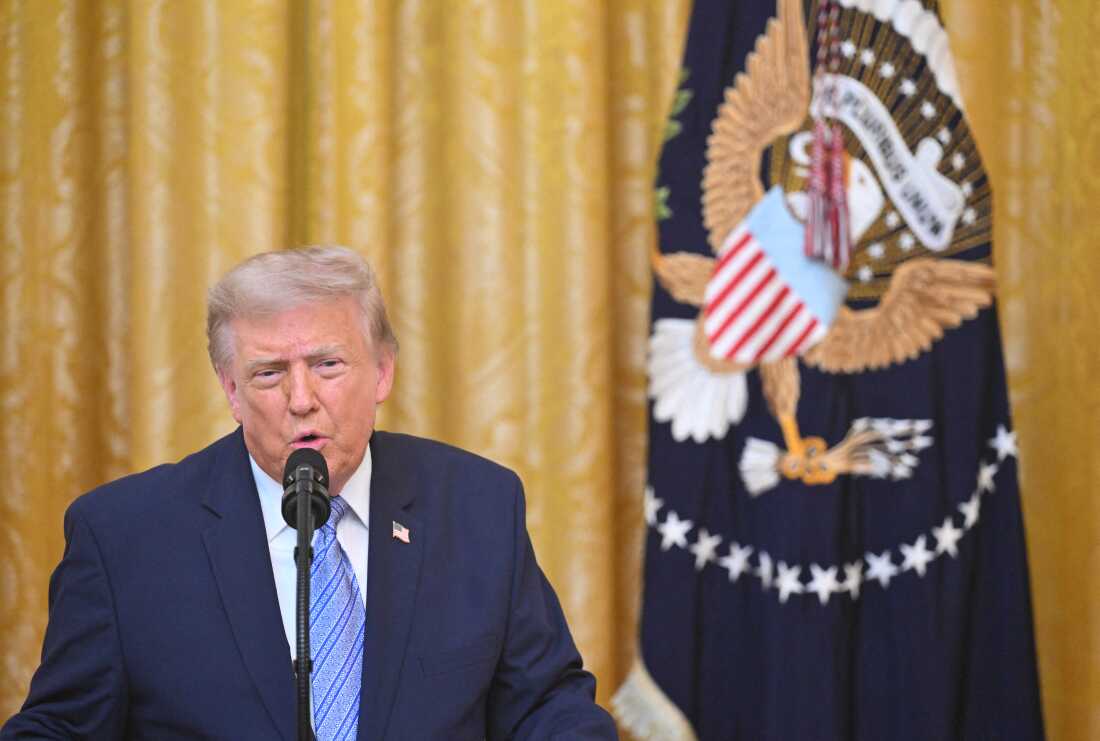
President Trump addresses the nation from the East Room of the White House. Image Credit: Saul Loeb/Pool/AFP via Getty Images
A US federal court has temporarily blocked proposed changes to student visa rules, allowing international students to continue using the existing Duration of Status framework while legal proceedings continue.
A major change to the US student visa system has been put on hold after a federal court in Massachusetts issued an order blocking the implementation of a Department of Homeland Security (DHS) rule that would have introduced a four-year stay limit for many international students.
The ruling, issued on September 14, 2026, came just one day before the proposed rule was scheduled to take effect. It means that students and exchange visitors who rely on F-1 and J-1 visas will not immediately be subjected to the new fixed admission period or the proposed changes to their post-programme grace period.
The legal dispute has attracted attention from universities, international students and education organisations concerned about how the proposed changes could affect academic programmes, research and exchange opportunities in the United States.
US Student Visa 4-Year Stay Limit Suspended After Court Ruling
The US District Court for the District of Massachusetts issued the order in a case identified as Presidents’ Alliance v. DHS, No. 1:26-cv-13799-FDS.
The decision delays the effective date of the DHS Duration of Status Final Rule while the legal challenge proceeds through the courts.
The rule was originally scheduled to come into force on September 15, 2026. However, the court’s intervention means the proposed changes did not take effect on that date.
For international students planning to study in the United States, the ruling provides temporary relief from a major change that could have affected how long they remain in the country.
The court’s order does not permanently cancel the rule. Its long-term status will depend on the outcome of the ongoing legal proceedings.
What the Ruling Means for F-1 and J-1 Visa Holders
Under the existing Duration of Status framework, eligible F-1 students can generally remain in the United States for the period necessary to complete their approved academic programme, provided they maintain their immigration status and meet the applicable requirements.
This arrangement differs from a fixed admission period because the length of a student’s authorised stay is connected to the approved programme and continued compliance with visa conditions.
The proposed DHS rule would have replaced this framework with a more formal fixed admission period, including a four-year limit for certain students.
It would also have introduced changes to the way students request additional time in the United States if they need to remain beyond their initial admission period.
With the court order in place, the existing framework remains applicable while the legal challenge continues.
Key implications for international students
The temporary pause means:
- The proposed four-year stay limit has not taken effect.
- The proposed 30-day grace period changes are also on hold.
- F-1 students remain subject to the existing Duration of Status system.
- J-1 exchange visitors and scholars continue under the applicable existing framework.
- Students must still comply with the conditions of their visa and approved programme.
- The court ruling does not automatically extend every student’s authorised stay.
Students should also understand that maintaining Duration of Status does not mean they can remain in the US indefinitely. Their stay remains connected to their academic or exchange programme, immigration status and other applicable requirements.
READ ALSO
UK Student Visa 2026/2027: New Financial Requirement From November 30 Explained
France Student Visa 2026/2027: New €877.50 Monthly Proof of Funds Requirement Explained
Why the DHS Student Visa Rule Faced Opposition
The DHS proposed the Duration of Status Final Rule as part of broader efforts to change how international students and exchange visitors are admitted and monitored in the United States.
One of the central changes would have been the introduction of a defined admission period instead of allowing eligible students to remain under the existing Duration of Status arrangement.
The proposed system would also have required students to take more formal steps when seeking additional time in the country.
Universities, student advocacy groups and higher education organisations raised concerns about the possible effects of the changes. These concerns contributed to the legal challenge that led to the Massachusetts court order.
Critics of the proposed rule have focused on issues such as administrative burdens, uncertainty for students whose programmes take longer than expected and the potential impact on international education.
The legal case will determine whether the rule can eventually take effect or whether further changes will be required.
What Nigerian Students Planning to Study in America Should Do
For Nigerian students preparing to apply for a US student visa, the court ruling does not remove the need to meet existing visa requirements.
Applicants should continue preparing their academic documents, securing admission from an eligible institution and following the applicable procedures for an F-1 visa.
Students who already hold an F-1 visa should remain attentive to instructions from their designated school officials and the relevant US immigration authorities.
Those currently studying in America should also continue meeting the requirements of their programme, including maintaining the appropriate student status.
The ruling may provide temporary certainty for students concerned about the proposed four-year limit. However, it does not guarantee visa approval, an extension of stay or permission to remain in the country after completing a programme.
Students should avoid making major immigration decisions based solely on the court order, particularly because the underlying legal dispute remains unresolved.
Does the Court Ruling Permanently Cancel the New US Student Visa Rule?
No. The court’s decision temporarily blocks the rule from taking effect while the litigation continues.
A later judgment could determine whether the DHS rule is lawful, whether it can be implemented in its current form or whether changes will be necessary.
Until further developments occur, international students should rely on official guidance and updates from their schools and the relevant US authorities.
Frequently Asked Questions About the US Student Visa Ruling
1. Has the US cancelled the 4-year student visa stay limit?
No. The proposed four-year stay limit has been put on hold by a federal court. The rule has not been permanently cancelled, and its future will depend on the ongoing legal case.
2. What is the current Duration of Status rule for F-1 students?
The existing Duration of Status framework generally allows eligible F-1 students to remain in the United States while completing their approved academic programme and complying with the conditions of their immigration status.
3. Does the court ruling affect Nigerian students applying for an F-1 visa?
The ruling does not remove the existing requirements for obtaining an F-1 visa. Nigerian applicants must still secure admission, meet the applicable visa conditions and follow the US visa application process.
4. What happened to the proposed 30-day grace period?
The proposed changes involving a 30-day grace period have been placed on hold alongside the broader DHS rule. They did not take effect on September 15, 2026, as initially scheduled.
5. Can international students stay in America indefinitely under Duration of Status?
No. Students must maintain their immigration status and comply with the requirements of their approved programme. Duration of Status does not provide unlimited permission to remain in the United States.
6. When will the new US student visa rule take effect?
There is no confirmed implementation date in the information currently available. The court’s order delays the rule while the legal proceedings continue.
7. Does the ruling guarantee approval of a US student visa?
No. The court decision concerns the proposed rules governing admission and stay. It does not guarantee visa approval, admission to a university or permission to enter the United States