

UK Student Visa 2026/2027: New Financial Requirement From November 30 Explained

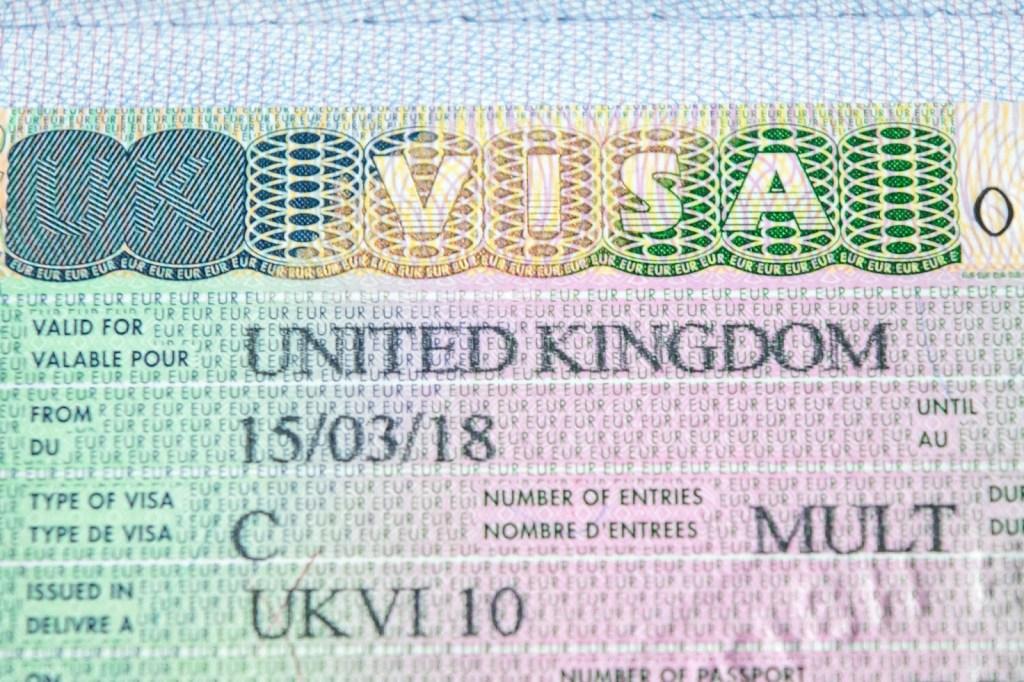
UK raises Student visa financial requirement
International students planning to study in the UK in 2026/2027 will need to pay closer attention to their visa finances as the government prepares to increase the amount applicants must show for living costs.
From November 30, 2026, the UK Student visa maintenance requirement will increase to £1,570 per month for students studying in London and £1,203 per month for students studying outside London.
The new amounts replace the current thresholds of £1,529 and £1,171 respectively. The requirement can be particularly important for Nigerian students, who must plan not only for tuition but also for the money they need to demonstrate for living expenses before submitting their visa applications.
The maintenance requirement is calculated separately from outstanding tuition fees listed on a student’s Confirmation of Acceptance for Studies (CAS).
How Much Money Do You Need for a UK Student Visa in 2026/2027?
The amount a student needs to demonstrate depends on where the course is located.
From November 30, 2026, the new figures will be:
- London: £1,570 per month, for up to nine months
- Outside London: £1,203 per month, for up to nine months
This means the maximum living-cost requirement will be:
London: £1,570 × 9 = £14,130
Outside London: £1,203 × 9 = £10,827
These figures cover living costs only.
Students must also account for any unpaid tuition fees shown on their CAS. The UK government states that the course-fee requirement is based on the tuition fees for the first academic year, with any amount already paid deducted where it is properly reflected in the student’s records.
What Is the New UK Student Visa Financial Requirement?
The financial requirement is designed to show that a student has enough money to support themselves while studying in the UK.
For a typical student applying from overseas, the calculation is:
Outstanding tuition fees + required maintenance funds = minimum funds to demonstrate
Suppose a student’s CAS shows £15,000 in outstanding tuition fees and the student will study in London.
Under the new rules, the calculation would be:
£15,000 + £14,130 = £29,130
A student with the same £15,000 outstanding tuition bill studying outside London would need:
£15,000 + £10,827 = £25,827
The actual amount depends on the student’s CAS, course and circumstances.
When Does the New £1,570 Requirement Start?
The higher maintenance amounts take effect on November 30, 2026.
The Home Office’s September 3, 2026 statement of changes specifically amends the Student route financial rules and replaces the £1,529 London figure with £1,570 and the £1,171 outside-London figure with £1,203.
This creates an important timing issue for students preparing applications around the end of November.
Applicants should check which version of the rules applies to their application date rather than relying on an older blog post, social media graphic or bank-balance calculation.
How Does the 28-Day Rule Work?
The 28-day rule remains one of the most important parts of the UK Student visa financial requirement.
Where a student needs to provide financial evidence, the required funds generally must have been held continuously for at least 28 consecutive days.
The end date of that 28-day period must also be within 31 days of the visa application.
That means students should not wait until they are ready to submit their application before putting the required money into an account.
A sudden deposit shortly before applying may not satisfy the requirement because the funds need to meet the relevant holding-period rules.
The government also has specific rules for applicants relying on student loans or official financial sponsorship.
What Can Be Used as Proof of Funds?
Students can meet the financial requirement using acceptable forms of funding, including eligible personal or family funds, student loans and official financial sponsorship.
The Immigration Rules allow qualifying funds to be held in an appropriate bank or building society account. Official financial sponsorship and qualifying student loans can also be used where the relevant documentation meets the rules.
For students using a parent or guardian’s money, the financial evidence must satisfy the applicable rules and the applicant may need to provide evidence of the relationship.
Students should make sure that the financial evidence is genuine, verifiable and available when required.
READ ALSO
France Student Visa 2026/2027: New €877.50 Monthly Proof of Funds Requirement Explained
MCAT 2027 Guide: What You Must Know About Registration, Costs, Test Locations and Scores
What Funds Are Not Accepted?
Not every asset that has a monetary value can be used to satisfy the Student visa financial requirement.
The rules do not treat assets such as overdraft facilities, cryptocurrency holdings, stocks and shares, pensions that cannot be immediately accessed and credit facilities as equivalent to qualifying readily available funds.
This is an important distinction for applicants who may have significant assets but do not have enough qualifying liquid funds in an acceptable account.
The government also places requirements on the financial institution and the type of account used to demonstrate funds.
Can Parents Sponsor a UK Student Visa?
Yes. Students can rely on qualifying funds held by a parent or legal guardian, subject to the applicable evidence requirements.
For Nigerian students, this can be particularly relevant where tuition and living expenses are being funded by parents or family members.
Applicants should not simply transfer money into their own account shortly before applying and assume the balance will automatically satisfy the requirement.
The financial evidence needs to comply with the holding-period and documentation rules. Where a parent or legal guardian’s funds are being relied upon, students should also prepare evidence establishing the relationship and any required consent.
What About Scholarships and Student Loans?
A scholarship or official sponsorship can help meet the financial requirement if it qualifies under the Student route rules and the supporting documentation clearly establishes the funding.
The same applies to eligible student loans.
Students relying on these sources should obtain formal documentation showing the amount of funding and the terms under which it is provided.
A scholarship covering tuition alone does not necessarily eliminate the need to demonstrate living costs.
Applicants should check exactly what their scholarship covers before calculating the amount they need to show.
How Much Do Dependants Need?
Students who are eligible to bring dependants must demonstrate additional maintenance funds for each eligible family member.
The current dependant requirement is:
- £845 per month in London, for up to nine months
- £680 per month outside London, for up to nine months
That means the maximum additional amount is £7,605 per dependant in London or £6,120 outside London.
However, the ability to bring dependants is restricted.
Most students cannot bring a partner or children under the current Student route. Eligibility generally applies to certain government-sponsored students and students on qualifying postgraduate research programmes, including PhDs and other doctoral or research-based higher degrees.
Students should establish whether they are eligible to bring dependants before adding these costs to their visa calculation.
Who Does Not Need to Show Financial Evidence?
Some applicants are exempt from providing financial evidence.
One important exemption applies to students who are applying for permission to stay in the UK and have already been living in the country with valid immigration permission for at least 12 months at the time of application.
There are also specific exemptions for Student Union sabbatical officers and certain doctors or dentists in training.
Some applicants may also fall under differential evidence arrangements, meaning UKVI may not routinely request financial documents at the initial application stage. However, applicants can still be asked to provide evidence later.
The safest approach is to understand the requirement even when financial evidence may not be requested immediately.
What Nigerian Students Should Do Before Applying
Students preparing for the 2026/2027 academic year should start with their CAS rather than an arbitrary bank-balance target.
Check the outstanding tuition fee shown on the document, determine whether the course is in London or outside London, then add the appropriate maintenance requirement.
Students planning to apply from November 30, 2026 should use the new figures:
£14,130 for living costs in London or £10,827 outside London, assuming the full nine-month maintenance period applies.
They should then make sure the qualifying funds have been held for the required 28-day period and that the financial evidence falls within the permitted timeframe.
The biggest mistake is leaving this until the final days before a visa application.
A student can have admission, a CAS and a place at a UK university and still face problems if the financial evidence does not satisfy the Immigration Rules.
Frequently Asked Questions About UK Student Visa Financial Requirements
How much money do I need for a UK Student visa in 2026?
From November 30, 2026, students will need £1,570 per month for living costs in London or £1,203 per month outside London, for up to nine months.
How much do I need for nine months in London?
The new London maintenance requirement is £14,130 for nine months.
How much do I need for nine months outside London?
The new requirement is £10,827 for nine months outside London.
Does the UK Student visa financial requirement include tuition?
No. Students must account separately for outstanding tuition fees shown on their CAS.
What is the 28-day rule for UK Student visa?
It generally requires applicants who must demonstrate funds to show that the required money was held continuously for at least 28 days. The end of that period must normally be within 31 days of the visa application.
Can my parents provide money for my UK Student visa?
Yes. Qualifying funds held by a parent or legal guardian can be used, provided the applicable evidence requirements are met.
Can I use cryptocurrency for my UK Student visa proof of funds?
No. Cryptocurrency holdings are not treated as qualifying financial evidence for the Student route.
Can I use a scholarship to meet the UK Student visa financial requirement?
Yes, where the scholarship qualifies as an accepted source of funding and appropriate official evidence is provided.
Can Nigerian students bring dependants to the UK on a Student visa?
Only certain Student visa holders can bring dependants. Current rules generally restrict dependants to qualifying postgraduate research students and certain government-sponsored students.
What happens if my bank balance falls below the required amount?
If the balance falls below the required level during the relevant 28-day period, the financial evidence may no longer satisfy the rules. Students should ensure the required funds remain available throughout the qualifying period.
Does the new £1,570 requirement apply to every UK student?
The new figure applies to students whose applications fall under the updated Student route financial rules and who need to meet the maintenance requirement. Exemptions and specific circumstances can change how the requirement applies.