

US Military Operation on Larak Island sparks Iran retaliation as missiles and drones target Jordan and UAE

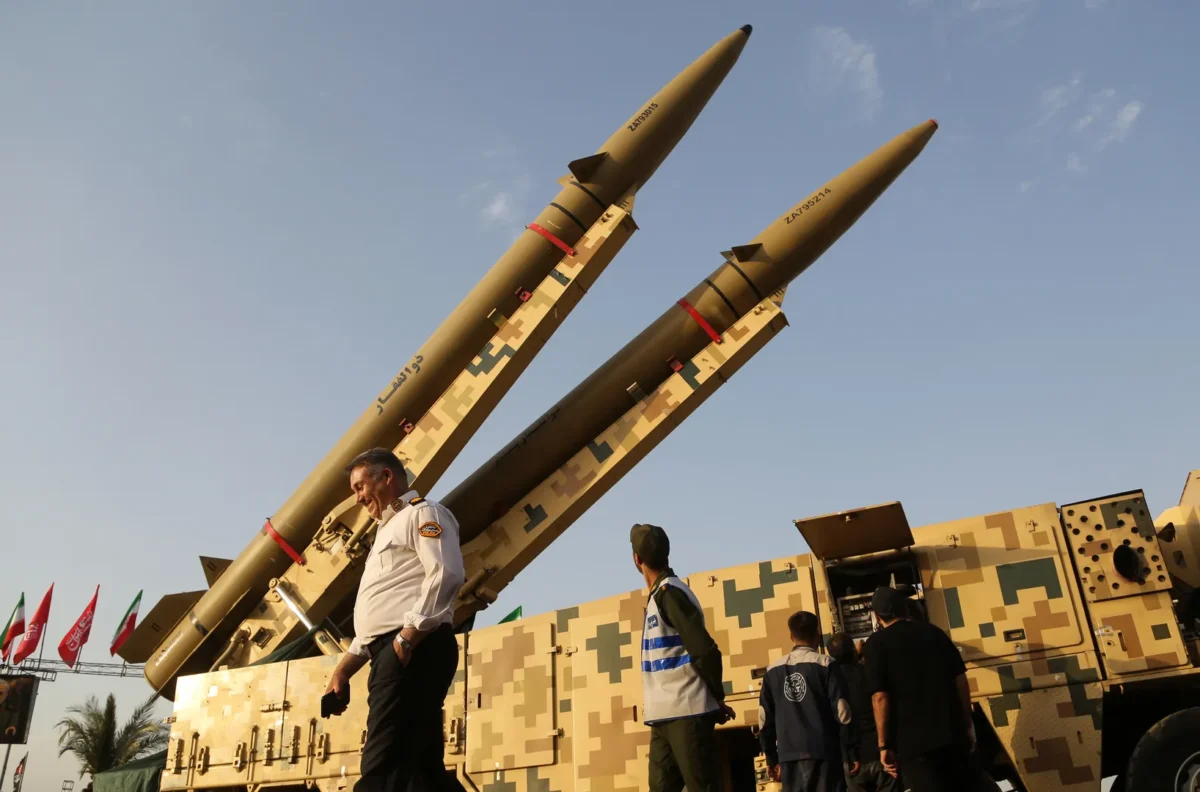
Iranian ballistic missiles displayed in Azadi Square in Tehran on July 24. Photo: Fatemeh Bahrami/Anadolu via Getty Images
A new US military operation against Iranian forces on Larak Island has triggered the most significant direct exchange between Washington and Tehran in more than a month, raising fresh fears that the six-month conflict could enter another dangerous phase.
The United States said it carried out a limited and precise military operation against Iranian forces it accused of preparing to deploy naval mines into the Strait of Hormuz. Iran responded with missile and drone attacks that it said targeted US military positions and assets in Jordan and the United Arab Emirates.
The latest exchange marks a sharp escalation after weeks of relatively reduced military activity. It also threatens diplomatic efforts aimed at restoring stability around the Strait of Hormuz, one of the world’s most strategically important shipping routes and a critical passage for global energy supplies.
While US officials described the operation as necessary to prevent an imminent threat to commercial shipping, Iran condemned the strikes as a violation of its sovereignty and promised further retaliation against military aggression.
What Happened During the US Military Operation on Larak Island?
According to US Central Command, American forces targeted two Iranian rocket launchers on Larak Island after observing Iranian forces allegedly preparing to launch rockets carrying naval mines into the Strait of Hormuz.
CENTCOM described the action as “limited” and “precise”, saying Iranian minelaying forces posed an imminent threat to civilian mariners, commercial vessels and the free flow of international commerce.
The US argued that the operation was intended to protect one of the world’s most important maritime corridors rather than launch a broader military campaign.
Iran, however, presented a sharply different account. Iranian authorities said the attack killed and wounded military personnel and civilians, while the Islamic Revolutionary Guard Corps described the US operation as a major strategic mistake.
Iranian President Masoud Pezeshkian said Tehran was not seeking war but would not remain passive in the face of military aggression.
Iran Launches Retaliatory Attacks on Jordan and UAE
Iran responded to the US military operation with attacks directed at US military positions in Jordan and military assets in the United Arab Emirates, according to Iranian state media and statements attributed to the IRGC.
Iran claimed that a combined missile and drone operation targeted US-linked military facilities in Jordan, including sites associated with the King Hussein and Al Azraq bases.
Jordan’s armed forces said its air defence systems intercepted eight missiles that entered the country’s airspace. Jordan said the missiles were destroyed before they could threaten civilians or property.
Iran also claimed to have launched dozens of drones against US military assets associated with Al Menhad airbase in the UAE.
The UAE acknowledged responding to a drone approaching its territorial waters but rejected Iranian claims that its airbase had been successfully targeted. Emirati authorities condemned the incident as a dangerous escalation.
The conflicting accounts underline the difficulty of independently assessing the full scale of the damage and the precise outcome of the retaliatory attacks.
Why Is the Strait of Hormuz at the Centre of the US-Iran Conflict?
The latest military operation has once again placed the Strait of Hormuz at the centre of the confrontation between the United States and Iran.
The waterway is one of the world’s most important shipping routes, particularly for global energy supplies. Disruption to maritime traffic through the strait can quickly affect oil markets, shipping costs and the wider global economy.
Washington has sought to maintain commercial navigation through the waterway, while Iran has continued to assert its influence over the strategically sensitive area.
The US said its operation on Larak Island was directly linked to concerns that Iranian forces were preparing to deploy mines that could threaten commercial vessels.
American forces reportedly completed efforts to clear mines from international shipping routes in the waterway last week. President Donald Trump had also warned that any vessel placing new mines could face immediate military action.
The new exchange suggests that control and security around the Strait of Hormuz remain one of the most volatile issues in the wider conflict.
READ ALSO
Iran economy on edge as US moves to tighten sanctions and Tehran threatens ships
US-Iran Military Escalation Breaks Weeks of Relative Calm
The attacks represent the first major direct exchange between the two sides in more than a month.
According to the reports, the United States had recently shifted its focus away from direct military action and toward increasing economic pressure on Tehran.
Washington has announced new sanctions and indicated that additional measures targeting entities doing business with Iran could follow. US Treasury Secretary Scott Bessent said the administration was expected to increase the use of secondary sanctions, with banks among the initial targets.
The renewed military confrontation could complicate that strategy.
Diplomatic efforts aimed at creating an off-ramp from the conflict have already slowed. The White House said there were no ongoing negotiations between the United States and Iran, although Iran and Oman have continued discussions concerning a possible arrangement to restore maritime traffic through the Strait of Hormuz.
Regional countries, including Qatar, have also supported efforts to find a diplomatic solution.
What the Larak Island Military Operation Means for Regional Stability
The exchange between the US and Iran has raised concerns that the conflict could spread further across the Middle East.
Jordan and the UAE have become directly involved in the latest episode because of Iranian allegations concerning US military positions and assets located within their territories.
The attacks also carry significant political consequences. A strike directed toward a country hosting US military forces can place regional governments under increased pressure over their security relationships with Washington.
A retired US naval officer quoted by Al Jazeera described the Iranian attacks on Jordan as a political message intended not only for the United States but also for regional governments supporting American military operations.
The UAE has similarly warned against further escalation, while regional officials have continued to argue that a prolonged state of conflict without a political settlement cannot provide lasting stability.
Oil Prices Rise as Markets React to US-Iran Military Operation
The latest US strikes and Iranian retaliation also had an immediate impact on global oil markets.
According to the CNN report, Brent crude rose 2.8 percent to $90.57 per barrel, while US crude increased 2.7 percent to $85.64 per barrel following the American military operation.
Energy markets are particularly sensitive to developments involving the Strait of Hormuz because of the route’s importance to global oil supplies.
Any prolonged disruption, military confrontation or threat to commercial shipping could increase pressure on energy prices and international supply chains.
The reaction in oil markets demonstrates how a military exchange in the Gulf can rapidly produce economic consequences far beyond the countries directly involved.
What Happens Next After the US and Iran Exchange Attacks?
The immediate future will depend on whether either side launches additional military operations.
Iran has warned that further aggression will receive a decisive response, while the United States has said it remains prepared to protect commercial shipping and maintain freedom of navigation through the Strait of Hormuz.
The latest exchange has also complicated efforts to return to diplomacy.
With talks already stalled and both military and economic pressure increasing, the risk is that further incidents could trigger a wider cycle of retaliation.
For now, the US-Iran confrontation remains centred on military activity, sanctions and the strategic battle over the Strait of Hormuz. Whether regional diplomacy can prevent another major escalation may determine the next phase of the six-month conflict.
FAQ: US Military Operation and Iran Retaliation
Why did the US launch a military operation on Larak Island?
According to US Central Command, American forces targeted two Iranian rocket launchers on Larak Island after observing Iranian forces allegedly preparing to launch rockets carrying naval mines into the Strait of Hormuz. The US described the operation as limited and precise and said the action was intended to protect commercial shipping and civilian mariners.
Iran rejected that justification and condemned the strike as a violation of its sovereignty.
What is Larak Island?
Larak Island is an Iranian island located near the Strait of Hormuz. Its location makes it strategically significant because the surrounding waterway is a major international route for commercial shipping and global energy supplies.
The island became the focus of the latest escalation after the United States said Iranian forces there posed an imminent threat to shipping in the Strait of Hormuz.
Did the US attack Iran?
Yes. According to the reports provided, the United States carried out strikes against two Iranian rocket launchers on Larak Island.
The US said the targets were linked to Iranian forces allegedly preparing to deploy naval mines into the Strait of Hormuz. Iranian authorities said the attack caused military and civilian casualties.
Why did Iran retaliate against Jordan and the UAE?
Iran said its missile and drone attacks were retaliation for the US military operation on Larak Island.
Iranian media reported that the IRGC targeted locations associated with US military forces in Jordan and military assets in the UAE.
The attacks reflect Iran’s strategy of responding to US military action by targeting facilities or assets connected to American forces across the region.
Did Iran successfully hit US military bases in Jordan?
The outcome remains disputed.
Iran claimed that its operation caused significant damage to targeted infrastructure. Jordan’s armed forces, however, said its air defence systems intercepted and destroyed eight missiles that entered its airspace.
The information provided does not independently confirm that Iranian missiles successfully struck US military facilities in Jordan.
Did Iran attack the UAE?
Iran claimed to have launched drones toward US military assets associated with Al Menhad airbase in the UAE.
The UAE confirmed that its air force responded to a drone approaching its territorial waters but rejected Iranian claims that its airbase had been successfully targeted.
What did the UAE say about the Iranian attack?
The UAE denied that the airbase identified by Iran had been successfully targeted.
Its government condemned the incident as a dangerous escalation and indicated that it reserved the right to respond.
Why is the Strait of Hormuz so important?
The Strait of Hormuz is one of the world’s most strategically important maritime routes because it is a major passage for global energy supplies and commercial shipping.
Military threats, naval mines or attacks on vessels in the waterway can disrupt oil markets and international trade.
The dispute over security and navigation in the strait has become one of the central issues in the current US-Iran conflict.
Did Iran place mines in the Strait of Hormuz?
The United States said its military operation targeted Iranian forces that were allegedly preparing to deploy mines into the waterway.
Iran’s account, as presented in the supplied reports, disputes the US justification for the attack.
The conflicting claims remain central to the disagreement over why the US launched the operation.
Is the Strait of Hormuz closed?
The supplied reports do not state that the Strait of Hormuz has been completely closed.
The United States has continued efforts to protect commercial shipping and restore safe navigation through international routes in the waterway.
However, military activity and threats involving mines continue to create significant risks for maritime traffic.
Are the United States and Iran at war?
The supplied reports describe a six-month conflict involving the United States, Israel and Iran, with the latest exchange marking the first major military escalation between the US and Iran in more than a month.
The conflict has involved direct military strikes, regional attacks, maritime tensions and economic sanctions.
Will the US-Iran conflict escalate after the Larak Island strikes?
There is a significant risk of further escalation because both sides have signalled a willingness to respond to additional attacks.
Iran has warned that further military aggression will receive a decisive response, while the US says it remains prepared to protect shipping and commercial navigation.
Whether the conflict expands will depend heavily on whether either side launches further military operations and whether diplomatic channels can regain momentum.
Are the US and Iran still negotiating?
According to the CNN report, the White House said there were no ongoing negotiations between Washington and Tehran.
Iran and Oman, however, have continued discussions concerning a proposed arrangement related to restoring maritime traffic through the Strait of Hormuz.
Other regional mediators have also supported diplomatic efforts.
How did the US-Iran military operation affect oil prices?
Oil prices rose after the US strikes on Larak Island.
According to the CNN report, Brent crude increased 2.8 percent to $90.57 per barrel, while US crude rose 2.7 percent to $85.64 per barrel.
The market reaction reflects concerns that military escalation around the Strait of Hormuz could threaten global energy supplies.
What happens next in the US-Iran military conflict?
The next phase will depend on whether the latest attacks lead to another round of retaliation or renewed diplomatic engagement.
The United States is combining military deterrence with increased economic sanctions, while Iran has indicated that it will continue responding to what it describes as aggression.
The security of the Strait of Hormuz, the future of regional military operations and the possibility of renewed diplomacy are likely to remain the key issues shaping the conflict.