

UK salmonella outbreak linked to imported eggs: 207 cases, one death and hundreds hospitalised

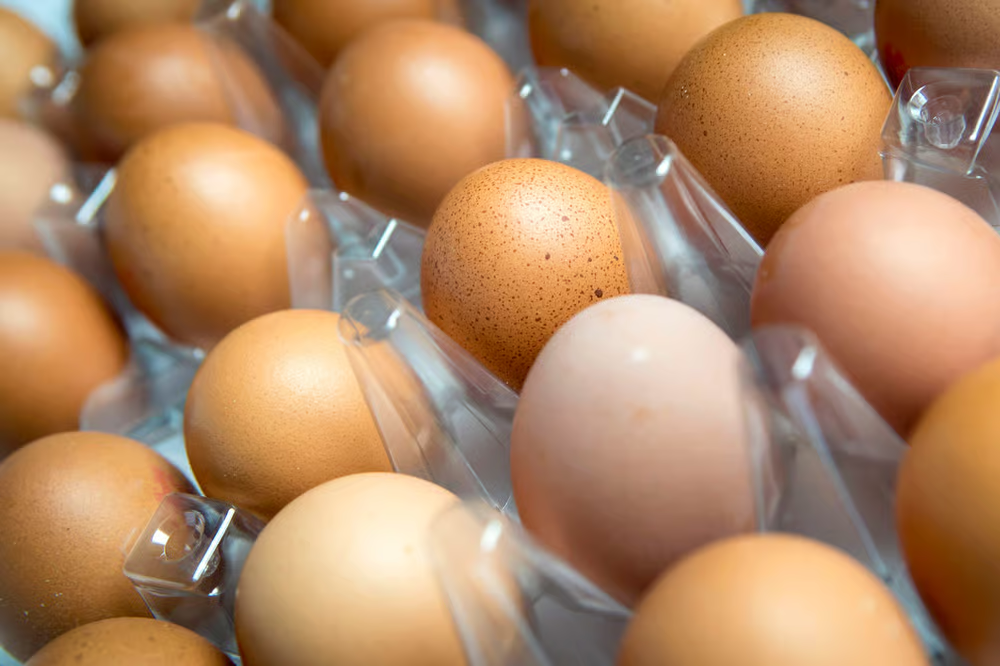
Eggs may be linked to the outbreak (Danny Lawson/PA
A salmonella outbreak in the UK has left one person dead and 207 people ill, with health authorities investigating a possible link to food prepared using imported eggs.
The UK Health Security Agency (UKHSA) said most of the cases have been reported in recent weeks, prompting an extensive investigation with the Food Standards Agency (FSA) and other public health bodies. More than one-third of those affected have required hospital treatment.
The outbreak involves the same specific strain of salmonella, making it different from the many individual salmonella infections that occur across the UK each year.
UK Salmonella Outbreak: 207 Cases Confirmed
According to the UKHSA, 207 cases have been identified during the past year. Of those, 199 were recorded in England, including 47 cases in London and 38 in Yorkshire and the Humber.
The investigation has identified a specific strain of salmonella affecting people across different areas. Health officials are examining epidemiological evidence and the food supply chain to establish exactly where the outbreak originated.
The UKHSA said egg consumption remains the strongest suspected link identified so far.
Food businesses associated with 24 of the cases have also been examined, with some of those businesses using imported eggs.
One Person Has Died and More Than 70 Were Hospitalised
The outbreak has caused serious illness in some people. More than a third of those infected have required hospital treatment, while two patients developed serious blood poisoning.
The people affected range in age from babies to adults aged 90, highlighting the broad range of people who have been infected.
The UKHSA has not identified a link between the outbreak and UK-produced eggs or poultry.
Despite the number of cases, health officials currently assess the risk to the general public as low.
What Are the Symptoms of Salmonella?
Salmonella infection can cause a range of gastrointestinal symptoms. The UKHSA says common symptoms include diarrhoea, vomiting, stomach cramps and fever.
Symptoms typically develop between 12 and 72 hours after infection, although the severity can vary between individuals.
Most people recover without specific treatment. However, salmonella can lead to more serious complications, particularly in vulnerable groups.
Anyone concerned about symptoms is advised to contact their GP or an out-of-hours medical service.
READ ALSO
Parasite outbreak explosive diarrhea: CDC investigates growing Cyclospora cases across the U.S.
Why Are Imported Eggs Being Investigated?
The UKHSA said investigations are continuing to identify the source of the outbreak, but food made using imported eggs is currently the strongest epidemiological link.
Investigators are examining food businesses connected to cases and tracing ingredients through the food supply chain.
The presence of a common strain among the cases has also helped investigators identify a potential connection between infections that might otherwise appear unrelated.
Hannah Charles, lead epidemiologist for gastrointestinal infections at the UKHSA, said authorities are working with the Food Standards Agency and other public health agencies to investigate the possible link to eggs imported from outside the UK.
The investigation remains ongoing, meaning the exact source has not yet been confirmed.
Are UK Eggs Safe During the Salmonella Outbreak?
The UKHSA has said there is currently no identified link to UK-produced eggs or poultry.
Food Standards Agency officials have also stressed that eggs which are properly cooked and handled hygienically should not present a food safety risk.
However, additional precautions have been recommended for vulnerable groups.
Infants, young children, pregnant people and older adults are advised to eat raw or runny eggs only when they carry the British Lion mark or are produced under the Laid in Britain egg assurance scheme.
How Can People Reduce Their Risk of Salmonella?
Good food hygiene remains an important way to reduce the risk of salmonella infection.
People handling eggs, eggshells or egg packaging should wash their hands thoroughly with soap and water. Food should also be prepared and cooked properly, particularly foods containing eggs, meat or poultry.
Keeping good hygiene practices in the kitchen can help prevent the spread of bacteria between food, surfaces and hands.
The UKHSA said additional preventative measures will be introduced if they become necessary as investigators learn more about the outbreak.
What Happens Next in the UK Salmonella Investigation?
Public health officials are continuing their investigation into the 207 cases, working alongside the Food Standards Agency and other agencies.
The focus is on determining how the specific strain spread and whether a particular food product, ingredient or supply chain is responsible.
For now, officials have not identified a connection to British-produced eggs or poultry, while imported eggs remain the strongest suspected source.
The UKHSA has also emphasised that the general public risk remains low. Further advice could be issued if investigators identify additional risks or establish a confirmed source.
FAQ
What is the latest UK salmonella outbreak?
The UKHSA is investigating an outbreak involving 207 reported cases over the past year. Most cases have occurred in recent weeks, and the outbreak involves one specific strain of salmonella.
How many people have been affected by the UK salmonella outbreak?
The UKHSA has identified 207 cases, including 199 in England. London has recorded 47 cases, while Yorkshire and the Humber has recorded 38.
Has anyone died from the salmonella outbreak?
Yes. One person has died in connection with the outbreak, according to the BBC report based on information from the UKHSA.
Are imported eggs linked to the salmonella outbreak?
Health officials say egg consumption is currently the strongest suspected link, and some food businesses associated with 24 cases use imported eggs. However, the investigation has not yet established a definitive source.
Are UK-produced eggs linked to the outbreak?
The UKHSA says there is currently no identified link to UK-produced eggs or poultry.
What are the symptoms of salmonella?
Common symptoms include diarrhoea, vomiting, stomach cramps and fever. Symptoms generally develop between 12 and 72 hours after infection.
How serious is salmonella infection?
Most people recover without treatment, but salmonella can sometimes cause serious illness. In this outbreak, more than a third of those affected required hospital care, and two developed serious blood poisoning.
Who is most vulnerable to salmonella?
The source states that cases have included babies and people as old as 90. The Food Standards Agency has specifically advised infants, young children, pregnant people and older adults to take extra care with raw or runny eggs.
Can I still eat eggs during the UK salmonella outbreak?
The UKHSA says the general risk to the public is low. The Food Standards Agency says properly cooked and hygienically handled eggs should not present a food safety risk.
Which eggs can vulnerable people eat runny or raw?
Infants, young children, pregnant people and older adults are advised to eat runny or raw eggs only if they carry the British Lion mark or are produced under the Laid in Britain egg assurance scheme.
How can I prevent salmonella infection?
Thorough cooking and good hand hygiene can reduce the risk. People should wash their hands with soap and water after using the bathroom and before handling food, as well as after handling eggs, eggshells or egg packaging.
Is there an egg recall because of the outbreak?
The supplied BBC report does not identify a specific egg recall. It says investigations are ongoing and that additional preventative measures will be introduced if necessary.
Should people in the UK be worried?
The UKHSA currently considers the risk to the general public low. Authorities are continuing investigations to identify the source and determine whether further action is needed.