

Asaba Massacre: Why Delta wants a sitting president to apologise 59 years later

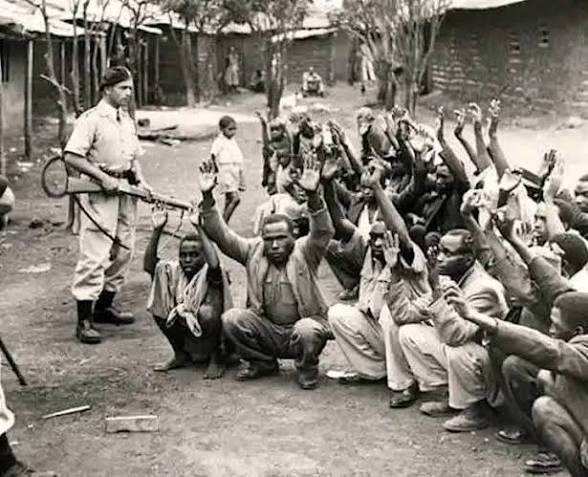
Fifty-nine years after hundreds of people were killed during the Nigerian Civil War, the Federal Government is preparing to formally acknowledge the 1967 Asaba Massacre.
But for the people of Asaba, official acknowledgement may not be enough.
The Asagba of Asaba, Prof. Epiphany Azinge, has demanded a public apology from a sitting Nigerian President, saying the community cannot achieve full closure without one.
The demand came during the 59th anniversary memorial of the massacre in Asaba, Delta State, where government officials, traditional rulers, survivors and families of victims gathered to remember those killed during the Civil War.
What happened in Asaba in 1967?
The Asaba Massacre occurred between October 5 and 7, 1967, during the Nigerian Civil War.
Federal troops had recaptured Asaba from Biafran forces as they advanced towards Onitsha. The operation took place during the early stages of the war, which began after years of political and ethnic tensions.
Historical accounts say many Asaba residents came out to welcome the Federal troops in a procession. Some wore white akwa ocha, the traditional ceremonial cloth associated with Asaba.
The situation later changed dramatically.
Men and boys were separated from women and children, and large numbers of civilians were killed.
The exact number of people killed remains disputed. However, Governor Sheriff Oborevwori said researchers and community historians estimate that more than 1,000 people died in the massacre.
The killings left deep scars on the community and became one of the most painful episodes associated with the Nigerian Civil War.
Why does Asaba want a presidential apology?
The current demand goes beyond simply remembering the victims.
The Asagba says Asaba wants the Nigerian state to formally acknowledge what happened and accept responsibility for the tragedy.
Azinge said the community has forgiven but has not forgotten.
He argued that forgiveness does not mean abandoning the demand for acknowledgement and accountability.
The traditional ruler therefore wants a sitting President, rather than a former president, to publicly apologise to the people of Asaba.
He noted that former military Head of State, retired General Yakubu Gowon, has apologised over the massacre. But Gowon no longer occupies the presidency.
For the Asagba, an apology from a sitting President would carry a different meaning because it would represent acknowledgement by the Nigerian government.
What does the Federal Government plan to do?
There is already movement on that front.
Governor Oborevwori said the Federal Government is expected to make a formal reconciliation declaration over the massacre.
He said Delta State had already acknowledged the tragedy and that national acknowledgement was important for reconciliation.
The governor also said the state would continue supporting efforts to secure national recognition for the victims and establish a fitting national memorial.
That means the Federal Government’s proposed declaration could become an important step towards the recognition Asaba has demanded for decades.
However, it remains separate from the specific request for a presidential apology.
Why is forgiveness not enough?
Former President Olusegun Obasanjo, who participated virtually in the anniversary memorial, urged survivors and victims’ families to embrace forgiveness.
Obasanjo described the massacre as one of the most painful and terrible episodes of the Nigerian Civil War.
He said he was moved to tears after receiving documents about the killings and called on Nigerians to ensure that such an event never happens again.
But the Asagba’s response showed why forgiveness remains a complicated issue.
Azinge said Asaba could forgive without forgetting.
He also pointed to the need for truth, justice and acknowledgement before complete healing.
The position was echoed by the Obi of Onitsha, Igwe Nnaemeka Achebe, who said Nigeria must pursue truth, justice, restoration and healing, with forgiveness following those steps.
A family has already apologised
At the same memorial, Major-General Ahmed Ibrahim Taiwo (retd.), son of the late Major Ibrahim Taiwo, apologised to the people of Asaba on behalf of his father and family.
Taiwo said he had spent years researching his father’s role in the events before deciding to make the apology.
He acknowledged that he could not change what happened but hoped his gesture would contribute to reconciliation.
The Asagba accepted the apology.
He publicly declared that the Asaba community had forgiven the Taiwo family.
That gesture is significant because it shows the community is not necessarily demanding revenge against individuals or their descendants.
Instead, the current demand is largely about official recognition of what happened and acknowledgement by the Nigerian state.
Why is the issue returning after 59 years?
The renewed attention comes as Asaba prepares for the 60th anniversary of the massacre in 2027.
Community leaders want the anniversary to go beyond another remembrance ceremony.
They are seeking a permanent memorial centre where the names, testimonies and records of victims can be preserved for future generations.
The proposed memorial is also intended to ensure that the massacre remains part of Nigeria’s historical record. Officials said survivors’ testimonies and victims’ names are available, although the records may not yet be exhaustive.
The timing also explains why the Federal Government’s proposed reconciliation declaration is attracting attention.
For Asaba, the 60th anniversary could provide an opportunity for Nigeria to formally confront one of the darkest episodes of the Civil War.
What Asaba is asking for
The demand from Asaba can therefore be understood in three parts.
First is recognition — that the Nigerian state formally acknowledges the massacre and the civilians who were killed.
Second is remembrance — through a permanent memorial and preservation of victims’ names and testimonies.
Third is a presidential apology — with the Asagba insisting that a sitting President should publicly apologise to the people of Asaba.
The community has also made clear that its demand is not necessarily about reopening the Civil War or seeking revenge.
Governor Oborevwori said remembering the tragedy should not be viewed as an attack on Nigeria. Instead, he said the lesson should be that ethnicity, suspicion and political conflict must never become reasons for killing innocent people.
As Nigeria approaches the 60th anniversary of the Asaba Massacre, the debate is therefore shifting from whether the tragedy should be remembered to how the Nigerian state should acknowledge it.
For Asaba, forgiveness may have begun. But the community says recognition, remembrance and an official apology are still part of the journey towards closure.