

Can Tinubu compel states to reduce transport fares? What the Constitution says

President Bola Tinubu’s directive for Nigerians to begin experiencing lower transportation costs through Compressed Natural Gas buses has raised a question following reports that fares remained unchanged in several states: Can the President compel state governments to reduce transport fares?
The question became more relevant after checks across several states showed that many commuters had yet to see the expected fare reductions from October 1.
The PUNCH reported that fares remained largely unchanged in states including Anambra, Delta, Imo, Sokoto, Kebbi, Jigawa, Gombe, Edo, Plateau, Ondo, Osun, Oyo and Ogun.
In some places, state-supported buses were offering cheaper or free transportation, but the benefits were limited to particular routes and categories of commuters.
Tinubu had on September 19 urged all states to work with transport unions and commercial operators, support vehicle conversion and fleet deployment, and ensure that savings from cheaper energy reached Nigerians through lower fares.
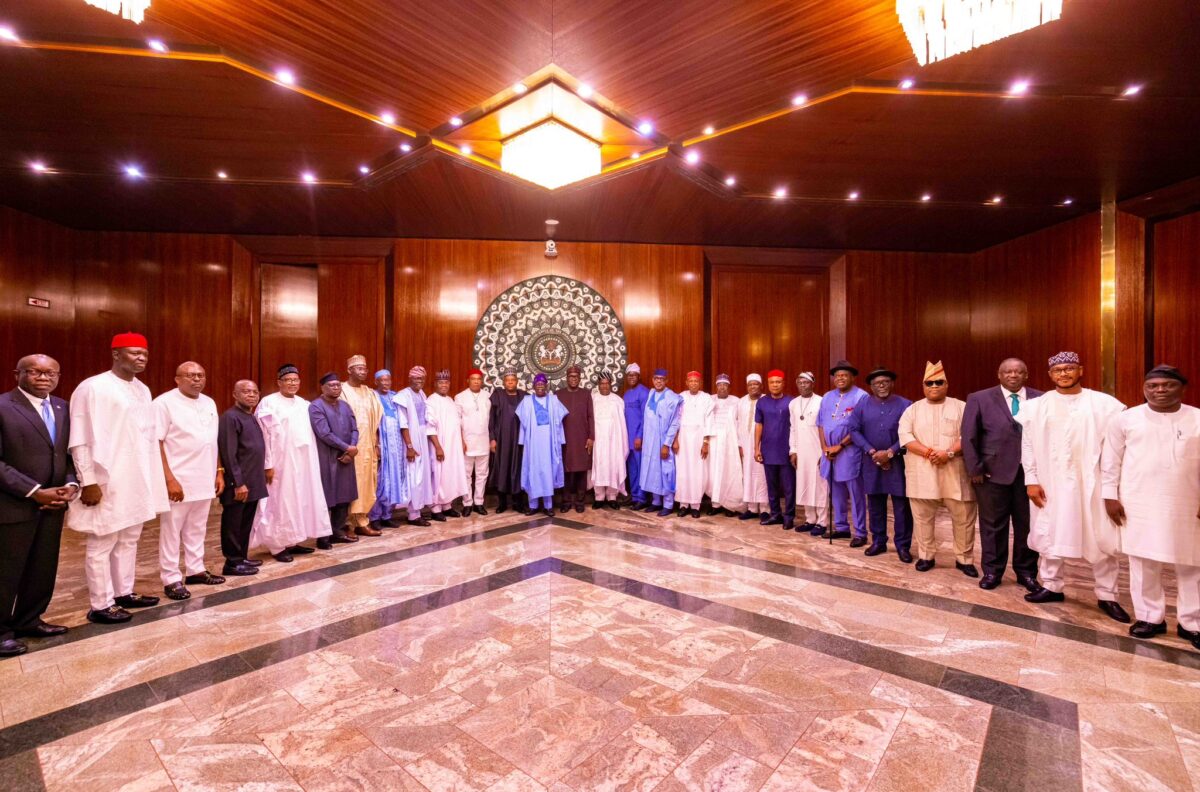
The President said the objective had been agreed with the 36 state governors during a meeting on August 27.
But the directive did not amount to a blanket federal order fixing fares for every commercial vehicle operating in the states.
What exactly did Tinubu direct?
Tinubu’s September 19 statement focused on the implementation of the National Affordable CNG Transit Programme.
He said the states should maintain momentum towards October 1, work with transport unions and commercial operators, support CNG conversion and fleet deployment, and facilitate infrastructure required for the programme.
He also asked the states to ensure that savings from cheaper energy were passed on to commuters through lower fares.
The Federal Government has been supporting the programme through CNG infrastructure, vehicle conversion and deployment of CNG-powered buses.
According to the Presidency, more than 120,000 vehicles had been converted to CNG, while the country had more than 400 certified conversion centres and over 90 CNG refuelling stations as of September 19.
However, the programme depends on cooperation between the Federal Government, state governments, transport unions, commercial operators and other stakeholders.
Does the President control state governments?
No. Nigeria operates a federal system in which executive powers are divided between the Federal Government and the states.
Section 5(1) of the 1999 Constitution vests the executive powers of the Federation in the President. Those powers extend to the execution of the Constitution, federal laws and matters over which the National Assembly has legislative authority.
Section 5(2), however, vests the executive powers of each state in its governor. Those powers cover the execution of the Constitution, state laws and matters within the legislative competence of the state.
That distinction matters in the CNG fare debate.
A presidential directive does not automatically give the President authority to take over functions constitutionally assigned to state governments.
The President can direct federal agencies and implement federal programmes within the powers of the Federal Government. He can also negotiate agreements and programmes with governors.
But where implementation requires action by a state government, the constitutional powers of the governor and the laws applicable in that state remain relevant.
What about transport regulation?
Transport is not a single area controlled entirely by either the Federal Government or the states.
The Constitution assigns different responsibilities across the federal, state and local levels.
For example, the Fourth Schedule gives local government councils functions that include the establishment, maintenance and regulation of motor parks, subject to the constitutional framework and state legislation.
This means the regulation of transport activities can involve different levels of government.
The situation becomes even more complicated when commercial operators are involved.
A private bus owner is not automatically an employee of a state government simply because the state has a transport policy.
The government may regulate operators through applicable laws, licensing arrangements, transport authorities, subsidies and other lawful mechanisms.
But a presidential announcement alone does not necessarily determine the price a private operator must charge on every route.
So what can Tinubu do?
The Federal Government has several ways of influencing transport costs without directly taking over state transport regulation.
One is funding and deploying CNG buses.
Another is supporting the conversion of petrol and diesel vehicles to CNG.
The government can also expand refuelling infrastructure and work with transport unions and commercial operators to make cheaper fuel available to the transport sector.
The Presidency has said an additional 500 CNG stations are expected as part of the government’s expansion of the infrastructure needed for the programme.
Tinubu can also negotiate directly with governors and make federal support conditional on agreed implementation arrangements, where legally permissible.
That is broadly how the current programme has been structured.
The President said the National Affordable CNG Transit Programme followed his August 27 meeting with the 36 governors, after which an implementation committee was established under the auspices of the Nigeria Governors’ Forum.
Why have fares not fallen everywhere?
The explanation varies from state to state.
In some states, transport unions said they had not received CNG buses.
In others, operators complained about inadequate refuelling facilities, conversion centres, fuel prices, maintenance costs and expensive spare parts.
The PUNCH also found that some states had introduced subsidised or free transport services, but these schemes did not cover every route.
For example, Kaduna operates government-supported CNG buses on selected routes, while Enugu has CNG buses charging a flat N300 on some routes.
Plateau also operates subsidised buses at N200, while commercial operators charge more than N500 on some routes.
The Federal Government’s Presidential Initiative on CNG and Electric Vehicles has maintained that fare reductions have already begun on some routes.
Its chairman, Ismaeel Ahmed, told The PUNCH that October 1 was not a date by which every state had to implement fare reductions simultaneously.
He described the date as the point from which the Federal Government would begin monitoring the rollout of fare reductions on routes using CNG and electric vehicles.
What happens if a state does not comply?
That depends on what exactly the state has agreed to do and what legal instrument governs the particular programme.
If a state voluntarily commits to a federal programme, there may be administrative and financial consequences for failing to meet the agreed terms.
But the President cannot simply assume the constitutional powers of a governor because the Federal Government wants a national policy implemented.
Where a federal and state authority disagree over constitutional powers, the courts can ultimately determine the limits of each government’s authority.
The Constitution itself provides a framework for resolving disputes between the Federation and states.
The bottom line
Tinubu can use the Federal Government’s financial resources, CNG infrastructure, buses, federal agencies and agreements with states to push transportation costs downward.
He can also call on governors to implement agreed measures, as he did ahead of October 1.
But the constitutional structure does not make state governments departments of the Presidency.
The executive power of a state belongs to its governor, while the President exercises the executive powers of the Federation.
That is why the October 1 CNG target depends not only on a presidential directive but also on state action, transport operators, infrastructure and the legal arrangements governing each programme.
For commuters, the immediate issue is therefore not simply whether the President gave an order.
It is whether the CNG programme has reached enough routes, whether operators can access cheaper energy and whether the resulting savings are actually being passed on through lower fares.