

The Fever in Geneva: The World’s Biggest AI Battle Isn’t Happening in Silicon Valley

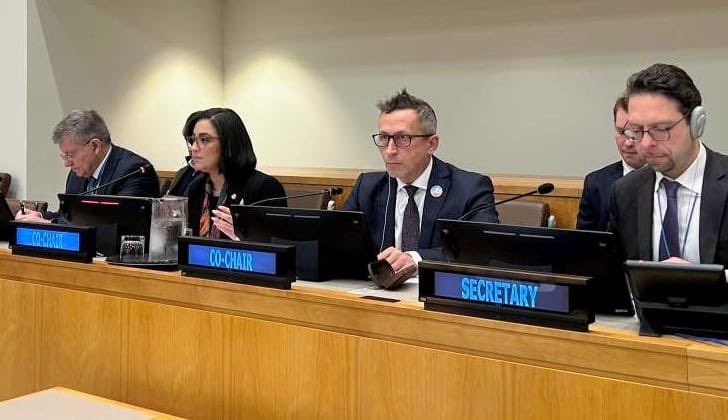
Nearly every government on Earth has arrived in Geneva to answer one question that could define the next century: Who should govern artificial intelligence—and who gets to decide?
By Chaste Inegbedion
When I asked Google’s Gemini to imagine me on the cover of the TIME100 AI issue alongside some of the world’s leading AI pioneers, it wasn’t an exercise in vanity.
It was curiosity.
Who are the people quietly shaping the future of artificial intelligence long before history remembers their names?
This week, many of them are gathering in Geneva.
As delegates from nearly every corner of the world arrive for the inaugural United Nations Global Dialogue on AI Governance, a different kind of race is unfolding—not over larger language models or faster chips, but over ideas.
Call it The Fever in Geneva.
Unlike Silicon Valley, where AI breakthroughs are measured by model releases and venture capital rounds, Geneva has become the arena for an equally consequential competition: deciding how humanity governs its most powerful technology.
The question hanging over the Palais des Nations is no longer whether AI will transform society.
It already has.
The question is whether governments can build enough trust, cooperation, and scientific consensus to ensure that transformation benefits everyone—not just the countries and companies leading today’s AI race.
United Nations Secretary-General António Guterres captured the moment succinctly:
“AI is advancing at runaway speed. The question is whether we will govern it together—or let it govern us. For the first time, the AI Dialogue gives every country a seat at the table. We must now turn global participation into global action—to make AI safer, fairer, more accessible and more ethical.”
That challenge has drawn an extraordinary cast of participants.
Scanning the attendee list feels like reading a who’s who of global AI leadership.
Among them are Joy Buolamwini, founder of the Algorithmic Justice League; Rita Orji, member of the Independent International Scientific Panel on AI; Cathy Li, Head of the Centre for AI Excellence at the World Economic Forum; Brad Smith, Vice Chair and President of Microsoft; Bosun Tijani, Nigeria’s Minister of Communications, Innovation and Digital Economy; Philip Thigo, Kenya’s Special Envoy for Technology; and Phumzile Mlambo-Ngcuka, former Executive Director of UN Women.
Yet this gathering is not about unveiling another chatbot.
It is about building the architecture of trust.
A Different Kind of AI Summit
The Dialogue comes just one week after the launch of the preliminary report from the Independent International Scientific Panel on Artificial Intelligence, a 40-member body of independent scientists selected from more than 2,600 global applicants. Co-chaired by Yoshua Bengio and Maria Ressa, the panel provides governments with something AI governance has often lacked: a shared scientific foundation.
Its warning is sobering.
AI capabilities are advancing faster than existing safeguards.
Rather than asking governments to negotiate based solely on political interests, the panel offers an evidence base from which countries with vastly different priorities can begin the conversation.
That is precisely what makes Geneva different.
As Amandeep Singh Gill, UN Under-Secretary-General and Special Envoy for Digital and Emerging Technologies, observed:
“The Global Digital Compact gave the multilateral system two things it never had before: an independent scientific panel to assess AI’s impacts and opportunities, and a global dialogue where every government has a seat at the table. Today, for the first time, both come together. That is what makes 6 July a turning point—not just for AI governance, but for how the international community responds to transformative technology.”
Organizers are equally clear that this is not an attempt to create another international bureaucracy.
“Our objective is not to build another silo,” said Ambassador Egriselda López of El Salvador, who co-chairs the Dialogue with Estonia’s Ambassador Rein Tammsaar.
“It is more to help build bridges across these different ecosystems, strengthen mutual understanding, and identify where cooperation is possible.”
Tammsaar echoed that sentiment while rejecting criticism that global AI discussions could stifle innovation.
“We wholeheartedly embrace innovation. But we also care about innovation serving as many people as possible.”
Competing Visions
The meeting arrives amid growing geopolitical debate.
The Trump administration has argued against UN-led AI governance, favoring trusted partnerships and market-driven innovation over multilateral oversight. Others contend that without broader international cooperation, AI risks deepening inequality and concentrating power.
The Dialogue seeks a middle path.
It does not negotiate binding rules.
Instead, it creates the first UN General Assembly-mandated forum where every Member State can exchange national experiences, share best practices, and explore common approaches to AI governance.
That inclusivity matters because AI’s consequences will not be limited to countries that build frontier models.
They will shape healthcare in rural Africa, education in South Asia, disaster response in the Pacific, manufacturing across Latin America, and public services worldwide.
As Doreen Bogdan-Martin, Secretary-General of the International Telecommunication Union, noted:
“For AI to benefit all people, technology and international cooperation must move forward together. The Global Dialogue on AI Governance has sharpened the world’s focus on building an AI future that includes everyone, especially the 2.2 billion people who have yet to join the digital world.”
UNESCO Director-General Khaled El-Enany added another dimension:
“Humanity’s rich and diverse cultural and linguistic heritage is our greatest source of creativity, identity and resilience, but we must ensure Artificial Intelligence strengthens, rather than erodes this diversity. Global AI governance is essential to protect all voices, empower all cultures, and guarantee that innovation reflects the full breadth of human culture.”
Building Resilience Before the Crisis
The conversation in Geneva echoes a broader lesson emerging across international diplomacy.
Just days earlier, leaders at the Hamburg Sustainability Conference asked why the world needed another global summit.
The answer was strikingly relevant to AI.
If there was one lesson from Hamburg, it was that resilience must be built before the next crisis arrives.
UN Deputy Secretary-General Amina J. Mohammed summarized it in three words:
“Diversification is protection.”
African Development Bank President Sidi Ould Tah extended that argument to development itself.
“Africa should be ready for the next challenge.”
The same principle applies to artificial intelligence.
Waiting until AI systems outpace governance will be far more costly than investing today in institutions capable of managing tomorrow’s risks.
History often celebrates technological breakthroughs.
Far less attention is paid to the rooms where humanity decides how those breakthroughs will serve society.
Geneva may become one of those rooms.
The real breakthrough this week may not be another frontier model.
It may be something even more valuable:
A shared commitment that artificial intelligence should become not only humanity’s greatest invention—but one of its greatest acts of international cooperation.
I’ll take that TIME cover eventually. But today, the more useful seat is at this table, watching whether Geneva turns participation into action.