

Strait of Hormuz crisis deepens as Trump and Xi hold emergency talks over Iran war, oil prices surge

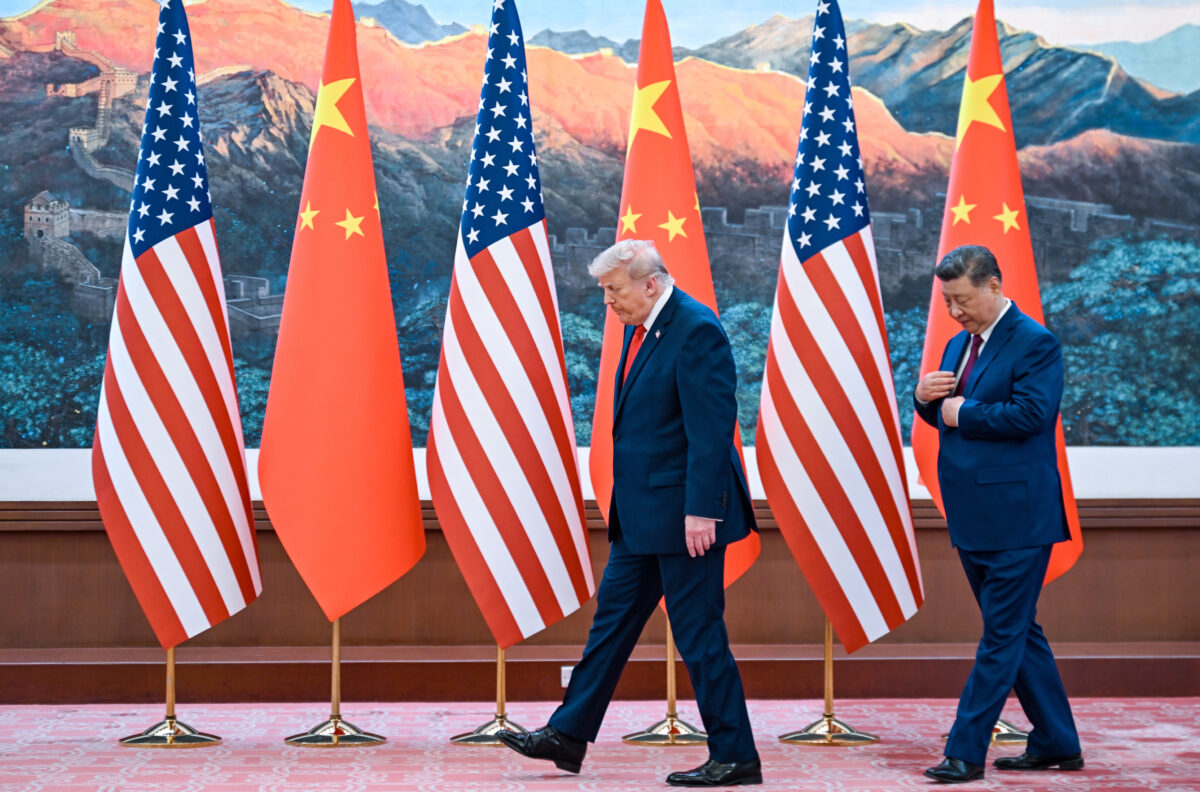
Chinese President Xi Jinping, right, and U.S. President Donald Trump meet at the Great Hall of the People in Beijing, Thursday, May 14, 2026. Kenny Holston/Pool. Photo via AP
Global attention has shifted sharply toward the Strait of Hormuz, one of the world’s most strategically important waterways, after United States President Donald Trump and Chinese President Xi Jinping held high-level talks over escalating tensions linked to the ongoing Iran conflict.
The emergency discussions come as fears grow over a prolonged disruption to global oil supplies, rising fuel prices, and increasing attacks on commercial vessels navigating the narrow maritime corridor between the Persian Gulf and the Gulf of Oman.
According to reports, both leaders agreed that the Strait of Hormuz “must remain open” to ensure the uninterrupted flow of global energy supplies, even as military tensions and economic uncertainty continue to shake international markets.
Why the Strait of Hormuz Matters to the Global Economy
The Strait of Hormuz is widely regarded as one of the world’s most critical oil transit chokepoints. A substantial portion of global crude oil exports passes through the narrow waterway daily, making any disruption capable of triggering major economic consequences worldwide.
The current crisis intensified after Iran reportedly restricted movement through the strait following the outbreak of the US-Israel conflict involving Tehran earlier this year. The disruption has already affected shipping operations, delayed oil tankers, and pushed global energy prices higher.
Reports indicate that several vessels have either been redirected, attacked, or prevented from accessing the route in recent days. Shipping concerns have also increased after authorities confirmed incidents involving seized vessels near the United Arab Emirates and attacks on cargo ships in nearby waters.
Trump and Xi Discuss Reopening Strategic Waterway
During bilateral talks in Beijing, President Trump reportedly told reporters that President Xi supports keeping the Strait of Hormuz open because China heavily relies on Middle Eastern oil imports.
The White House stated that both nations agreed on the importance of maintaining free energy movement through the region. China also reportedly opposed further militarisation of the waterway and resisted any move to impose tolls or restrictions on international shipping.
Although Beijing has not publicly confirmed all details shared by Washington, Chinese officials later stated that they support diplomatic negotiations aimed at restoring stability and reopening the strategic maritime route.
The issue dominated discussions between both leaders alongside concerns surrounding Iran’s nuclear programme, sanctions, Taiwan, and broader US-China trade relations.
Oil Prices Surge as Shipping Crisis Worsens
Financial markets reacted nervously to the uncertainty surrounding the Strait of Hormuz. Brent crude reportedly climbed above $109 per barrel, while US crude prices also surged significantly amid fears of prolonged supply disruptions.
Global investors remain concerned that continued instability in the region could fuel inflation, increase transportation costs, and affect economies already struggling with high commodity prices.
Analysts say the Strait of Hormuz crisis could have widespread consequences beyond the Middle East, especially for countries heavily dependent on imported energy supplies.
The situation has also raised concerns across Asia, Europe, and North America, with governments closely monitoring shipping activity and military developments around the region.
READ ALSO
Iran War Ceasefire: Trump, Tehran claim victory as two-week truce reopens Strait of Hormuz
Vessel Attacks and Maritime Security Concerns Raise Alarm
Maritime authorities confirmed multiple security incidents near the Strait of Hormuz in recent days.
One vessel anchored near Fujairah in the UAE was reportedly seized by unidentified individuals and redirected toward Iranian waters. Separately, an Indian cargo vessel sank following a suspected drone or missile attack near Oman, though all crew members were rescued safely.
Iranian officials have continued to insist that vessels can pass through the strait if they cooperate with Tehran’s newly proposed maritime procedures. Under the reported system, ships may need to provide detailed cargo and ownership information before receiving transit approval.
Meanwhile, the United States Central Command said dozens of commercial vessels had already been redirected to enforce restrictions connected to the ongoing conflict.
Iran Nuclear Dispute Still Blocking Peace Negotiations
Despite growing international pressure, negotiations between Washington and Tehran remain deadlocked.
The United States continues to demand tighter restrictions on Iran’s nuclear programme, while Tehran insists on maintaining sovereignty and seeking relief from international sanctions.
President Trump also stated that parts of Iran’s latest proposal regarding enriched uranium were “unacceptable,” suggesting that diplomatic progress remains limited despite ongoing mediation efforts involving China and other global powers.
Political analysts warn that failure to reach an agreement could further destabilise the Strait of Hormuz and deepen the global energy crisis.
Global Attention Turns to Middle East Stability
The Strait of Hormuz crisis has now become one of the most closely watched geopolitical developments of 2026.
With rising oil prices, vessel attacks, tense US-Iran negotiations, and increased military activity around one of the world’s busiest shipping lanes, governments and businesses worldwide are bracing for possible long-term economic impacts.
As diplomatic talks continue, the international community remains focused on whether world powers can prevent the crisis from escalating into a wider regional conflict capable of disrupting global trade and energy security.
FAQ
What is the Strait of Hormuz?
The Strait of Hormuz is a narrow but highly strategic waterway connecting the Persian Gulf to the Gulf of Oman and the Arabian Sea. It is one of the world’s busiest oil shipping routes.
Why is the Strait of Hormuz important?
The waterway is critical because a large percentage of global oil exports pass through it daily. Any disruption can affect global fuel prices, shipping operations, and international trade.
Why are tensions rising in the Strait of Hormuz?
Tensions increased following the ongoing US-Israel conflict involving Iran, combined with disputes over sanctions, shipping controls, and Iran’s nuclear programme.
Did Trump and Xi discuss the Strait of Hormuz?
Yes. Reports indicate that President Donald Trump and President Xi Jinping discussed the importance of keeping the Strait of Hormuz open during recent high-level talks in Beijing.
Is Iran blocking the Strait of Hormuz?
Iran has reportedly imposed restrictions and increased oversight on vessels passing through the strait, though some ships are still being allowed to transit under certain conditions.
How does the Strait of Hormuz crisis affect oil prices?
Disruptions in the waterway reduce confidence in global oil supply chains, causing crude oil prices to rise sharply due to fears of shortages.
What countries depend on the Strait of Hormuz?
Major economies including China, India, Japan, South Korea, European nations, and the United States depend heavily on oil transported through the strait.
Why is China involved in the Strait of Hormuz talks?
China imports significant amounts of oil from the Middle East, making the stability of the Strait of Hormuz extremely important for its economy and energy security.
Has the US military taken action in the Strait of Hormuz?
Yes. US Central Command stated that multiple vessels have been redirected and maritime enforcement measures have been implemented in the region.
Are commercial ships still passing through the Strait of Hormuz?
Some ships continue to transit the route, but movement has reportedly slowed significantly due to heightened security concerns and military tensions.
Could the Strait of Hormuz crisis trigger a global economic problem?
Yes. Experts warn that prolonged disruptions could increase fuel costs, worsen inflation, affect food prices, and impact global trade and transportation networks.
What is happening with Iran’s nuclear negotiations?
The US and Iran remain divided over enriched uranium, sanctions relief, and regional security demands, preventing a full peace agreement from being reached.