

State police: Solution to Nigeria’s insecurity or a political gamble?

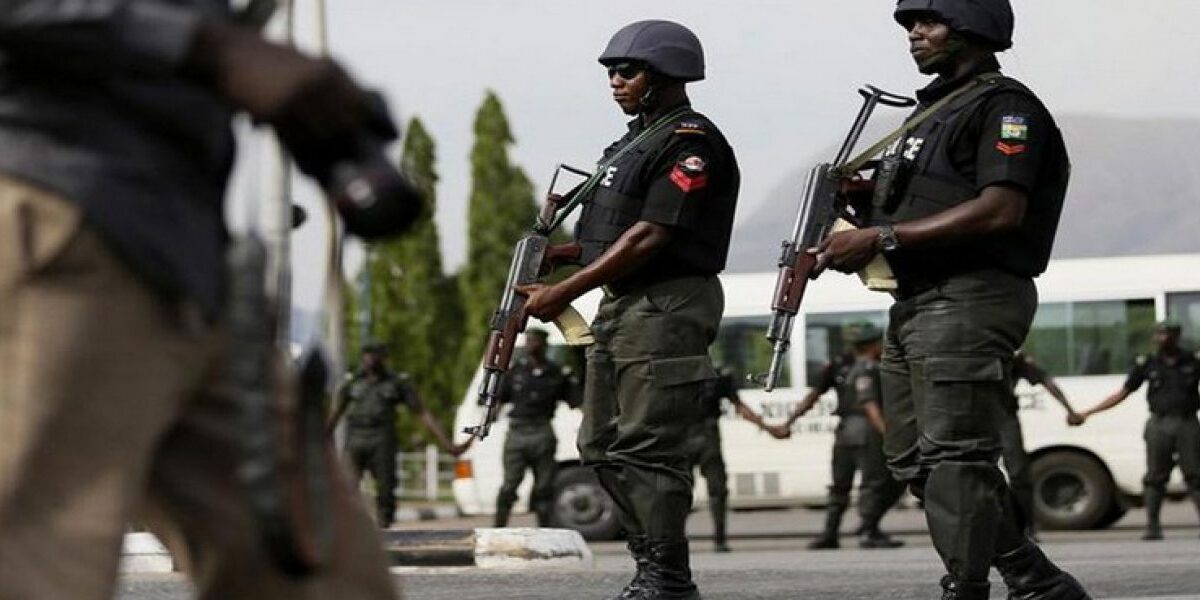
Police rescue kidnap victim after deadly Oyo gun battle
By Kenechukwu Onah
When Nigeria’s National Assembly passed the State Police Bill, it did more than approve another constitutional amendment. It reignited one of the country’s oldest debates on security, federalism, and political power, a debate that has persisted for more than two decades without a definitive resolution.
For supporters, the legislation represents a long-awaited opportunity to restructure a security system many believe has become too centralised to effectively tackle Nigeria’s growing security challenges. For critics, however, the concern is not whether state police are necessary, but whether Nigeria’s political environment is mature enough to prevent them from becoming instruments of intimidation in the hands of state governors.
As the bill awaits ratification by state Houses of Assembly, it has continued to generate intense debate among security experts, political leaders and constitutional scholars.
Nigeria operates one of the most centralised policing systems in Africa. Since independence, policing has remained largely under the exclusive control of the Federal Government, with Abuja overseeing the recruitment, appointment, deployment and discipline of officers across the country.
Critics have long argued that such a structure is increasingly ineffective for a country of over 200 million people with diverse cultures, terrains and security threats. They contend that officers deployed from distant states often lack the local knowledge, language and community relationships necessary for effective policing.
The co-founder and Lead Analyst at SBM Intelligence, Cheta Nwanze argues that the country’s security architecture was never designed primarily to protect citizens. According to him, it evolved from colonial institutions established to protect government interests and maintain political control — a structure successive administrations failed to fundamentally reform.
He maintained that although security threats have changed dramatically, from insurgency and banditry to kidnapping and violent crimes, the country’s policing structure has remained largely unchanged, leaving security agencies overwhelmed by challenges they were never originally designed to confront.
The proposed legislation introduces two policing structures, which allow both the Federal Government and individual states to operate police services.

Among its major provisions are the establishment of state police forces, the appointment of state police commissioners by governors subject to approval by a National Police Council, powers for commissioners to challenge directives they consider unlawful, and oversight mechanisms intended to check political interference.
The bill also outlines funding responsibilities for both federal and state governments, although questions remain over how resources would be distributed among states with vastly different financial capacities.
Supporters say decentralising policing is no longer optional.
Speaking on ARISE News, former Director of the Department of State Services (DSS), Mike Ejiofor, said he had consistently supported state police, arguing that although concerns over possible abuse exist, the benefits outweigh the risks.
According to him, the legislation contains safeguards capable of limiting political interference. He pointed to the powers vested in the National Police Council, which must approve key appointments and removals and can entertain complaints from state police commissioners against unlawful directives from governors.
Supporters also argue that community-based policing would improve intelligence gathering, strengthen trust between security agencies and residents, and enable quicker responses to local security threats.
On funding, public affairs analyst Charles Awuzie urged state governments to look beyond public finances by partnering with the private sector.
“Security is everyone’s business,” he said, arguing that private sector collaboration could provide additional funding, equipment and technology needed to strengthen state policing.
Despite the optimism surrounding the bill, opposition has centred less on the concept of state police than on the political environment in which they would operate.
Former Labour Party presidential candidate Peter Obi said while state police could help address the shortcomings of Nigeria’s centralised policing system, the current legal framework does not provide sufficient safeguards against political abuse.
He warned that governors could deploy state police to intimidate political opponents, suppress opposition activities and influence elections if independent oversight institutions are not insulated from executive control. According to him, implementation should be delayed until after the 2027 general election unless stronger constitutional safeguards are introduced.
A similar concern was raised by Hakeem Baba-Ahmed, National Chairman of the Peoples Redemption Party (PRP), who questioned whether the current administration possesses the credibility required to oversee such a far-reaching security reform.
Speaking on Channels Television’s Politics Today, Baba-Ahmed described the present moment as “the worst possible time” to implement state police.
Even among lawmakers who support decentralised policing, the speed with which the legislation moved through the National Assembly attracted criticism.
Senator Ali Ndume said although he supports decentralisation in principle, the Senate failed to live up to its responsibility as a “House of Deliberation.”
According to him, constitutional amendments of such magnitude deserved more rigorous debate and scrutiny instead of being hurried through the legislative process.
Similar concerns emerged in the House of Representatives, where Bashir Usman, representing Birnin Gwari/Giwa Federal Constituency of Kaduna State, was the only lawmaker to oppose the bill.
He argued that members received the constitutional amendment report only minutes before debate commenced, leaving little opportunity to study provisions that would fundamentally reshape Nigeria’s security architecture. He warned that rushed legislation often creates legal loopholes and structural weaknesses that become difficult to correct later.
Although the bill enjoys overwhelming support among federal lawmakers and many state governors, its passage has not ended the debate. Rather, it has shifted the conversation from whether Nigeria should have state police to whether the country has built sufficient institutional safeguards to prevent abuse.
While many say the legislation represents a necessary response to worsening insecurity and an opportunity to bring policing closer to the people, others have repeatedly argued that the political environment is not mature enough to prevent abuse.
As Nigeria moves closer to one of the most significant security reforms in its democratic history, the challenge may no longer be convincing Nigerians that state police are needed. The greater test will be ensuring that the institution protects citizens rather than politics.