

South Africa AGOA exclusion: US sets January 2027 end date

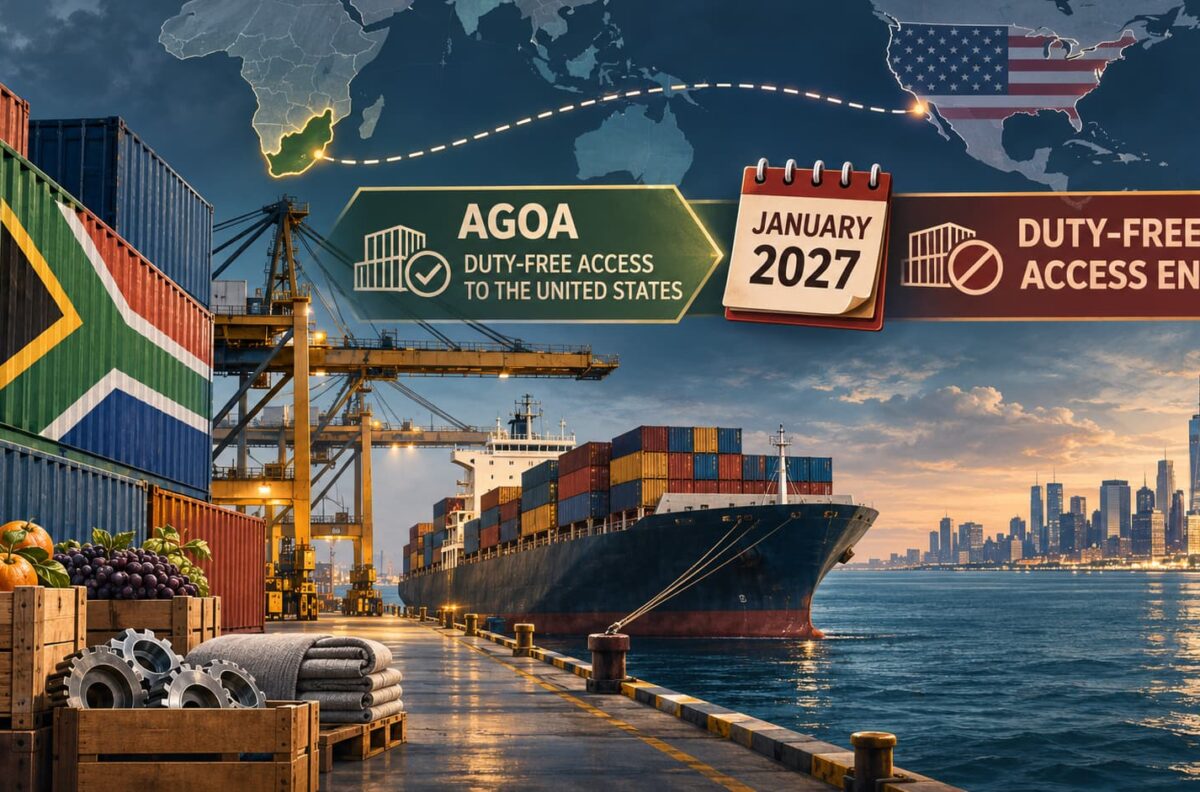
Conceptual illustration: South African exports move towards the US market under AGOA, whose tariff preference is due to end on 1 January 2027.
Washington plans to end South Africa’s duty-free access under AGOA from 1 January 2027. Here is what the move means for exporters, workers and the country’s wider trade with the United States.
The proposed South Africa AGOA exclusion advanced on Monday, 2 November, when President Donald Trump notified Congress and the governments of South Africa and Rwanda of his intention to terminate their participation in the African Growth and Opportunity Act from 1 January 2027, according to the USTR notice. Pretoria says it is working to protect affected sectors while pursuing a constructive relationship with Washington.
The announcement gives companies roughly two months to prepare for the end of a preference that has supported South African exports to the US for more than two decades. The practical impact will vary by product: some exporters rely on the tariff advantage more heavily than others, while existing trade rules and other US duties continue to apply.
What the South Africa AGOA exclusion changes
AGOA, first enacted in 2000, gives qualifying sub-Saharan African economies duty-free access to the US market for eligible goods, as AP explains. The USTR says its latest annual review found that South Africa and Rwanda fall short of the programme’s eligibility criteria, citing trade and investment barriers, corruption and concerns involving US national security and foreign policy.
If the intended termination takes effect on 1 January 2027, eligible South African goods will lose their AGOA tariff preference. Exporters may continue selling into the US under ordinary import rules, with applicable duties shaped by product classification and any other measures in force.
The timing follows a short extension of AGOA, which Congress renewed in February through 31 December 2026. That left the annual review to decide which countries would keep benefits after the extension ended. South Africa’s government had said it was preparing for an adverse outcome while negotiations continued.
READ ALSO: How the US Tariffs Could Affect South Africans
Which South African industries face the closest scrutiny?
South Africa’s trade department reported that AGOA exports reached nearly $1.7 billion in 2025, down from $4 billion in 2024, and represented about 1% of the country’s total exports worldwide, according to the SAnews response. The overall share appears modest, yet the effects can be concentrated in firms and regions that built production around US buyers.
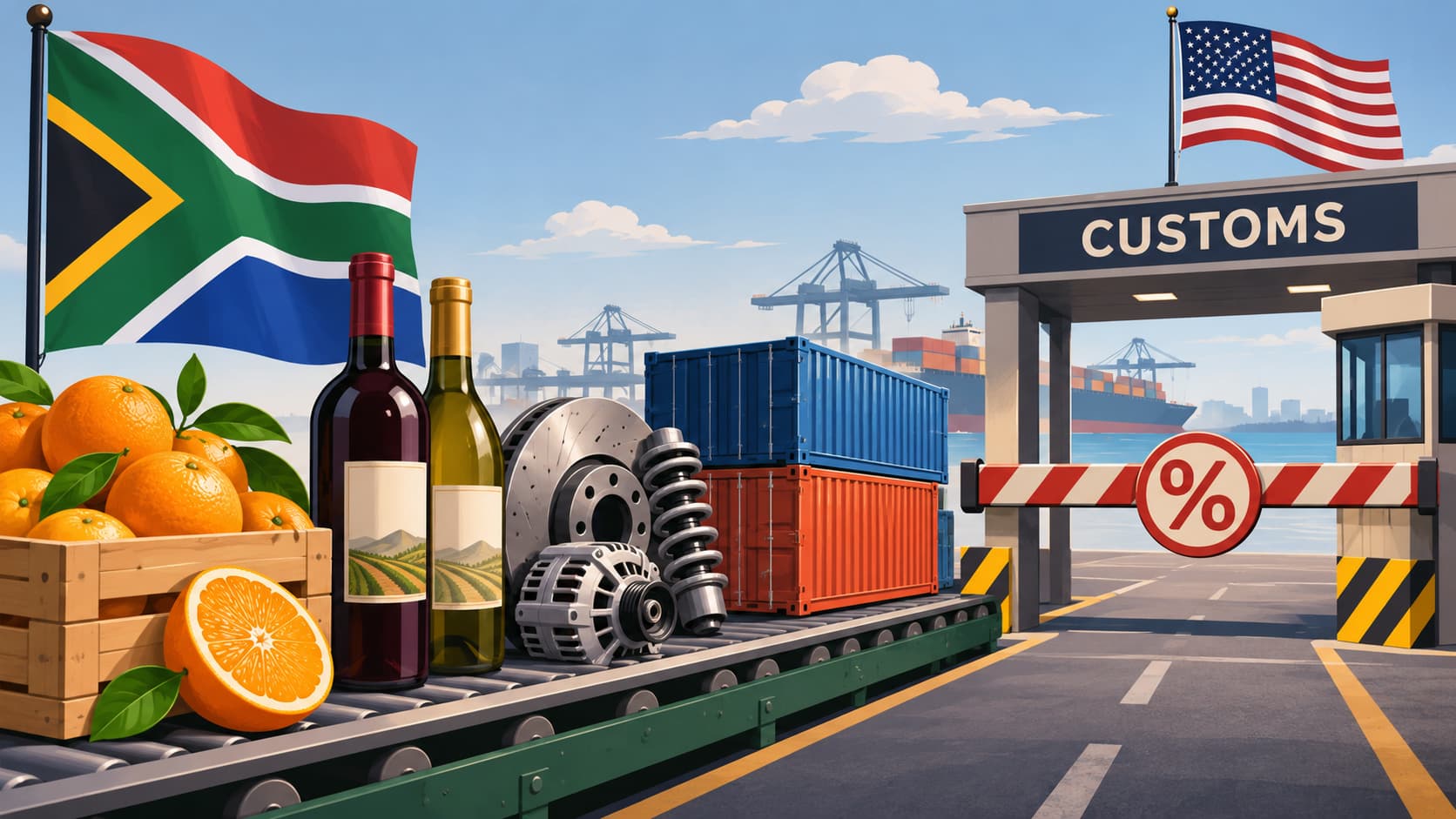
Reuters identifies motor components, fruit and wine among the products South Africa has sold to the US through AGOA. Citrus growers have warned that orchards were planted for that market and that alternative destinations can bring different standards and buyer preferences. The vehicle industry also faces exposure: industry body naamsa said the US took the largest part of a North American market that accounted for about 8% of South Africa’s automotive exports in 2025.
Business leaders cited in Bloomberg analysis put the share of South African exports to the US currently using AGOA at about 10%. They expect a limited effect on the national economy overall, alongside possible job losses and tighter margins in particular agricultural and automotive operations. That distinction matters for workers: a small national trade share can still affect specific farms, factories and supplier towns.
What should exporters and workers do next?
Exporters should review each product’s US tariff classification, the preference it currently uses, contract terms and the tariff likely to apply from 1 January. Customs brokers and trade advisers can help companies model the change by product line rather than treating every shipment as equally exposed.
South Africa’s Trade, Industry and Competition Minister Parks Tau said on 3 November that the government would focus on protecting affected sectors and keep dialogue with the US open, the government response says. His statement records the government’s focus on protecting affected sectors and continuing dialogue. Workers and suppliers can follow future announcements from the department, industry associations and employers for company-level transition plans or support measures.
US buyers and African exporters should distinguish the AGOA preference from other tariffs and import requirements. A shipment may remain commercially viable after the preference ends, though its price, margin or competitiveness could change. The strongest early planning will come from comparing product-level duty costs with buyer demand and alternative market options.
South Africa AGOA exclusion: key questions
When will South Africa leave AGOA?
The US announced an intended termination date of 1 January 2027 in its USTR statement. AGOA was extended through 31 December 2026, so exporters have the remainder of the year to plan for the change.
Can South African firms keep exporting to the US?
Yes. The announced move concerns AGOA tariff preferences; companies may continue exporting under ordinary US import rules and product-specific duties.
Which sectors could feel the change most?
Motor components, citrus and other fruit, and wine are among the sectors linked to AGOA access in reporting by Reuters and South African industry groups. The effect will depend on product tariffs, buyer contracts and each company’s ability to shift sales.
What should a South African exporter check first?
Confirm the product’s US customs code, current AGOA preference, expected duty from January 2027 and the terms agreed with buyers. Employers should also follow official guidance and sector-specific support announcements from Pretoria.