

NYSC Members’ Release: Parents Allege ₦6m Ransom, Police Say They Are Unaware

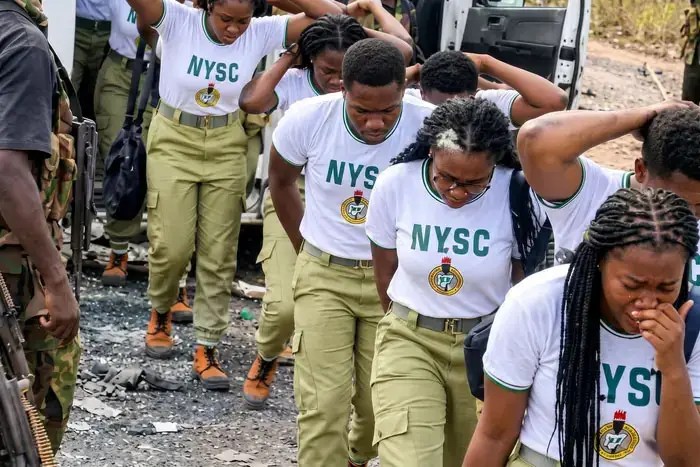
Parents of the 20 prospective National Youth Service Corps (NYSC) members recently released from kidnappers in Imo State have alleged that they paid millions of naira in ransom to secure their children’s freedom.
The claims contradict the account of the Imo State Commissioner of Police, Audu Bosso, who said he was unaware of any ransom payment. He attributed the release to pressure from security agencies during a search-and-rescue operation.
One mother said her family paid ₦6 million after the kidnappers initially demanded ₦50 million for her son. Another parent reportedly said the family paid ₦3 million.
The victims were abducted on October 1, 2026, while travelling from Ibadan, Oyo State, to their NYSC orientation camps in Abia and Akwa Ibom states. Security agencies announced their release on October 7.
Reports published by TheCable, Vanguard and The ICIR contain accounts from relatives who said they raised money and delivered it to the kidnappers.
Here is what the families said, how the police responded and what remains unclear about the release.
1. Mother says family paid ₦6 million
One of the strongest accounts came from a mother whose son was among the abducted graduates.
In an interview with News Central Television, the woman, identified in subsequent reports as Alirat Wahab, said the kidnappers initially demanded ₦50 million for her son.
She said the family pleaded with the abductors to accept a smaller amount because they could not raise the money.
According to her account, the kidnappers later demanded ₦15 million. The family said it could raise only ₦5.5 million, but the abductors insisted on ₦6 million.
The family eventually raised the amount and arranged for representatives to deliver it.
Wahab said her husband and elder son participated in the process. She also said the kidnappers instructed the representatives to send the money to an account and convert it into US dollars after reaching Imo State.
Her elder son later contacted the family to say the money had been handed over and that his brother had been released.
The account was published by TheCable and reported by The ICIR.
The reports establish that the family made the allegation publicly. However, the payment details have not been independently verified through publicly available transaction records.
2. Other parents reportedly paid millions
The allegations are not limited to one family.
A report published by Vanguard on October 9 said some parents paid about ₦3 million, while another family reportedly raised ₦6 million to secure a child’s release.
One mother said she struggled to raise ₦3 million before sending someone to deliver the money to the kidnappers.
The report also quoted a father who said his family gathered in Ibadan to raise ₦6 million. He said some contributors borrowed money to meet the demand.
The father expressed relief that his son had returned but worried about repaying the money borrowed during the ordeal.
These accounts suggest that several families may have made payments. However, the reports do not establish the total amount allegedly collected by the kidnappers.
They also do not provide a complete list of families who paid or independently verify every reported transaction.
3. Police say security agencies forced the kidnappers to release the victims
The Imo State Commissioner of Police, Audu Bosso, said he was unaware of any ransom payment for the victims’ release.
Speaking to Channels Television on October 8, Bosso attributed the outcome to sustained pressure from security agencies.
He said operatives combed the forest during the search-and-rescue operation until the kidnappers eventually released the captives.
The police had earlier said security personnel used intelligence and drone surveillance to locate the kidnappers’ camp. Their efforts were reportedly complicated by suspected improvised explosive devices at the location.
The eventual operation involved security agencies, including the police, military and Department of State Services.
The Nigeria Police Force announced that the victims were released on October 7 at Amakohia-Ubi in Imo State. It said they were taken for medical assessment and care.
Bosso’s statement, however, was that he was not aware of ransom being paid. It does not, on its own, establish that no payment occurred outside the police operation or without the command’s knowledge.
The families’ accounts and the police explanation therefore remain in conflict.
4. Kidnappers initially demanded ₦1 billion
The ransom allegations emerged after reports that the kidnappers had demanded ₦50 million for each of the 20 prospective corps members.
That demand amounted to ₦1 billion for the group.
On October 3, parents disclosed the demand while seeking help from the Olubadan of Ibadanland, Oba Rashidi Ladoja.
The families appealed for intervention as they struggled to meet the demands and feared for their children’s safety.
Subsequent reports said the kidnappers reduced their demands during negotiations. The mother’s account suggests that the amount demanded for her son eventually fell to ₦6 million.
However, the initial demand should not be confused with the amount eventually paid. The available reports do not establish how much the kidnappers collected in total.
The families’ accounts also do not show that every parent paid the same amount.
The earlier ransom demands provide important context for understanding the pressure the families faced during the six days their relatives were held captive.
5. What remains unclear about the NYSC members’ release?
The conflicting accounts raise several questions about how the prospective corps members regained their freedom.
First, the timing of the reported payments needs to be established against the security operation. The mother who said her family paid ₦6 million linked the delivery of the money to her son’s release.
Second, it remains unclear how many families paid ransom and how much the kidnappers allegedly collected. Reports contain accounts from several relatives, but there is no independently verified total.
Third, the public statements do not establish whether security agencies knew about the families’ negotiations. Bosso said he was unaware of ransom payments, while a separate account reported by Vanguard alleged that the DSS knew about the process.
That allegation has not been independently established in the reports reviewed.
The police and other security agencies should clarify whether their investigation has examined the families’ claims. Such clarification could help establish whether ransom payments occurred alongside the rescue operation or whether other circumstances contributed to the release.
For now, the distinction between the two accounts remains important. The families say they paid to secure their children’s freedom, while the police attribute the release to sustained pressure on the kidnappers.
The prospective corps members have regained their freedom, but the conflicting explanations leave questions about the circumstances of their release unanswered.