

Why states leave ₦264bn unspent as schools struggle

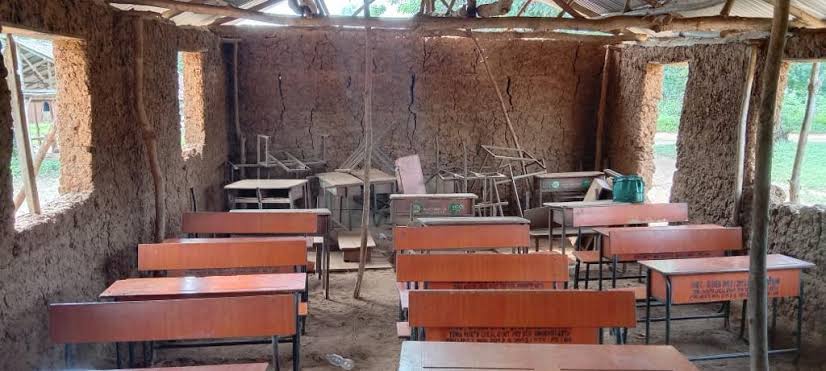
While pupils learn in overcrowded classrooms and schools struggle with poor facilities, state governments have billions of naira in basic education funds they have yet to spend. Why is the money not improving the schools that need it?
Nigeria’s public schools face several challenges, from damaged classrooms to inadequate furniture and learning materials. Yet, ₦264.12 billion in basic education matching grants remained unspent across the country, according to a report by the Universal Basic Education Commission (UBEC).
The report, published by PUNCH, followed UBEC’s financial monitoring visits in July 2025. It found that the funds had been released to State Universal Basic Education Boards but remained unspent in state government accounts.
The situation raises an important question. If the money is available to improve basic education, why are schools still struggling?
Which states have the most unspent funds?
Benue had the highest unspent balance, at ₦19.18 billion. Imo followed with ₦14.12 billion, while Osun had ₦14.02 billion.
Kwara recorded ₦13.99 billion, and Delta had ₦13.40 billion.
Together, the five states accounted for ₦74.72 billion of the total reported balance.
However, these figures do not explain why the money remains unspent. They also do not show how much each state has spent since the monitoring visits.
Understanding the reasons behind the balances is therefore important.
Why are the funds still unspent?
UBEC has raised concerns about delays in spending the grants, procurement problems and failure to comply with financial guidelines.
These problems can slow down school projects, even when funding is available.
The funding arrangement also places responsibilities on state governments. Under the matching-grant system, states must provide their share of project costs before they can access the corresponding federal funds.
Osun’s experience illustrates one challenge. The state’s Commissioner for Education, Dipo Eluwole, said the government had cleared outstanding counterpart-funding obligations covering five years but faced difficulties raising additional funds.
He attributed the problem to financial constraints and competing government commitments.
However, this explanation concerns access to fresh grants. It does not fully explain why funds already released to state education boards remained unspent.
That question requires more detailed answers from the affected states. Their governments need to explain which projects have stalled, what caused the delays and when the money will be used.
What does this mean for public schools?
UBEC grants support projects such as classroom construction, building renovation, furniture provision and the purchase of learning materials.
When governments delay spending these funds, planned projects may also face delays.
For pupils learning in overcrowded classrooms or schools with inadequate facilities, this is a serious concern. Money intended to improve their learning environment has limited value if approved projects are not completed.
However, the report does not establish that every school facing poor conditions was due to receive funding from the unspent balances. Nor does it show how many classrooms could have been improved with the money.
These details matter because the scale of the problem differs across states and schools.
Who should explain the delays?
State governments and their education boards need to account for the unspent balances.
They should identify the projects awaiting implementation, explain why the money has not been used and provide timelines for completing the work.
The figures alone do not prove that the money was stolen or diverted. Some delays may involve procurement, funding constraints or administrative requirements. Each state’s circumstances need to be examined separately.
Still, the central concern remains: why do billions of naira intended to improve basic education remain unspent while public schools continue to struggle?
For parents and pupils, the answer matters because education funding should produce visible improvements in classrooms, furniture and learning resources.
Until state governments explain the delays and show how they intend to use the money, the gap between available funds and the needs of public schools will remain a concern.