
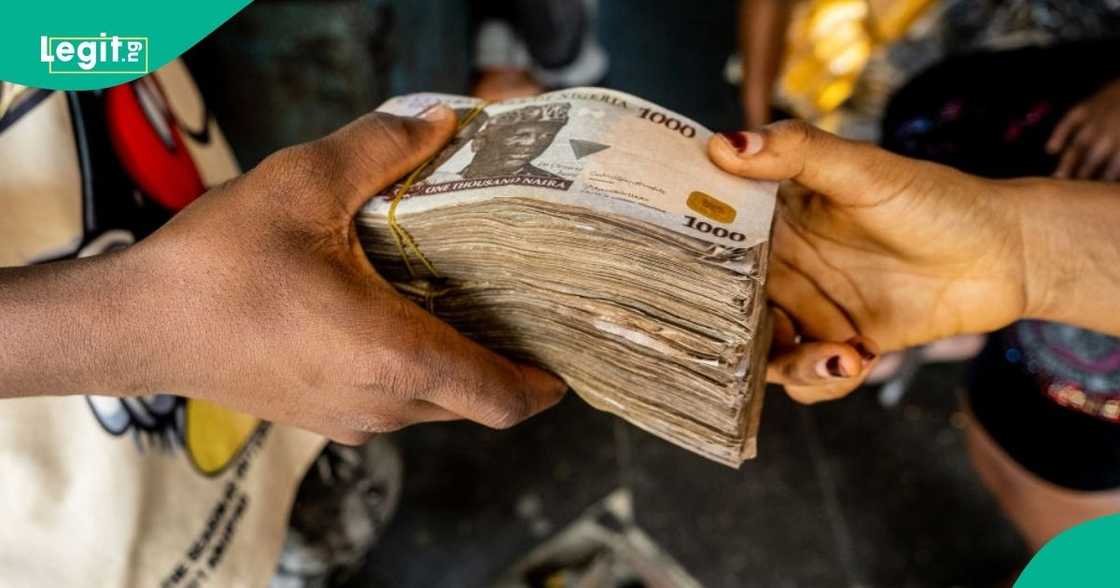
The Federal Government’s ₦100,000 NFSP and ₦50,000 NERSI cash-transfer programmes have attracted interest among Nigerians seeking financial assistance amid rising living costs.
Both initiatives are designed to support poor and vulnerable households, but they differ in their administration, eligibility requirements, registration procedures and payment arrangements.
The Nigeria Family Strengthening and Development Programme (NFSP) operates through the Hope for Indigenous Family Support Initiative under the Federal Ministry of Youth Development.
Meanwhile, the National Emergency Relief and Stabilisation Intervention (NERSI) is coordinated by the Federal Ministry of Humanitarian Affairs and Poverty Reduction.
Although both programmes use social protection records and identity verification to identify beneficiaries, Nigerians should understand their separate requirements before expecting payment.
Here are seven major differences between the two interventions.
1. Grant amount: ₦100,000 versus ₦50,000
The most obvious difference is the amount beneficiaries receive.
Under NFSP, each selected beneficiary is offered ₦100,000 as a non-repayable grant.
The programme’s website also describes the support as monthly, although it does not establish a guaranteed number of payments for each beneficiary.
NERSI, on the other hand, provides ₦50,000 to selected beneficiaries.
The Federal Ministry of Humanitarian Affairs and Poverty Reduction’s October 30 announcement described NERSI as monthly assistance, while its subsequent FAQ confirms the ₦50,000 payment without specifying a fixed duration.
This means NFSP offers twice the amount of NERSI per advertised payment.
However, beneficiaries should not assume either programme guarantees a particular annual total.
2. Different ministries coordinate the programmes
NFSP is described as operating through the Hope for Indigenous Family Support Initiative under the Federal Ministry of Youth Development.
Its stated objectives include strengthening household resilience and providing financial assistance to Nigerians affected by economic hardship.
NERSI is administered by the Federal Ministry of Humanitarian Affairs and Poverty Reduction.
The ministry describes it as an emergency relief and stabilisation intervention intended to help vulnerable households meet immediate needs.
Although both initiatives address economic hardship, they operate under different administrative arrangements.
3. NFSP accepts online applications, while NERSI does not
This is one of the most important differences for Nigerians interested in the grants.
The NFSP website provides an online registration process.
Applicants are instructed to create an account, provide personal details, enter their NIN, complete family and employment information, and upload relevant documents.
The published registration address is nfsp.ng/signup.
NERSI operates differently.
According to the official NERSI FAQ, there is no public application or registration process.
Beneficiaries are identified through the National Social Register and verified national identity records.
The ministry warns that no agent or individual can add someone to the beneficiary list.
Therefore, Nigerians should not confuse NFSP registration with NERSI selection.
4. NFSP specifies an age requirement
The NFSP website states that applicants must be between 18 and 65 years old at registration.
It also requires Nigerian citizenship by birth and a valid National Identification Number.
These are among the programme’s published general eligibility conditions.
NERSI’s FAQ focuses on selection from the National Social Register and verified identity records, based on poverty and vulnerability.
It does not specify a universal 18-to-65 age requirement in the reviewed guidelines.
However, the absence of a published age limit does not mean every Nigerian automatically qualifies for NERSI.
Selection still depends on the programme’s criteria.
5. Both use social protection records, but selection differs
The two programmes share some similarities in beneficiary identification.
NFSP says it uses social safety net systems, verified national identity records and relevant family and employment information.
Beneficiaries are assessed using poverty and vulnerability criteria and selected in phases across the six geopolitical zones.
NERSI also relies on the National Social Register and verified identity records.
However, NERSI does not require individuals to submit new public applications.
Both programmes cover a limited number of beneficiaries during their respective phases.
This means meeting preliminary conditions does not automatically guarantee payment under either initiative.
6. NFSP pays bank accounts, while NERSI uses mobile wallets
The payment arrangements also differ.
According to NFSP’s published guidelines, selected beneficiaries receive SMS notifications from designated payment providers.
They must provide the required consent before the ₦100,000 is credited to their submitted bank accounts.
NERSI also requires consent, but its ₦50,000 payment is delivered through mobile wallets.
The five approved NERSI payment providers are:
- ALAT by Wema Bank
- MoMo Payment Service Bank
- NairaGram
- OPay
- Moniepoint
NERSI beneficiaries can use designated USSD codes to access their wallets.
The ministry says the service can work without a smartphone or internet connection.
The publicly reviewed NFSP FAQ does not provide an equivalent complete list of payment providers or a universal USSD code.
7. Both grants are non-repayable, but support channels differ
Another important similarity is that both payments are described as grants rather than loans.
NFSP says selected beneficiaries receive ₦100,000 without a repayment obligation.
NERSI also confirms that its ₦50,000 support does not have to be repaid.
Both programmes warn Nigerians against paying agents who promise guaranteed selection or faster payment.
However, their published support contacts differ.
NFSP lists [email protected] for enquiries.
NERSI provides the official helpline 0700-022-2222.
Beneficiaries should use the appropriate channel for the programme concerned.
NFSP vs NERSI: Key differences at a glance
| Feature | NFSP | NERSI |
|---|---|---|
| Grant amount | ₦100,000 | ₦50,000 |
| Coordinating ministry | Youth Development | Humanitarian Affairs and Poverty Reduction |
| Public application | Online registration | No public application |
| Registration portal | nfsp.ng/signup | Not applicable |
| Published age requirement | 18–65 years | No universal age range specified in FAQ |
| Selection | Social safety net systems, identity and vulnerability checks | National Social Register, identity and vulnerability checks |
| Payment destination | Submitted bank account | Mobile wallet |
| Notification | SMS from designated provider | SMS from five approved providers |
| Repayment | Not required | Not required |
| Support | [email protected] | 0700-022-2222 |
Which programme can Nigerians apply for?
The answer depends on the registration arrangements.
NFSP provides an online application process for interested Nigerians who meet its stated requirements.
NERSI does not accept public applications.
Instead, beneficiaries are selected from existing records and contacted by approved financial service providers.
Therefore, a Nigerian interested in both interventions should not assume the same application procedure applies.
Can Nigerians benefit from both programmes?
The published guidelines do not expressly state that receiving one grant automatically disqualifies someone from the other.
However, they also do not guarantee simultaneous payment.
A person who independently receives ₦100,000 from NFSP and ₦50,000 from NERSI would receive a combined ₦150,000.
That calculation does not establish an entitlement to both grants.
The ministries would need to clarify any rules governing overlapping beneficiaries.
What Nigerians should remember
NFSP and NERSI share the objective of supporting vulnerable households, but their administrative and payment arrangements differ.
The most important practical distinction is that NFSP provides online registration, while NERSI selects beneficiaries without a public application.
Nigerians should follow the specific instructions for each programme, avoid paying agents and verify payment notifications before disclosing financial information.