
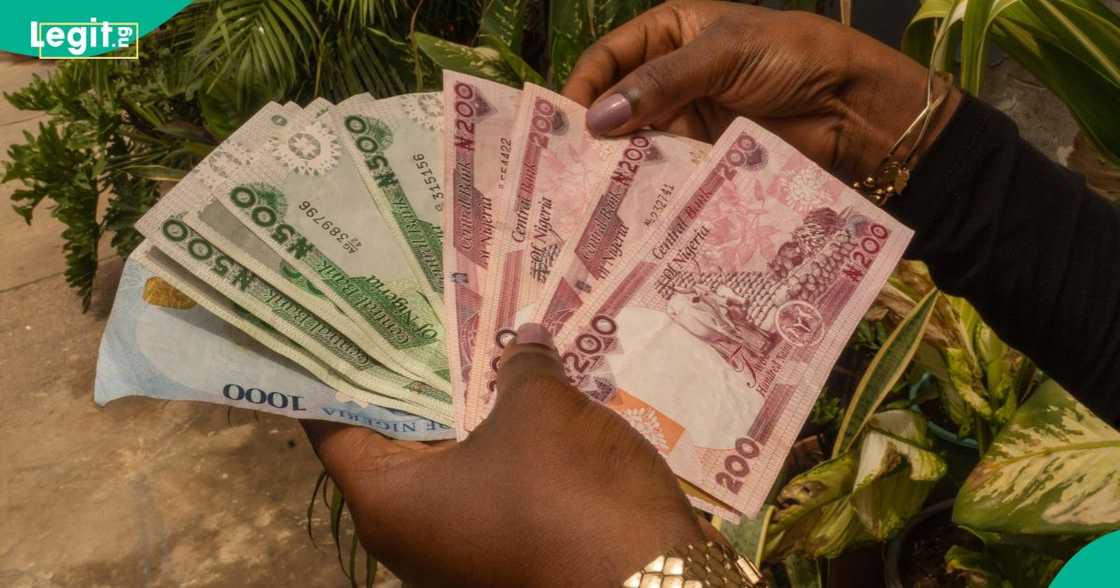
Nigerians selected for the Federal Government’s ₦50,000 relief grant are not required to withdraw the entire amount in cash after receiving payment.
The Federal Ministry of Humanitarian Affairs and Poverty Reduction has explained that beneficiaries of the National Emergency Relief and Stabilisation Intervention (NERSI) can spend money directly from their mobile wallets or transfer it to bank accounts.
The clarification provides alternatives for beneficiaries who may not want to withdraw their entire grant through POS agents.
According to the official NERSI FAQ, recipients can withdraw all or part of their money, retain the remaining balance in their wallets or transfer funds to another account.
How does the NERSI mobile wallet work?
Selected beneficiaries receive notifications from approved payment providers.
After giving consent, a mobile wallet linked to the beneficiary’s registered phone number and National Identification Number is opened.
The government then credits the ₦50,000 support to the wallet.
The recipient receives a confirmation SMS and can access the money through the provider’s available services.
These may include USSD transactions, mobile applications or authorised agent networks.
The wallet therefore serves as both a receiving account and a channel for subsequent transactions.
Must beneficiaries withdraw the full ₦50,000?
No.
The government expressly states that beneficiaries can withdraw only part of the grant.
For example, someone who receives ₦50,000 may decide to withdraw ₦20,000 and leave the remaining ₦30,000 in the wallet.
Another beneficiary may choose to retain the entire balance temporarily.
The programme does not require recipients to collect all the money from a POS agent immediately after payment.
However, beneficiaries should familiarise themselves with their providers’ transaction limits and applicable charges.
Can beneficiaries transfer money to their bank accounts?
Yes.
The official FAQ confirms that beneficiaries may transfer money from their wallets to bank accounts.
This includes transferring funds to their own accounts or to another person’s account.
The procedure depends on the payment provider.
For example, ALAT beneficiaries can use the designated USSD transfer arrangement, while OPay and Moniepoint users may access transfer services through their official USSD menus or applications.
Beneficiaries should verify destination account details before authorising transactions.
Can the grant be used for purchases?
The government says beneficiaries may spend money directly from their wallets.
This means the support does not have to be converted into physical cash before it can be used.
Where a merchant accepts a transfer from the relevant wallet, the beneficiary may pay electronically.
For example, a recipient buying household supplies from a trader who accepts bank transfers may be able to pay through the provider’s transfer service.
However, the merchant must support the payment method.
The official FAQ does not establish that every shop or service provider can accept payments from all five NERSI wallets.
Are beneficiaries required to spend the money on specific items?
The public FAQ describes NERSI as assistance intended to help vulnerable households cope with living costs.
It does not publish a detailed list of compulsory purchases.
It also does not state that beneficiaries must spend the entire grant within a fixed number of days.
However, the programme’s purpose is to provide relief to households facing economic difficulties.
Recipients should distinguish this purpose from claims that the government requires them to buy particular products from designated sellers.
Such claims are not established by the published guidance.
What about transaction charges?
NERSI says the full ₦50,000 grant is credited without deductions.
Accepting and receiving the support are free.
However, the government acknowledges that POS agents may charge their normal withdrawal fees.
Other ordinary transaction charges may depend on the provider and service used.
Beneficiaries should therefore check any applicable fee before authorising a transaction.
They should not confuse normal service charges with fraudulent demands for a NERSI registration or release fee.
Can beneficiaries leave money in their wallets?
Yes.
The official FAQ says any amount not withdrawn remains in the beneficiary’s wallet.
This means recipients can access their funds in stages rather than withdrawing everything immediately.
However, beneficiaries should keep their phone numbers and security credentials safe.
They should never share their PINs or OTPs with people offering to help manage the grant.
For payment difficulties, the government advises contacting the designated provider.
The main point is that NERSI beneficiaries can retain, transfer or spend their grants electronically without withdrawing the entire ₦50,000 in cash.