
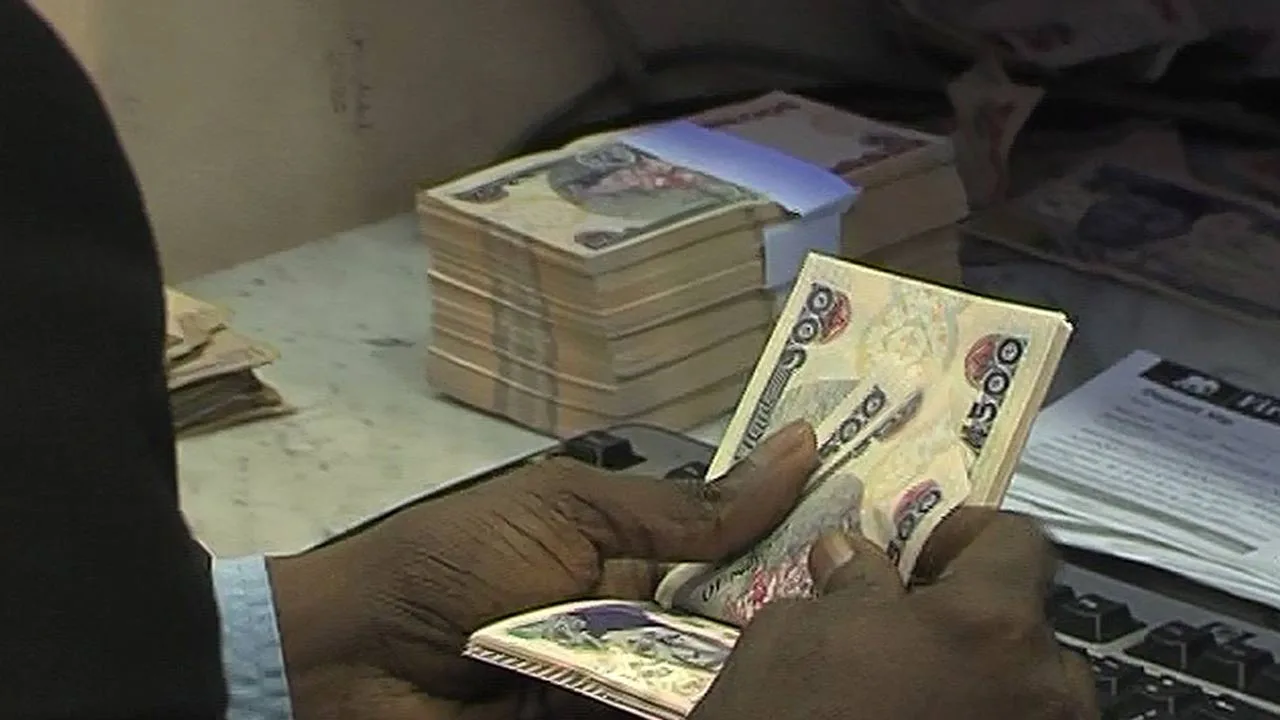
The Federal Government’s ₦50,000 relief grant is intended to help vulnerable Nigerian households cope with rising living costs.
But once the money enters a beneficiary’s mobile wallet, an important question arises: must it be spent on food and other immediate household needs, or can recipients use it for business, school fees and existing debts?
The distinction matters because Nigerians face different financial pressures.
One household may urgently need food, while another may consider using part of the money to restart a small business.
The Federal Ministry of Humanitarian Affairs and Poverty Reduction has explained how the grant is delivered, but its public guidance does not prescribe a detailed spending plan for beneficiaries.
What is the ₦50,000 grant meant for?
According to the official NERSI programme page, the National Emergency Relief and Stabilisation Intervention is designed to help poor and vulnerable households manage living costs.
The programme provides ₦50,000 directly to selected beneficiaries through mobile wallets.
The money is a grant rather than a loan.
Consequently, recipients are not required to repay it to the Federal Government.
The programme’s central objective is immediate household relief, not necessarily the financing of commercial activities.
Does the government restrict how beneficiaries spend the money?
The published NERSI FAQ does not provide an exhaustive list of approved and prohibited purchases.
It explains that beneficiaries can withdraw the money, transfer it to bank accounts or spend directly from their wallets.
However, it does not state that every beneficiary must spend a fixed percentage on food, transport, healthcare or another category.
This does not establish that there are no legal restrictions of any kind. It means the public guidance does not specify detailed expenditure conditions.
Beneficiaries should follow any additional official terms communicated through authorised channels.
Can someone use the ₦50,000 to start a small business?
The public NERSI guidance does not expressly prohibit business-related expenditure.
For example, a beneficiary who sells food may consider using part of the grant to purchase additional ingredients.
Another may consider buying small quantities of goods for resale.
However, NERSI is not presented as a dedicated business-financing programme.
Unlike FarmerMoni or TraderMoni, it is designed primarily to provide relief to vulnerable households.
A recipient considering business investment should therefore weigh potential income against immediate household needs.
Is investing the entire ₦50,000 advisable?
That depends on the person’s circumstances.
A household without sufficient food or essential medication may face serious difficulties if the entire grant is invested in an uncertain business venture.
Consider a hypothetical beneficiary who uses ₦40,000 to purchase trading stock and keeps ₦10,000 for household expenses.
If the stock sells profitably, the investment could generate additional income.
However, if sales are slow or goods are damaged, the household may struggle to recover the money.
The example illustrates why grant recipients should consider both immediate needs and financial risk.
Can beneficiaries pay school fees or medical bills?
The ministry’s public FAQ does not specifically prohibit these uses.
School fees, healthcare and other household obligations can represent significant financial pressures.
However, beneficiaries should not interpret the absence of detailed spending restrictions as an official guarantee that every possible expenditure is permitted.
The purpose of the programme remains support for vulnerable households.
What about paying outstanding debts?
Some beneficiaries may wish to use the grant to settle urgent financial obligations.
For example, a household might owe money to a food supplier, landlord or relative.
The public NERSI guidance does not establish a specific prohibition on debt repayment.
However, recipients should consider whether using the entire amount to repay debts would leave them unable to meet immediate necessities.
The best decision depends on the urgency of the debt, the household’s available income and its essential expenses.
Can the government demand repayment if the money is spent differently?
The ministry explicitly describes the ₦50,000 as a grant that does not require repayment.
Its public FAQ does not announce a general recovery policy based on ordinary household spending decisions.
However, this should not be interpreted as permission to obtain funds fraudulently or violate applicable laws.
The distinction is between legitimate spending choices and misconduct in obtaining or handling the grant.
How can beneficiaries make the money more useful?
One practical approach is to identify the household’s most urgent needs before spending.
A beneficiary might prioritise food, medication, essential transport and other unavoidable expenses.
Where some money remains, the household could consider savings or a modest income-generating activity.
There is no single allocation that will work for every family.
The bigger picture
The usefulness of NERSI depends partly on whether beneficiaries can respond to their own circumstances.
A fixed spending formula may not reflect the different pressures facing Nigerian households.
However, the ministry could improve public understanding by clarifying whether any restrictions apply to the use of the grant.
The government’s published NERSI guidance does not specify a detailed spending restriction covering business investment, school fees or debt repayment. Beneficiaries should prioritise essential needs and avoid treating the ₦50,000 as risk-free investment capital.