

U.S. Soldier arrested in $400K Nicolás Maduro capture betting scandal

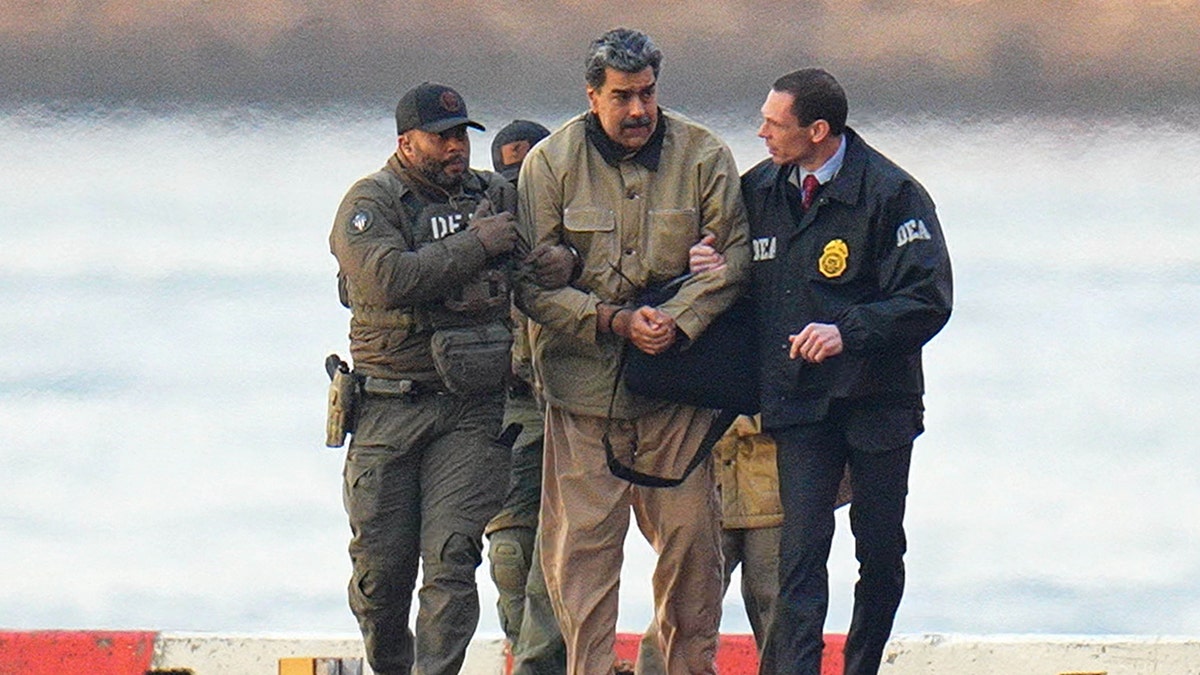
Nicolás Maduro is seen in handcuffs after landing at a Manhattan helipad, escorted by heavily armed federal agents as they make their way into an armored car en route to a federal courthouse in Manhattan on Jan. 5, 2026 in New York City. Image Credit: XNY/Star Max/GC Images/Getty Images
A major international controversy has erupted following the dramatic capture of Venezuelan leader Nicolás Maduro, as U.S. authorities charge a special forces soldier with profiting from classified intelligence tied to the covert mission.
The case has intensified scrutiny on both the operation itself and the growing influence of prediction markets, after prosecutors alleged that sensitive military information was exploited for financial gain.
U.S. Soldier Accused of Profiting From Classified Maduro Operation
According to federal prosecutors, Master Sgt. Gannon Ken Van Dyke, a U.S. Army Special Forces communications specialist, used confidential intelligence to place strategic bets ahead of Maduro’s capture.
The indictment alleges that Van Dyke wagered approximately $34,000 on a prediction platform, Polymarket, betting that Maduro would be removed from power before January 2026.
Following the successful execution of the operation, he reportedly earned over $400,000 in profit, making the case one of the most high-profile examples of alleged insider trading linked to national security.
Inside the Maduro Capture Operation
The covert mission, reportedly involving elite U.S. forces, culminated in the capture and transfer of Nicolás Maduro to New York, where he now faces federal drug-related charges. Maduro has pleaded not guilty.
Van Dyke is said to have been directly involved in planning and executing the operation, granting him access to highly sensitive, non-public information. Authorities claim this access enabled him to place well-timed bets that aligned with the mission’s outcome.
The timeline outlined by investigators shows that the soldier made multiple trades between late December 2025 and early January 2026, just days before the operation was publicly announced.
Criminal Charges and Legal Risks
Van Dyke now faces multiple federal charges, including:
- Unlawful use of classified government information
- Wire fraud and commodities fraud
- Theft of nonpublic information
- Illegal financial transactions
If convicted, he could face decades in prison, reflecting the seriousness of exploiting national security intelligence for personal profit.
U.S. Attorney officials described the alleged actions as a clear breach of trust, emphasising that individuals entrusted with sensitive information must not use it for financial gain.
Attempts to Conceal Identity Raise Red Flags
Investigators say Van Dyke took deliberate steps to hide his involvement, including:
- Using cryptocurrency transactions to obscure financial trails
- Transferring profits to a foreign crypto vault
- Requesting deletion of his trading account
- Changing identifying information linked to his accounts
These actions reportedly triggered suspicion and led to a broader investigation into unusual trading activity surrounding the Maduro operation.
READ ALSO
Who is Barry Pollack? Meet the Power Lawyer defending Nicolás Maduro after his U.S. capture
Growing Concerns Over Prediction Markets and Insider Trading
The case has reignited debate about the role of platforms like Polymarket, where users can bet on real-world events, including geopolitical developments.
Regulators and lawmakers in Washington are increasingly concerned that such platforms could be used to monetize insider information, particularly in sensitive areas like military operations and international conflicts.
Recent reports indicate that billions of dollars are now traded weekly on prediction markets, with calls growing for stricter oversight and regulation.
Political and Global Reactions
U.S. President Donald Trump acknowledged the case, comparing it to athletes betting on their own teams, highlighting concerns about conflicts of interest and ethical violations.
Meanwhile, the incident has drawn international attention, as it intersects with broader geopolitical tensions involving Venezuela and global security dynamics.
Experts warn that the scandal could undermine confidence in intelligence operations and raise new questions about information security within military institutions.
What This Means for Global Security and Financial Markets
The Maduro capture case now stands at the intersection of national security, financial markets, and emerging technology.
Key implications include:
- Increased scrutiny of military information leaks
- Potential regulation of prediction markets
- Stronger enforcement against insider trading involving geopolitical events
- Heightened awareness of cybersecurity risks in financial platforms
As investigations continue, the case is expected to shape future policies on how sensitive information is handled, and how emerging financial systems are regulated.
FAQ
Why was Nicolás Maduro captured?
Nicolás Maduro was captured as part of a U.S. operation and transported to New York, where he faces federal drug-related charges. He has pleaded not guilty.
Who is the U.S. soldier involved in the scandal?
Master Sgt. Gannon Ken Van Dyke, a U.S. Special Forces member, is accused of using classified information from the operation to place profitable bets.
How much money did the soldier make?
Prosecutors allege he made over $400,000 in profit through prediction market bets.
What is Polymarket?
Polymarket is a prediction market platform where users bet on the outcomes of real-world events, including politics and global affairs.
Is insider trading illegal in this case?
Yes. Using classified or nonpublic government information for financial gain is illegal under U.S. law and carries severe penalties.
What charges does the soldier face?
He faces multiple charges, including fraud, theft of confidential information, and unlawful financial transactions.
Why are prediction markets controversial?
They raise concerns about insider trading, misinformation, and ethical risks, especially when users bet on sensitive geopolitical events.
What could happen next in the case?
If convicted, the accused could face decades in prison, while regulators may introduce stricter controls on prediction market platforms.