

Lagos Waste Crisis: What Hassan Sanuth Must Fix as New LAWMA Boss

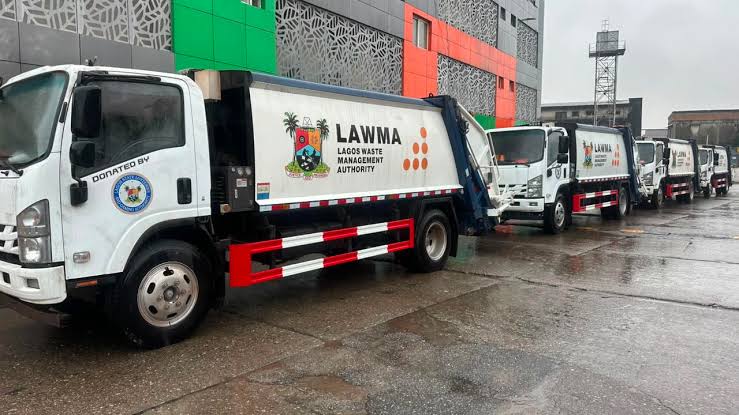
Sanwo-Olu has appointed Dr Hassan Sanuth as the new managing director of the Lagos Waste Management Authority (LAWMA), following growing concerns over refuse accumulation across the state.
Sanuth’s appointment comes after reports that the governor asked the outgoing managing director, Dr Muyiwa Gbadegesin, to resign over the slow pace of waste evacuation.
The leadership change comes as residents in several parts of Lagos continue to complain about heaps of refuse on roads, residential streets and drainage channels.
Sanuth now faces the challenge of improving waste collection and ensuring that the government’s interventions produce lasting results.
Here are five major issues awaiting the new LAWMA boss.
1. Clearing refuse from affected communities
One of Sanuth’s immediate challenges is tackling the accumulation of refuse across Lagos.
Communities in Mushin, Egbeda, Surulere, Ajegunle, Ikorodu, Ojo, Obalende, Apapa and Mile 2 have experienced waste collection problems.
The accumulation has left residents dealing with decomposing refuse along streets, road medians and drainage channels.
Although LAWMA has carried out clearance operations in some locations, removing existing waste is only part of the challenge. The agency must also ensure that refuse does not accumulate again after the initial clean-up.
For Sanuth, improving the consistency of waste collection will be essential to restoring public confidence in the agency.
2. Fixing problems with private waste operators
Lagos relies on Private Sector Participation (PSP) operators to collect household waste across many communities.
However, Sanwo-Olu previously attributed part of the state’s waste management problems to PSP operators who failed to meet their obligations.
The governor has also ordered changes to improve LAWMA’s operations following an inspection of the Olusosun dumpsite in Ojota.
Sanuth will need to ensure that waste operators meet their collection schedules and provide reliable services to residents.
Where operators fail to deliver, LAWMA will need effective monitoring and enforcement measures. The agency must also address service gaps in areas where existing arrangements are not working.
Without a more reliable collection system, clearance exercises may offer only temporary relief.
3. Improving operations at major dumpsites
The condition of Lagos’ major dumpsites is another challenge facing the new managing director.
During his visit to the Olusosun dumpsite, Sanwo-Olu expressed dissatisfaction with the waste management situation and ordered immediate action.
The governor also identified operational difficulties at the Olusosun and Solous 3 dumpsites, including delays linked to fire incidents and ongoing compaction work.
According to the governor, completing the compaction projects would enable each dumpsite to receive about 450 trucks of municipal waste daily.
Improving the capacity and efficiency of these facilities will be important for waste evacuation across the state.
Sanuth will need to work with relevant contractors and government agencies to ensure that disposal operations can accommodate the volume of waste collected daily.
4. Preventing refuse from returning after clearance
Clearing a street does not necessarily solve the problem if waste collection does not continue.
This is one of the central issues Sanuth must address as he takes charge of LAWMA.
In a recent operational update, Gbadegesin reported that Mile 2 had been cleared and routine collection sustained. He also announced additional trucks for Doyin-Orile and continued collection in other locations.
The update highlighted the need to move beyond emergency clearance to regular waste collection.
Sanuth will need a system that tracks collection schedules, identifies underserved communities and responds quickly when refuse begins to accumulate.
Consistent monitoring could help LAWMA identify service failures before they become widespread problems.
5. Restoring residents’ confidence in LAWMA
The waste crisis has placed LAWMA under pressure to demonstrate that it can deliver reliable sanitation services.
For residents, the success of the leadership change will depend less on who occupies the managing director’s office and more on whether their streets remain clean.
Sanuth previously served as Director of Sanitation Services in the Lagos State Ministry of the Environment and Water Resources. He holds a PhD in Environmental Microbiology and has more than 23 years of public service experience, according to Vanguard.
His background in environmental management provides relevant experience for the role. However, the immediate test will be how effectively he applies that experience to Lagos’ waste collection and disposal challenges.
The agency will also need to communicate clearly with residents about collection schedules, service disruptions and the steps being taken to address complaints.
Ultimately, Sanuth’s performance will be judged by whether LAWMA can move from emergency clean-up operations to a dependable waste management system across Lagos.