

Trump vs. John Thune: Why Senate GOP are rallying behind their leader

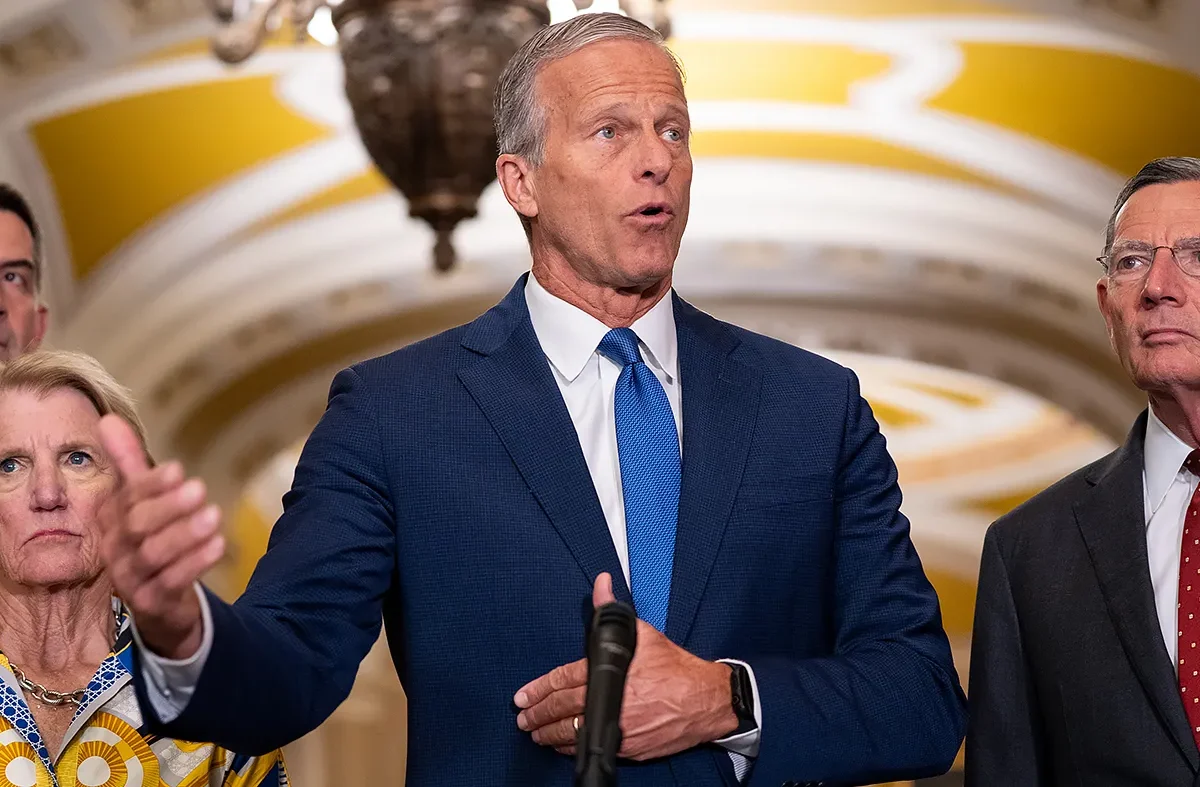
Senate Majority Leader John Thune. Image Credit: The HILL
A growing number of Senate Republicans are backing Majority Leader John Thune despite President Donald Trump withholding his support for Thune to continue leading the GOP conference after the 2026 midterm elections.
The dispute has exposed a growing divide between Trump and Senate Republicans over how aggressively the chamber should pursue the president’s legislative priorities. At the center of the disagreement is the Senate filibuster, which Thune has resisted eliminating, and the Safeguard American Voter Eligibility (SAVE) Act, which Trump has made a major priority.
While Trump has increasingly criticized Thune’s handling of his agenda, Republican senators including Jerry Moran, Rick Scott and John Kennedy have publicly defended the South Dakota Republican.
The backing could become significant if Trump eventually supports another candidate for Senate majority leader following the November elections.
Why Are Senate Republicans Supporting John Thune?
Several Republican senators have pointed to Thune’s handling of the Senate’s 60-vote threshold as a reason to keep him in leadership.
Sen. Jerry Moran of Kansas said there is substantial respect for Thune among Senate Republicans and argued that choosing the chamber’s leader should remain the prerogative of senators.
Moran acknowledged that Republicans have given Trump considerable latitude on policy matters but suggested there is a boundary when it comes to deciding who should lead the Senate.
The comments come as Trump has declined to say whether Thune remains his preferred choice for the leadership position.
Trump’s lack of endorsement follows months of disagreements between the president and the Senate majority leader over the pace and feasibility of Trump’s legislative agenda.
Trump and Thune Clash Over the Senate Filibuster
One of the biggest disagreements between Donald Trump and John Thune involves the Senate filibuster.
Trump has called for eliminating the filibuster to make it easier for Republicans to pass legislation with a simple majority. Thune, however, has repeatedly indicated that there are not enough Republican votes to make such a move.
The Senate’s current legislative framework generally requires 60 votes to overcome a filibuster on major legislation. With Republicans not united behind changing that rule, Thune has argued that eliminating the filibuster is not realistically achievable under the current circumstances.
Thune has described some of Trump’s demands as difficult, or even impossible, to accomplish given the votes available in the Senate.
That position has placed him between the White House and members of his own conference who want Trump’s priorities moved through Congress more quickly.
SAVE America Act Becomes Another Flashpoint
The SAVE America Act is another major source of tension.
Trump has pushed Republicans to advance the legislation, which would require proof of citizenship for voter registration and make significant changes to mail-in voting. The proposal has faced resistance in the Senate, where Democrats oppose it and Republicans have not demonstrated sufficient support to overcome the filibuster.
Thune has maintained that he cannot manufacture votes that do not exist.
The Senate leader said Republicans have already accomplished a substantial amount of Trump’s agenda and that some proposals were always going to face significant obstacles.
His position has frustrated Trump, who has argued that Republican lawmakers in Congress are not doing enough to deliver his priorities.
READ ALSO
Trump Pressures Senate Majority Leader John Thune to Advance SAVE America Act
Rick Scott and John Kennedy Defend Thune
Support for Thune has not been limited to moderate Republicans.
Sen. Rick Scott of Florida, who supports the SAVE America Act and has advocated eliminating the filibuster, acknowledged the difficulty of Thune’s position.
Scott said presidents can become frustrated when their priorities do not move through the Senate as quickly as they want. His comments suggested that opposition to Thune’s leadership is not necessarily widespread among Senate Republicans.
Sen. John Kennedy of Louisiana also said he was unaware of any organized effort to replace Thune.
Kennedy characterized the dispute between Trump and Thune as a disagreement over difficult issues rather than evidence that the two Republicans are fundamentally opposed to one another.
Thune Says Trump’s Lack of Endorsement Was Expected
Thune has attempted to play down Trump’s decision not to endorse him for another term as Senate Republican leader.
Speaking to The Hill, Thune said the president’s position was “probably to be expected” given their disagreements over the filibuster and the SAVE America Act.
Thune also defended the Senate GOP’s record, arguing that Republicans have delivered significant parts of Trump’s agenda.
He cited the confirmation of Attorney General Todd Blanche as one of the Senate’s accomplishments, while also noting the challenges created by the prolonged absence of Sen. Mitch McConnell.
Thune said Republicans would continue working on Trump’s priorities while recognizing that some proposals face serious political barriers.
GOP Senators Face Pressure Ahead of the 2026 Midterms
The dispute comes at a politically sensitive time for Republicans, with the 2026 midterm elections approaching.
The Hill reported that some Senate Republicans are increasingly concerned about Trump’s political standing, particularly around the economy and the cost of living.
Sen. John Kennedy said voters are frustrated and suggested that affordability is likely to be a major issue in the election.
Other Republican senators have also pushed back against White House initiatives on spending, government funding and other controversial issues, demonstrating that the Senate GOP is not always prepared to follow the administration’s preferred strategy.
That broader pattern makes the Thune dispute more significant. The disagreement is not simply about one Senate leader; it reflects the tension between Trump’s push for rapid action and senators’ concerns about maintaining their own institutional authority and protecting Republican electoral prospects.
Could John Thune Remain Senate Majority Leader?
Thune’s future as Senate majority leader will depend heavily on the outcome of the November midterms and the internal Republican leadership contest that follows.
If Republicans retain control of the Senate, senators will choose their leadership for the new Congress. The sources provided do not establish that Thune has secured another term, but they show that several influential Republicans are publicly defending him despite Trump’s refusal to endorse him.
The situation could change after the election, particularly if Trump’s political standing shifts or if Republicans gain or lose seats.
For now, John Thune continues to have significant support within the Senate GOP, even as his relationship with Trump faces growing public strain.
FAQ
Who is John Thune?
John Thune is a Republican senator from South Dakota and the Senate majority leader. The supplied reports focus on his leadership role and his disagreements with President Donald Trump over Senate procedure and legislation.
Is John Thune still Senate majority leader?
Yes. The supplied reports identify Thune as the Senate majority leader. His future in that position after the 2026 midterm elections will depend on the election results and the subsequent Republican leadership process.
Why is Donald Trump not endorsing John Thune?
Trump has declined to endorse Thune for another term as Senate Republican leader. The reports link Trump’s position to disagreements over the Senate filibuster and the SAVE America Act, as well as frustration over the pace of Trump’s legislative agenda.
Do Senate GOP support John Thune?
Several Republican senators have publicly expressed support for Thune. Jerry Moran said there was significant respect for Thune, while Rick Scott and John Kennedy also acknowledged the difficulty of his position and did not indicate support for replacing him.
What did Jerry Moran say about John Thune?
Sen. Jerry Moran said there is substantial respect for Thune and recognition of how difficult his job is. He also argued that Republican senators should have a significant say in determining their own Senate leader.
Does Rick Scott support John Thune?
Scott has been a strong supporter of the SAVE America Act and eliminating the filibuster, putting him on the opposite side of Thune on those issues. However, Scott defended Thune’s difficult position and did not indicate that he wanted him replaced.
What did John Kennedy say about John Thune?
Sen. John Kennedy said he was not aware of a movement to replace Thune. He characterized the disagreement between Trump and Thune as involving difficult issues, particularly the filibuster.
What is the Senate filibuster?
The filibuster is a Senate procedure that can be used to delay or block legislation unless supporters obtain enough votes to overcome it. The reports describe the current political battle around the traditional 60-vote threshold.
Why does Trump want to eliminate the filibuster?
Trump wants to eliminate the filibuster because doing so could make it easier for Republicans to pass legislation with a simple majority rather than needing 60 votes to overcome a filibuster.
Why doesn’t John Thune eliminate the filibuster?
Thune has said there are not enough Republican votes to eliminate the filibuster. He has also indicated that some of Trump’s legislative demands were difficult or impossible to accomplish under the existing Senate vote count.
What is the SAVE America Act?
The Safeguard American Voter Eligibility Act, commonly called the SAVE Act, is legislation backed by Trump that would require proof of citizenship for voter registration and make significant changes involving mail-in voting, according to the supplied reports.
Can John Thune be removed by Donald Trump?
The supplied reports do not indicate that Trump has the formal power to directly remove Thune as Senate majority leader. The Senate’s Republican members determine their leadership.
Who chooses the Senate majority leader?
The Senate majority party selects its own leadership. If Republicans retain control of the Senate after the 2026 elections, Republican senators will determine their leadership for the new Congress.
Could John Thune lose his leadership position after the 2026 election?
Yes, his position could change after the election. The outcome will depend on Republican control of the Senate and the internal GOP leadership contest. The supplied reports do not establish who would replace him if he does not continue.
What happens to John Thune if Republicans lose the Senate?
The supplied Daily Beast report notes that Thune could become Senate minority leader if Republicans lose control of the chamber in November. The exact leadership outcome would depend on the post-election Republican leadership process.
Why is the Trump-Thune dispute important?
The dispute highlights a broader tension between presidential demands and Senate Republican priorities. It also raises questions about the future of the filibuster, Trump’s legislative agenda and Republican strategy heading into the 2026 midterms.
Are Republicans becoming divided over Trump?
The supplied reports show several instances of Republican senators resisting or questioning White House priorities. They also describe concerns among some GOP lawmakers about Trump’s economic messaging and the political risks facing Republicans before the midterms.
What could happen to John Thune after the midterms?
Several outcomes are possible: he could remain Senate Republican leader if Republicans retain the majority and support him, face a leadership challenge, or become minority leader if Republicans lose control of the Senate. The sources do not establish which outcome will occur.
Will Trump eventually support John Thune?
That remains uncertain. The reports indicate that Trump has withheld an endorsement and that the disagreement has intensified, while one Thune ally suggested Trump’s position could change after the election. There is no confirmed decision from Trump to endorse Thune.
Why are Senate Republicans defending Thune despite Trump’s criticism?
The senators quoted in the reports appear to view Senate leadership as an institutional decision belonging to the Republican conference. Some also recognize that Thune must operate within the actual vote count in the Senate, particularly on issues requiring 60 votes.
What are the biggest issues between Trump and John Thune?
The major disputes highlighted in the supplied sources are the Senate filibuster, the SAVE America Act, the pace of Trump’s legislative agenda and the president’s frustration with congressional Republicans.
When will the next Senate Republican leadership decision happen?
The leadership decision will follow the 2026 midterm elections and depend on the composition of the Senate and the Republican conference’s internal leadership process. The supplied sources do not give a specific date for the leadership vote.