

Trump Pressures Senate Majority Leader John Thune to Advance SAVE America Act

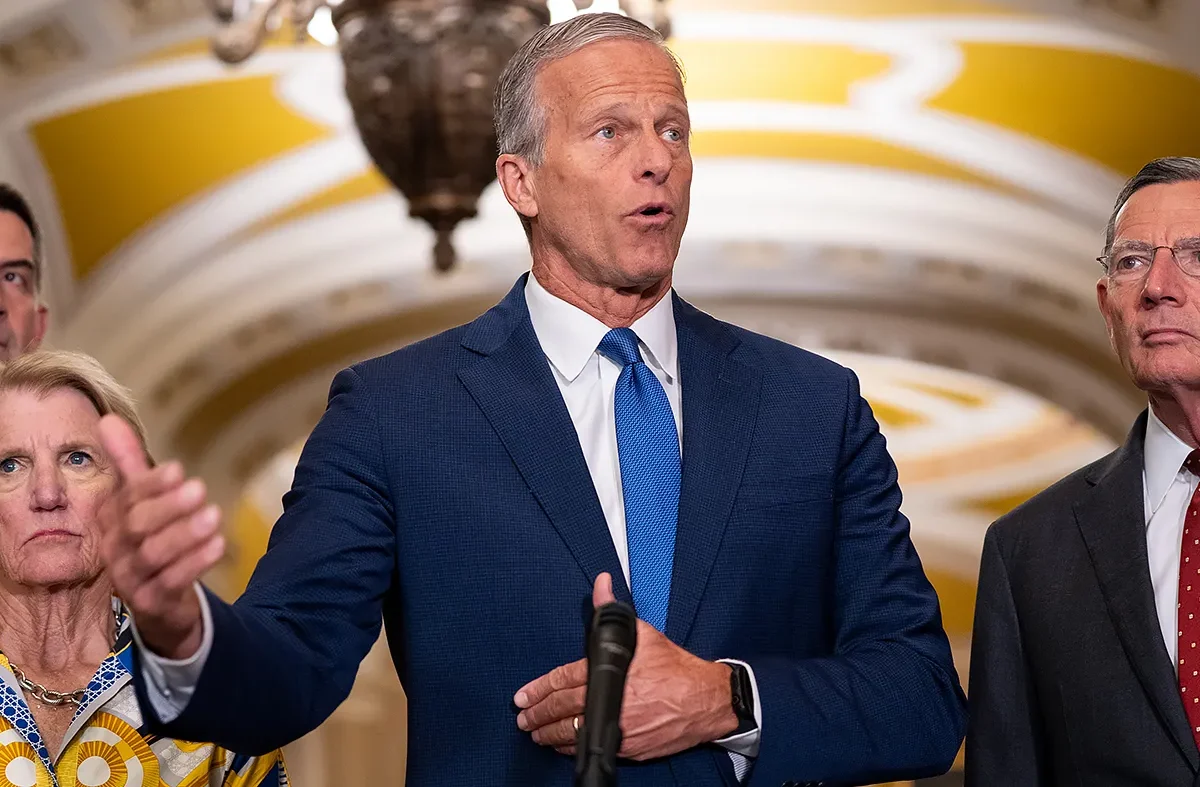
Senate Majority Leader John Thune. Image Credit: The HILL
Senate Majority Leader John Thune is confronting one of the biggest political tests of his leadership as President Donald Trump publicly demands action on the Republican-backed SAVE America Act, exposing growing tensions inside the GOP ahead of the August recess.
While Trump has repeatedly urged Senate Republicans to prioritize the election reform legislation and even eliminate the Senate filibuster, Thune has maintained that the bill currently lacks enough votes to pass. The disagreement has sparked speculation about the future of Republican leadership, even as many GOP senators continue to express confidence in Thune’s position.
The latest dispute comes as the Senate races against the clock to complete government funding legislation, confirm nominees and consider additional policy priorities before lawmakers leave Washington.
Trump Escalates Calls for Action on SAVE America Act
President Trump has sharply increased pressure on Senate Republicans, arguing that Congress should remain in session until the SAVE America Act is approved.
In a Truth Social post and several public appearances, Trump urged supporters to contact Thune directly and insisted Republicans should abolish the legislative filibuster if necessary to pass the bill with a simple majority.
The legislation includes Republican-backed election proposals such as voter identification requirements, proof of citizenship for voting, and restrictions on mail-in voting.
Trump argues the legislation is essential before the upcoming elections and has warned that Republicans risk losing momentum if it stalls.
John Thune Says Senate Votes, Not Public Pressure, Determine Success
Thune has pushed back against criticism by emphasizing a simple political reality: legislation cannot move forward without sufficient Senate support.
Responding to White House criticism, Thune remarked that supporters of the bill should help persuade lawmakers who remain undecided rather than blaming Republican leadership.
His comments reflect the practical challenge facing Senate leaders. Even with Republicans holding the majority, several GOP senators reportedly remain unconvinced, leaving the proposal short of the votes required for passage.
Without broader support, Senate leadership has prioritized legislation considered more achievable before recess.
Why the SAVE America Act Faces Major Obstacles
Although strongly backed by Trump and conservative lawmakers, the SAVE America Act confronts several procedural and political hurdles.
Most legislation in the Senate still requires 60 votes to overcome a filibuster.
Several Republican senators have indicated they do not support eliminating the filibuster, arguing that doing so would fundamentally alter Senate traditions and could eventually benefit Democrats when political control changes.
This leaves Thune balancing Trump’s demands with the realities of Senate procedure and the differing views within his own conference.
READ ALSO
Republican Senators Continue Backing Thune
Despite Trump’s increasingly public frustration, Republican insiders say Thune maintains broad support among Senate Republicans.
Political analysts and former GOP officials note that Senate leadership elections occur through private conference votes, making them different from public House leadership contests.
Several Republican lawmakers believe Thune has effectively balanced competing priorities by protecting Senate procedures while advancing legislation that has realistic prospects for approval.
Even senators who support Trump’s agenda acknowledge the mathematical challenge of passing the election bill under current conditions.
Leadership Questions Surface Ahead of the Next Congress
Although Thune is expected to seek another term as Senate Republican leader, Trump’s public criticism has fueled speculation about future leadership contests.
Some conservative lawmakers have suggested Thune’s handling of the SAVE America Act could influence next year’s internal Republican leadership elections.
Still, most observers believe his position remains secure because of strong backing within the Senate Republican Conference.
Political strategists argue that senators generally value institutional independence and are unlikely to replace a leader solely because of disagreements with the White House.
Senate Faces Packed Agenda Before August Recess
The SAVE America Act is only one item competing for limited floor time.
Senators are also working to:
- Advance a temporary government funding measure.
- Consider additional judicial and executive nominations.
- Debate legislation involving Russia sanctions.
- Continue work on cryptocurrency regulation.
- Address other bipartisan priorities before leaving Washington.
With only a handful of legislative days remaining, Thune faces difficult decisions about which bills receive floor consideration.
Trump-Thune Relationship Enters a New Political Phase
The latest dispute represents one of the most public disagreements between Trump and Thune since Republicans regained Senate control.
Unlike former Senate Majority Leader Mitch McConnell, who frequently found himself criticized by Trump during his leadership, Thune has generally maintained a lower-profile relationship with the president.
That dynamic appears to be changing as Trump’s legislative priorities encounter resistance in the Senate.
Whether the disagreement evolves into a lasting political conflict may depend largely on what happens before lawmakers leave Washington for the August recess.
For now, Thune continues to insist that Senate arithmetic—not public pressure—will ultimately determine the fate of the SAVE America Act.
FAQ
Who is John Thune?
John Thune is the Republican senator from South Dakota and currently serves as the Senate Majority Leader, responsible for managing the Senate’s legislative agenda.
Why is John Thune in the news?
Thune is making headlines after President Donald Trump publicly criticized him over the Senate’s failure to advance the Republican-backed SAVE America Act before the August recess.
What is the SAVE America Act?
The SAVE America Act is a Republican election reform proposal that includes voter identification requirements, proof of citizenship for voting, and changes to mail-in voting procedures.
Why hasn’t the SAVE America Act passed?
The legislation currently lacks enough support in the Senate. Most legislation requires 60 votes to overcome a filibuster, and Republicans do not currently have sufficient backing.
What is the Senate filibuster?
The filibuster is a Senate rule that generally requires 60 votes to advance most legislation. It allows a minority of senators to delay or block bills unless enough senators vote to end debate.
Why does Trump want to eliminate the filibuster?
Trump believes removing the filibuster would allow Republicans to pass key legislation with a simple majority instead of needing 60 votes.
Does John Thune support ending the filibuster?
There has been no indication that Thune supports eliminating the legislative filibuster. Senate Republicans broadly continue to defend the rule.
Could John Thune lose his leadership position?
While speculation has increased following Trump’s criticism, Republican senators and political analysts largely believe Thune continues to have strong support within the GOP conference.
What has John Thune said about Trump’s criticism?
Thune has argued that passing legislation depends on securing enough Senate votes and suggested supporters should persuade undecided lawmakers rather than blame Senate leadership.
What else is on the Senate’s agenda?
Before the August recess, senators are working on government funding legislation, judicial confirmations, Russia sanctions, executive nominations and other legislative priorities.
Will the SAVE America Act pass before recess?
At present, many Republican senators believe the legislation does not have the votes necessary for passage, making approval before recess uncertain.
How does this affect Trump’s agenda?
The dispute highlights the challenges of advancing Trump’s legislative priorities even with Republican control of the Senate, particularly when procedural rules and internal party divisions remain significant factors.