

ISWAP: What the Group Wants and Why Nigeria Is Still Fighting It

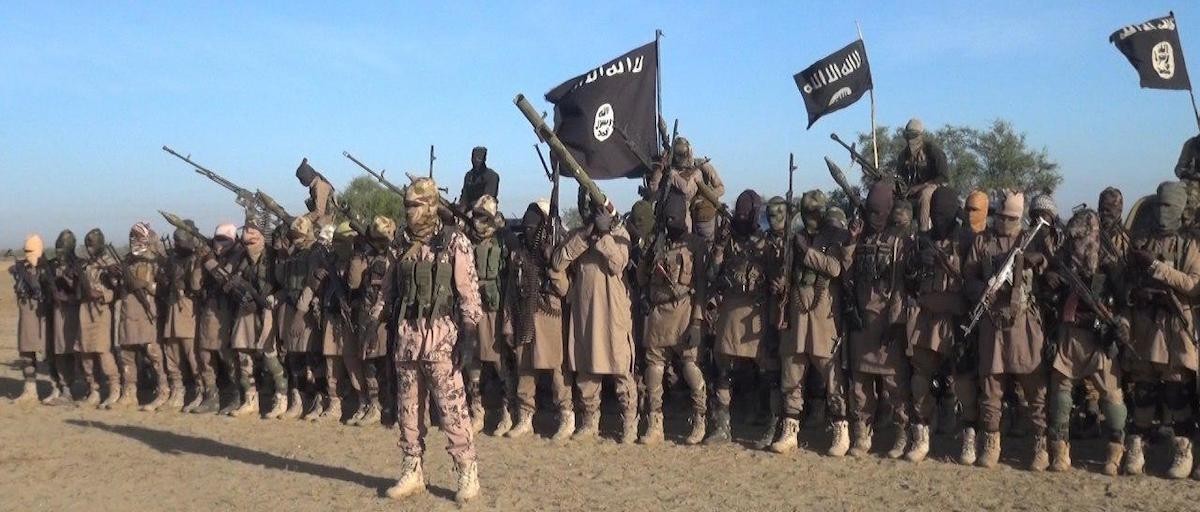
Nigeria’s long-running fight against Islamist insurgents has once again drawn attention to ISWAP, after the group attacked a military base in Pulka, Borno State.
The Nigerian military said soldiers repelled the attack, although one soldier sustained a gunshot injury. The military said the attackers retreated after troops, supported by the Civilian Joint Task Force and the air component of Operation Hadin Kai, resisted the assault.
But who exactly is ISWAP? Where did it come from, what does it want and why is Nigeria still fighting the group years after the Boko Haram insurgency began?
What is ISWAP?
ISWAP means Islamic State West Africa Province.
It is an armed extremist organisation affiliated with the Islamic State, also known as ISIS or ISIL. The United Nations lists ISWAP as an entity associated with Islamic State and says it has carried out terrorist attacks in Nigeria.
The group operates mainly around the Lake Chad Basin, an area covering parts of Nigeria, Niger, Chad and Cameroon.
Although ISWAP is closely associated with Boko Haram historically, it is important to understand that they are no longer the same organisation. They became rival factions after a major split within the insurgency.
How did ISWAP originate?
The roots of ISWAP can be traced to Boko Haram, the insurgent movement that emerged in northeastern Nigeria and launched a full-scale armed insurgency in 2009.
In March 2015, Boko Haram leader Abubakar Shekau pledged allegiance to Islamic State leader Abu Bakr al-Baghdadi. The group subsequently became known as the Islamic State’s West Africa Province. The United Nations identifies March 2015 as the date of ISWAP’s formation.
However, the alliance did not last peacefully.
In 2016, disagreements over leadership and tactics led to a major split. Islamic State removed Shekau as the leader of its West African affiliate and backed Abu Musab al-Barnawi instead.
Shekau rejected the change, creating two competing insurgent factions: the IS-aligned group that retained the ISWAP name and Shekau’s faction, commonly known as Boko Haram or JAS.
The two factions have since fought each other as well as Nigerian and regional security forces.
What is ISWAP’s mission?
At its core, ISWAP seeks to establish an Islamic state governed according to its extremist interpretation of Islamic law and to expand Islamic State’s influence in West Africa.
But its strategy has differed from Shekau’s Boko Haram faction.
ISWAP has historically tried to present itself as an alternative authority in areas where government control is weak. Analysts have noted that the group has attempted to win or maintain support among some local communities by providing limited forms of governance and services while imposing its own rules.
That does not make ISWAP a legitimate government. The United Nations classifies it as an Islamic State-associated terrorist organisation, and the group has carried out attacks against military and civilian targets.
Why is Nigeria still fighting ISWAP?
The simple answer is that ISWAP has survived years of military operations by adapting.
The group does not need to permanently occupy large cities to remain dangerous. It can operate from difficult terrain, attack military positions, ambush security personnel and exploit the porous borders around the Lake Chad Basin.
The geography also makes the conflict more complicated. ISWAP operates across a region that extends beyond Nigeria, meaning military pressure in one location can push fighters into another area rather than completely eliminate the organisation.
There is also the problem of recruitment, local grievances, poverty, displacement and weak state presence in some affected communities. These conditions can provide extremist groups with opportunities to recruit, hide, raise resources and maintain influence.
The conflict has also been sustained by rivalry between ISWAP and Boko Haram’s JAS faction. Both groups compete for territory, fighters, resources and influence while simultaneously fighting government forces.
Why does ISWAP attack military bases?
Military bases are important targets because they represent government authority and provide weapons, equipment and strategic positions.
ISWAP has repeatedly attacked military installations in northeastern Nigeria. In some cases, insurgents have attempted to overrun bases or seize weapons and military equipment.
The latest Pulka attack illustrates that strategy.
According to the Nigerian military, ISWAP fighters attempted to overrun the base but were pushed back by ground troops, with air support helping to disrupt their withdrawal. The military said the attackers suffered casualties.
The attack also shows why the insurgency remains a security concern even when the military succeeds in repelling individual attacks.
Is ISWAP getting weaker?
ISWAP has suffered significant losses from Nigerian and international military operations, including the killing of senior commanders.
In May 2026, a joint US-Nigerian operation killed senior ISWAP leader Abu Bakr al-Mainuki in the Lake Chad Basin. The operation was described as a significant blow to the group’s leadership.
However, eliminating individual commanders has not ended the organisation.
The latest attacks demonstrate that ISWAP retains the ability to mobilise fighters and strike Nigerian security positions.
That is why the conflict continues.
For Nigeria, defeating ISWAP will require more than winning individual battles. Military operations remain crucial, but lasting security will also depend on stronger governance, regional cooperation, intelligence gathering, border security and addressing the conditions that allow armed groups to recruit and survive.
For now, the fight continues in northeastern Nigeria — and the latest attack in Pulka is another reminder that the ISWAP insurgency is far from over.