

Israel’s election may not settle who governs: the 61-seat coalition test

Illustrative artwork, not a photograph of the current election.
Israelis vote on Tuesday, 27 October, in the country’s first national election since Hamas’s 7 October 2023 attack. But the result may not immediately answer the question many readers will have: who will govern next?
Israelis elect party lists to the 120-seat Knesset, rather than choosing a prime minister directly. A party can finish first without having enough support to form a government. The decisive test is whether a leader can assemble a coalition of at least 61 lawmakers. Pre-election reporting says no single party is expected to approach that number, and polling has not produced a clear path to a majority for either main bloc.
Why election night may be only the first stage
Israel’s official election calendar sets polling day for 27 October and lists 4 November for publication of the formal results. The first count will show how the parties performed, but coalition negotiations will determine which group can command a parliamentary majority.
That distinction matters because pre-election seat projections are not results. Small changes in votes can affect which lists clear the 3.25% threshold to enter parliament, while parties that win seats may still disagree about joining the same government. The Associated Press notes that if no leader can form a coalition, Benjamin Netanyahu’s government would remain as caretaker while the country faces the possibility of another election.
So a narrow lead for one bloc would not, by itself, guarantee that its preferred candidate becomes prime minister. The practical question after polls close will be which parties are willing and able to negotiate a governing agreement.
What voters are being asked to judge
The campaign has centred on Netanyahu’s leadership and the security failures surrounding 7 October, alongside the wars that followed. Critics say he has resisted an independent state inquiry; Netanyahu has shifted responsibility toward security officials while pointing to Israel’s military record. Those are competing political claims, not a settled legal finding.
Military service is another fault line. Ultra-Orthodox parties have sought continued exemptions for men studying in religious institutions, while many Israelis argue the burden should be shared more widely as reservists are repeatedly called up.
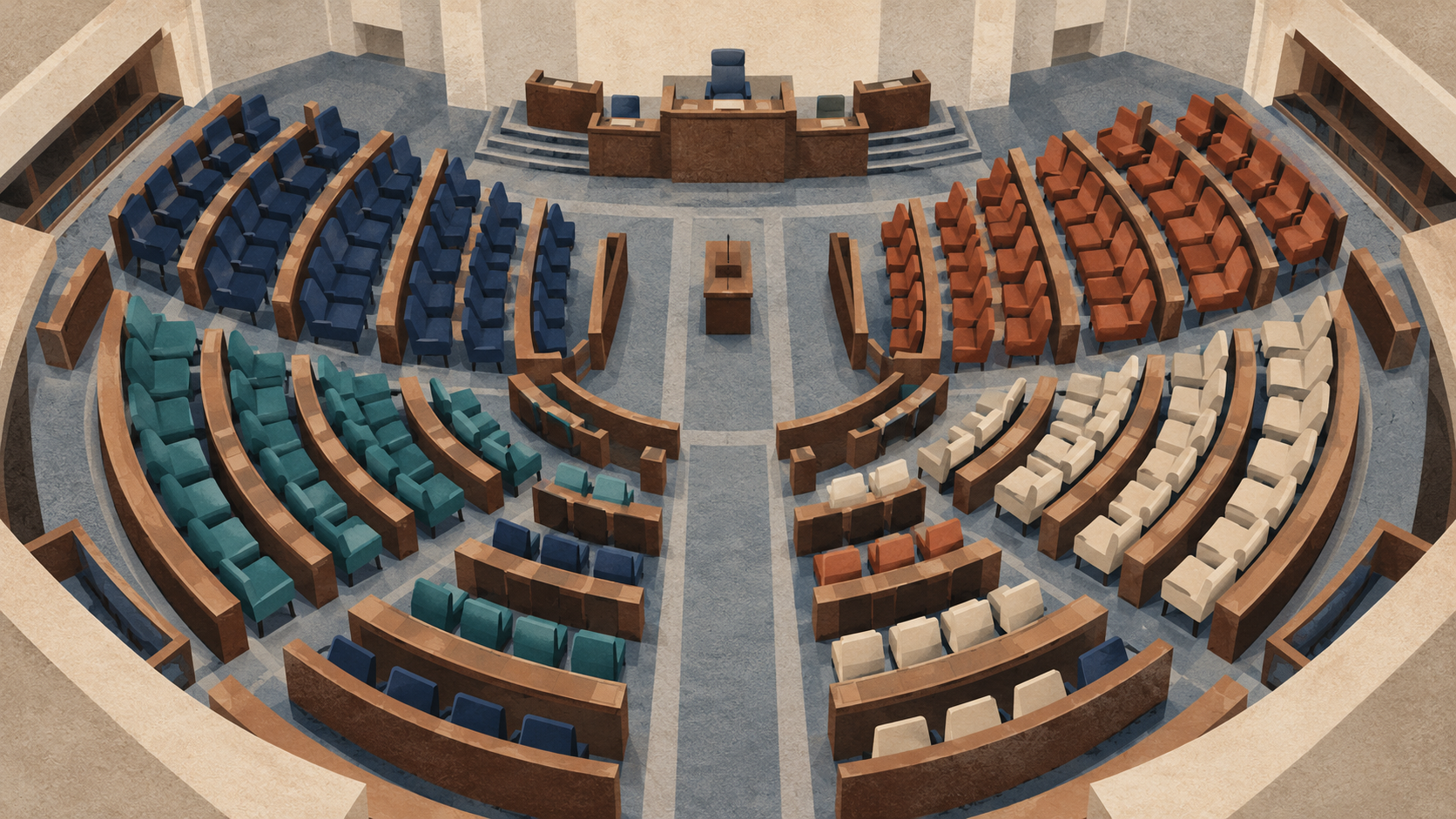
The AP reports that roughly one quarter of Jewish voters surveyed by the Israel Democracy Institute ranked the military-service issue among their leading considerations.
Everyday costs also matter even when they receive less campaign attention. In the Institute’s survey cited by AP, 38% of Jewish respondents and 46% of Arab respondents ranked the economy and cost of living among their top two voting issues. The same reporting describes judicial reform as a continuing, though less central, campaign question.
What to watch after the vote
Three developments will clarify whether election day produces a workable government: which party lists enter the Knesset, whether Arab-majority parties are part of coalition arithmetic, and whether former rivals can agree on a shared programme. The election authority’s timetable places formal results after polling day; negotiations may take longer.
Even a change of prime minister would not automatically mean a sharp change in every policy. Coalition partners would have to agree on security, military-service rules, judicial powers and the economy. Until that agreement exists, claims that the vote has already decided Israel’s direction should be treated cautiously.
Sources: Israel Central Elections Committee election timetable; Associated Press analysis of the election issues; Israel Democracy Institute survey methodology and findings; Al Jazeera’s pre-election explainer.