

Iranian Strike Damages US Warplanes at Jordan Air Base

Airforcetimes.com
AirforceAn Iranian ballistic-missile strike damaged multiple US military aircraft at the Muwaffaq Salti Air Base in Jordan, according to reports, in an attack that brought the US-Iran conflict directly to one of Washington’s key military positions in the region.
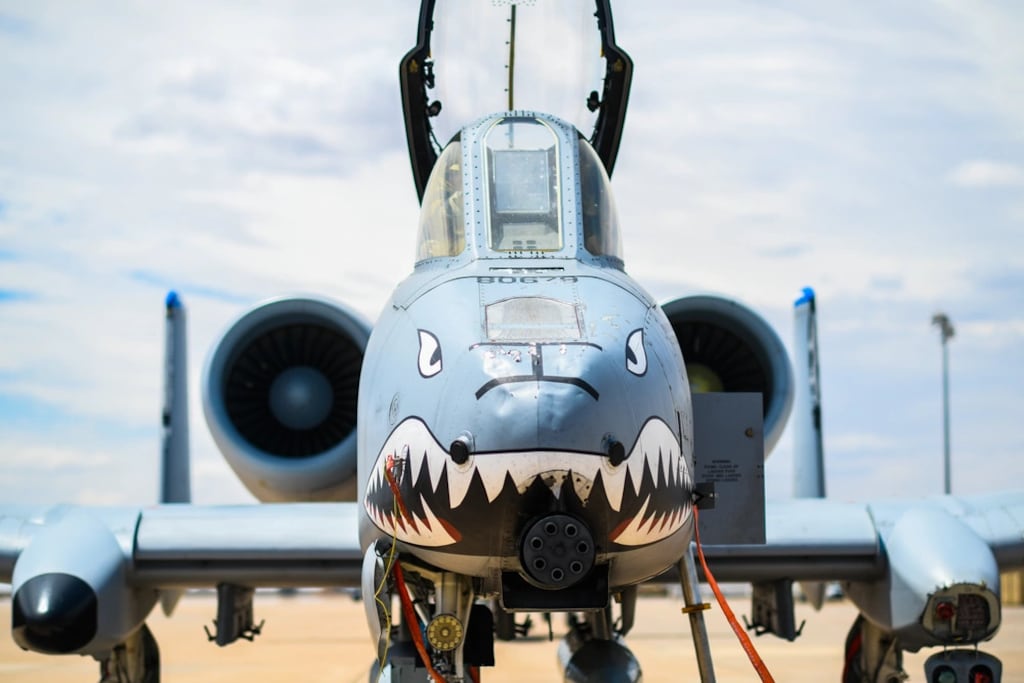
An A-10 Thunderbolt II, popularly known as the Warthog, was seriously damaged and left with a missing wing, while about eight F-15 fighter jets sustained lighter damage.
The aircraft were damaged during overnight strikes on the base, according to reporting by Reuters. The details of the damage were first reported by CBS reporter Jennifer Jacobs.
The Islamic Revolutionary Guard Corps, Iran’s elite military force, also claimed that its missile attack had damaged American aircraft at the Jordanian base.
The reported damage affected aircraft with different roles in the US military. The A-10 is primarily used for close air support, while the F-15 is a fighter aircraft that can perform both air-superiority and strike missions, depending on the variant.
How the Iranian attack reached the US base
Muwaffaq Salti Air Base is located in Jordan, a country that has maintained close military ties with the United States.
The US military uses facilities in Jordan as part of its wider operations in the Middle East. The country’s location gives American forces access to the region while also providing a base for aircraft and other military assets.
The Iranian attack therefore reached a facility being used by American forces rather than an isolated military position on the immediate battlefield.
Jordan has found itself in a difficult position during the conflict. While it hosts US forces, it has also had to respond to missiles and drones crossing or approaching its territory.
Jordanian authorities have previously said their air defences intercepted threats entering the country’s airspace.
The latest strike demonstrates that the presence of US forces in Jordan can expose the country and American military assets there to attacks connected to the wider confrontation with Iran.
What happened to the A-10 and F-15s?
The A-10 Thunderbolt II suffered the most serious reported damage.
The aircraft is recognisable by its unusual design and is commonly called the Warthog. It was developed primarily to provide close air support for troops on the ground and to attack armoured vehicles and other ground targets.
The reported loss of a wing means the aircraft cannot simply return to normal operations without significant repair work.
The F-15s suffered less severe damage.
About eight F-15 fighter jets were reportedly affected, but the aircraft were later returned to service.
The F-15 is one of the best-known aircraft in the US military fleet. Different versions have been used for air-to-air combat, ground strikes and other missions.
The fact that several aircraft were hit at the same base means the incident involved more than damage to a single military aircraft.
Why Muwaffaq Salti Air Base is important
The Jordanian base forms part of the US military’s network of facilities in the Middle East.
American forces have operated from Jordan for years, using the country for military cooperation, training and regional operations.
Its location also places it close to several areas affected by the conflict.
For the US military, maintaining access to facilities such as Muwaffaq Salti allows aircraft, personnel and other assets to operate in the region without relying on a single location.
But the arrangement also creates a vulnerability.
Aircraft stationed at a base are concentrated in a relatively limited area. A successful missile strike can therefore damage several aircraft or other military infrastructure without having to engage them in the air.
That is what makes the reported damage at Muwaffaq Salti significant from a military perspective.
Iran’s attacks on US-linked positions
The strike is part of a wider series of attacks involving Iran and the United States.
Iran has previously targeted US-linked military positions in the Middle East following American military operations against Iranian targets.
The attacks have also affected countries that host US forces.
An earlier Iranian retaliation involved missile and drone attacks targeting US-linked positions in Jordan and the United Arab Emirates after a US military operation on Larak Island.
The repeated attacks have expanded the geographical reach of the conflict beyond Iran and the immediate areas where American and Iranian forces are operating.
For countries such as Jordan, that has meant dealing with the consequences of a conflict in which they are not the principal combatants.
Does the damage affect US military operations?
The reported damage does not by itself indicate a major reduction in US air power in the region.
The United States operates a large number of aircraft and other military assets from different locations across the Middle East.
The return of the damaged F-15s to service also means the reported impact on those aircraft was limited.
The A-10, however, suffered substantially more serious damage and will require assessment and repair.
The immediate military concern will be determining the condition of the aircraft and whether additional measures are required to protect American aircraft at Muwaffaq Salti and other bases.
Those measures could include changes to where aircraft are parked, additional protection for aircraft on the ground and adjustments to the deployment of US military assets.
What the strike means for Jordan
The attack places another layer of pressure on Jordan as the US-Iran conflict continues.
Jordan has close security and military ties with Washington but has also sought to prevent the conflict from drawing the country directly into the fighting.
Its airspace and territory have nevertheless become part of the wider security problem.
Iran’s ability to strike a US military facility in Jordan means American forces stationed there remain exposed even when they are operating from a partner country.
For Washington, the incident adds to the challenge of protecting military assets across several bases in the region.
For Amman, it reinforces the risks that come with hosting American forces during an escalating conflict.
The damage to the A-10 and F-15s does not represent the loss of the US military’s air power in the Middle East.
But it is a clear example of what can happen when missiles reach a military base where American aircraft are stationed.
As the US-Iran conflict continues, American forces operating from Jordan and elsewhere in the region will remain potential targets for further Iranian attacks.