
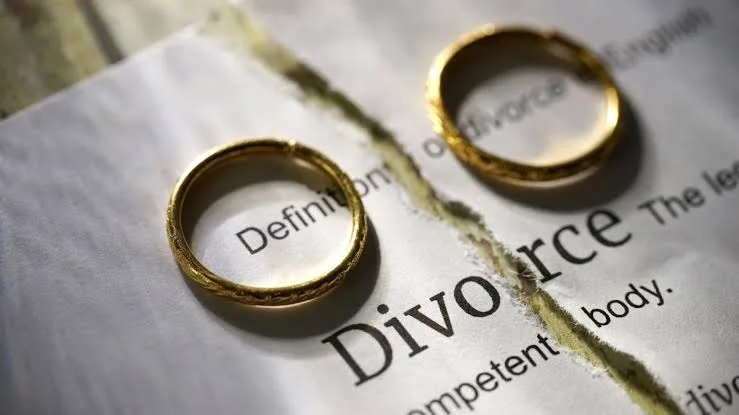
Ending a marriage in Nigeria involves more than moving out of the matrimonial home or informing family members that a relationship has ended. The legal process depends on how the marriage was contracted, with statutory, customary and Islamic marriages governed by different legal systems.
While some couples can dissolve their marriages through customary or Islamic procedures, others must approach a High Court to obtain a legally recognised divorce.
Understanding these differences is important, particularly for couples who have conducted both traditional and registry weddings. Here is what Nigerian law says about ending the different types of marriages.
1. How to divorce a statutory marriage in Nigeria
A statutory marriage is commonly known as a registry marriage or marriage under the Marriage Act. It is a legally recognised monogamous union between a man and a woman.
A church wedding can also qualify as a statutory marriage if it is properly conducted in a licensed place of worship and complies with the Marriage Act. A church ceremony or certificate alone does not automatically establish this status.
Under the Matrimonial Causes Act, only a State High Court or the High Court of the Federal Capital Territory can grant a divorce for a statutory marriage.
The law requires the person seeking divorce to establish that the marriage has broken down irretrievably.
Section 15(2) of the Act provides several facts that can establish this, including:
- One spouse has refused to live with the other.
- One spouse has behaved in a way that makes it unreasonable to expect the other to continue living with them.
- One spouse has deserted the other for at least one continuous year.
- The couple has lived apart for at least two years and one spouse does not object to the divorce.
- The couple has lived apart for at least three years.
- One spouse has failed to comply with a decree of restitution of conjugal rights.
- One spouse has been absent for a prolonged period and is presumed dead.
- The parties have failed to resume marital relations after a judicial separation.
How does the divorce process work?
The spouse seeking divorce, known as the petitioner, files a divorce petition at the appropriate High Court.
The petition explains the reasons for seeking dissolution and provides relevant supporting evidence. The other spouse, known as the respondent, receives the court documents and has an opportunity to respond.
The court considers the evidence before deciding whether to grant the divorce.
If the court is satisfied, it initially issues a decree nisi. This is a provisional divorce order. It can subsequently become a decree absolute, which formally ends the marriage.
The court can also determine issues involving child custody, maintenance and financial arrangements.
2. How to divorce a traditional marriage in Nigeria
Traditional marriages are governed by the customary laws of the communities where the marriages were contracted.
Unlike statutory marriages, there is no single divorce procedure applicable to every traditional marriage across Nigeria.
The process depends on the customs governing the union. In many communities, a spouse seeking separation may approach the families involved to communicate the decision and begin the customary dissolution process.
This may involve discussions between both families, returning the bride price or satisfying other requirements recognised by the applicable custom.
However, returning the bride price is not a universal requirement under every Nigerian custom. The applicable customary law determines the conditions.
Where the parties disagree about whether the marriage has been dissolved or dispute issues arising from the separation, they may approach a Customary Court or Area Court with jurisdiction over the matter.
A court can determine whether the customary requirements for dissolution have been satisfied.
3. How to divorce an Islamic marriage in Nigeria
Islamic marriages, commonly known as Nikah, are governed by Islamic personal law.
The law recognises different methods through which an Islamic marriage can be dissolved, depending on the circumstances.
One common method is Talaq, through which a husband initiates divorce in accordance with Islamic principles.
A wife can also seek dissolution through Khul’, which generally involves a separation initiated by the wife, often with an agreed return of the dower or other consideration.
Another option is Faskh, which involves judicial dissolution by a competent Islamic court on recognised grounds.
The applicable process may involve the Sharia Court or Area Court, depending on the state and the court’s jurisdiction.
The court may also consider issues such as maintenance, custody and other obligations arising from the marriage.
4. What happens if a couple conducts both traditional and registry weddings?
This is an important distinction that many couples may overlook.
A couple can conduct a traditional marriage and subsequently celebrate a statutory marriage under the Marriage Act.
However, the two ceremonies do not mean that the couple can choose either process when seeking a divorce.
Where a valid statutory marriage follows a customary marriage between the same couple, dissolving the customary aspect does not automatically terminate the statutory marriage.
The couple must obtain a divorce decree from the High Court to legally dissolve the statutory marriage.
Similarly, couples should not assume that moving out of their matrimonial home, separating privately or returning bride price automatically ends a statutory marriage.
5. Can a husband or wife independently initiate divorce in Nigeria?
Yes. The law does not restrict the right to seek divorce to husbands.
Under the Matrimonial Causes Act, either the husband or wife can file a divorce petition for a statutory marriage, provided the legal requirements are satisfied.
Women can also seek dissolution of customary and Islamic marriages through the procedures recognised by the applicable legal system.
The fact that one spouse wants to remain married does not automatically prevent the other from seeking a legally recognised dissolution.
Ultimately, the type of marriage determines the applicable divorce procedure in Nigeria. Couples should understand their legal position before taking steps to end a marriage, particularly where children, property and financial responsibilities are involved.