

Pete Hegseth huddles with House Republicans as Trump pushes massive $350 Billion defense plan

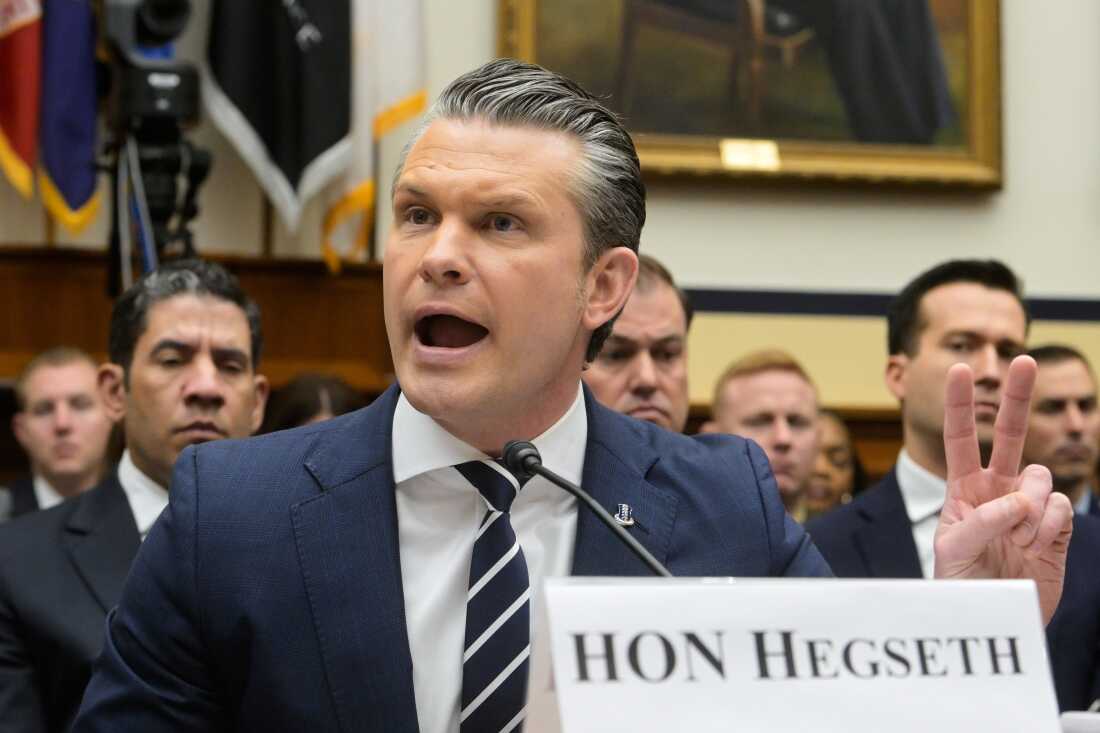
Secretary of Defense Pete Hegseth. Image Credit: AP Photo/Rod Lamkey Jr.
Defense Secretary Pete Hegseth held a private meeting with senior House Republicans as President Donald Trump intensified his push for a new Republican-led reconciliation package that could deliver an additional $350 billion for defense spending and advance key election reforms.
The closed-door meeting, first reported by POLITICO, signals that discussions surrounding a potential third budget reconciliation bill are gaining momentum inside Republican circles. However, while House Republicans appear willing to explore the proposal, Senate Republicans are expressing significant concerns about its political and procedural viability.
The emerging debate highlights growing tensions within the GOP as lawmakers weigh national security priorities, election reforms, deficit concerns and the political risks ahead of the 2026 midterm elections.
Hegseth and House Republicans Discuss Future Military Funding
According to reports, Hegseth met with several influential House Republicans, including House Budget Committee Chairman Jodey Arrington and Republican Study Committee Chairman August Pfluger.
The discussions centered on how Republicans could use the budget reconciliation process to approve a substantial Pentagon funding increase without needing Democratic support in the Senate.
Arrington described the proposal as both a response to current military operations and a long-term investment in future readiness. He said lawmakers discussed replenishing resources used in ongoing conflicts while modernizing military capabilities for future threats.
The meeting also explored how spending reductions tied to anti-fraud initiatives could offset portions of the proposed defense investment, reducing the impact on federal deficits.
Trump Pushes for Reconciliation 3.0
The meeting came shortly after Trump publicly called for another reconciliation package.
The president wants Republicans to approve approximately $350 billion in additional Pentagon funding while also advancing the SAVE America Act, a sweeping election reform proposal.
Trump argues that the funding is necessary to strengthen military readiness and support U.S. strategic objectives during a period of heightened global tensions.
The reconciliation process would allow Republicans to bypass a Senate filibuster and pass legislation with a simple majority vote. However, achieving consensus within the GOP remains a significant challenge.
Senate Republicans Show Growing Resistance
While House Republicans continue discussions, Senate Republicans are showing increasing skepticism.
Several Republican senators have warned that another reconciliation battle could create political headaches heading into the midterm elections.
Sen. John Cornyn of Texas acknowledged the importance of military funding but described another reconciliation effort as an “enormously heavy lift.” He warned that forcing vulnerable Republicans into another lengthy series of politically difficult votes could complicate their reelection campaigns.
Sen. Lisa Murkowski of Alaska also expressed doubts, calling another round of reconciliation “very, very, very challenging.”
Meanwhile, Senate Appropriations Committee Chair Susan Collins and former Senate Republican leader Mitch McConnell have both suggested that a third reconciliation package faces steep odds.
READ ALSO
Election Reform Provisions Face Additional Obstacles
Beyond military funding, Trump’s proposal includes election-related provisions through the SAVE America Act.
The legislation would require proof of citizenship for voter registration, strengthen voter identification requirements and impose new restrictions on mail-in voting.
However, similar provisions have already struggled to gain unanimous Republican support. Several GOP senators previously opposed aspects of the proposal, raising questions about whether it can secure enough votes to advance.
Senate Majority Leader John Thune acknowledged the uncertainty, stating that Republicans remain open to reconciliation if they can identify a proposal capable of securing support in both chambers.
Deficit Concerns Complicate GOP Strategy
Another major obstacle is fiscal policy.
Conservative budget hawks are insisting that any new spending be fully offset by spending reductions elsewhere in the federal budget.
Some Republicans fear that approving hundreds of billions of dollars in additional defense spending without corresponding cuts would undermine the party’s fiscal responsibility message.
As a result, lawmakers are exploring whether savings from government efficiency and anti-fraud initiatives could be used to offset at least part of the proposed spending package.
What Happens Next?
The Hegseth meeting demonstrates that House Republicans are actively preparing for the possibility of another major legislative push.
However, Senate opposition, deficit concerns and procedural challenges suggest that Trump’s proposal faces a difficult path forward.
With Republicans holding narrow margins in Congress and the 2026 midterms approaching, party leaders must balance defense priorities, political realities and internal divisions.
For now, the discussions between Hegseth and House Republicans underscore the growing importance of defense funding and election policy within the GOP’s broader legislative strategy.
Whether Republicans can unite behind a third reconciliation package remains one of the most consequential questions facing Congress in the months ahead.
FAQ
Why did Pete Hegseth meet with House Republicans?
Defense Secretary Pete Hegseth met with senior House Republicans to discuss a potential new reconciliation package that could include $350 billion in defense funding and support President Trump’s legislative priorities.
What was discussed during the Hegseth meeting?
The discussions focused on military readiness, Pentagon modernization, funding for ongoing military operations, budget offsets and strategies for passing legislation through budget reconciliation.
What is Trump’s proposed $350 billion Pentagon funding plan?
Trump wants Congress to approve an additional $350 billion for defense spending to strengthen military capabilities, replenish resources used in recent conflicts and modernize the U.S. armed forces.
What is Reconciliation 3.0?
Reconciliation 3.0 refers to a potential third Republican budget reconciliation package. Budget reconciliation allows legislation affecting federal spending and revenues to pass the Senate with a simple majority rather than requiring 60 votes.
Why are Senate Republicans hesitant about another reconciliation bill?
Many Senate Republicans are concerned about political risks, deficit impacts and the difficulty of securing enough votes for another major reconciliation package before the 2026 midterm elections.
What is the SAVE America Act?
The SAVE America Act is an election reform proposal backed by Trump. It includes voter identification requirements, proof-of-citizenship rules for voter registration and restrictions on mail-in voting.
Can Republicans pass the defense funding package without Democratic support?
Potentially. Republicans could use budget reconciliation to avoid a Senate filibuster, but they would still need near-unanimous support from GOP lawmakers in both chambers.
How much support does Trump’s proposal currently have?
Support is mixed. House Republicans are actively discussing the plan, while several Senate Republicans have publicly questioned whether another reconciliation package is realistic.
What role does national security play in the proposal?
Supporters argue the funding is necessary to improve military readiness, modernize defense systems and address emerging global security threats.
Could the proposal increase the federal deficit?
It could, unless lawmakers identify spending cuts or savings to offset the new defense expenditures. Fiscal conservatives are pushing for full offsets.
What happens if Republicans cannot agree on reconciliation?
If sufficient support cannot be secured, GOP leaders may need to pursue traditional appropriations legislation, which would require Democratic cooperation in the Senate.
When could Congress vote on the proposal?
No formal vote has been scheduled. Discussions are ongoing, and congressional leaders are still assessing whether enough support exists to move forward.