

If FG can’t maintain King’s College, what happens to Nigeria’s lesser-known schools?

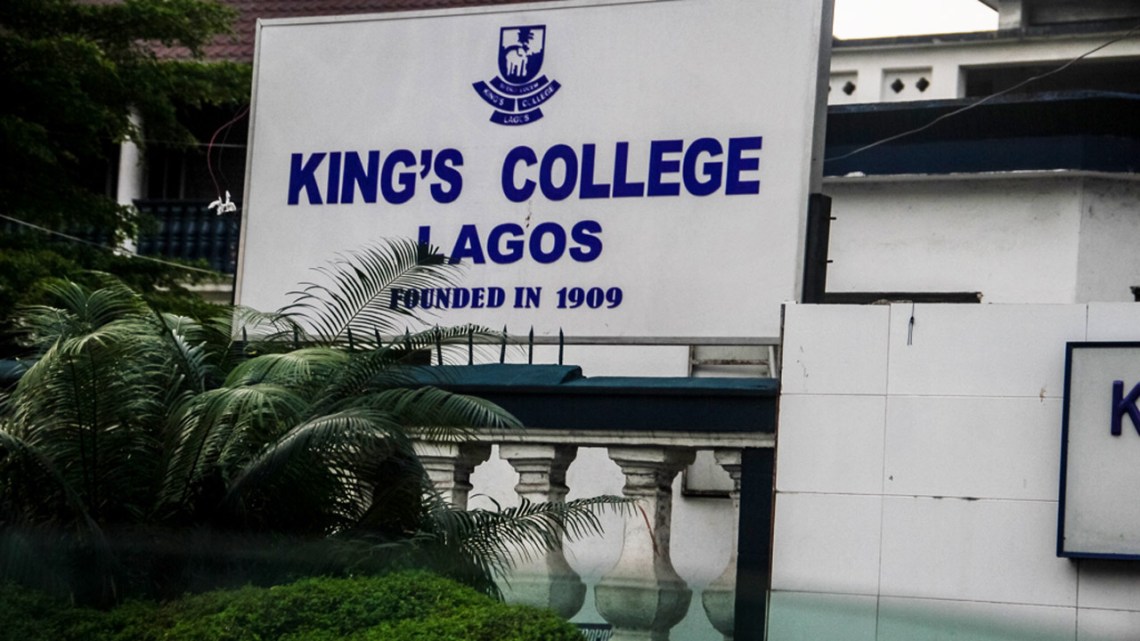
The controversy over the planned concession of King’s College, Lagos, raises a question that goes beyond the future of one of Nigeria’s most famous secondary schools: why has the Federal Government struggled to maintain institutions it owns and is responsible for?
King’s College is not just another public school. Established in 1909, it is one of Nigeria’s oldest and most recognised secondary schools. It belongs to the same historic group as Government College Ibadan, Barewa College, Zaria and Government College Umuahia.
Yet, after more than a century, the school has been left with serious infrastructure and management challenges.
The Federal Government now says the answer is to allow the King’s College Old Boys’ Association (KCOBA) to finance, rehabilitate, modernise, operate and maintain the school under a public-private partnership.
The government has stressed that King’s College has not been sold. Legal ownership remains with the Federal Government, while the Old Boys’ Association is expected to take responsibility for the school’s rehabilitation and management.
But that clarification does not remove the bigger question.
Government school maintenance should not reach this point
The most troubling part of the King’s College controversy is not simply that an alumni association wants to invest in its former school.
There is nothing unusual about old students supporting their alma mater. Alumni groups routinely build classrooms, renovate hostels, provide equipment and establish funds for their former schools.
The question is why such support has become necessary on this scale for a school that belongs to the Federal Government.
According to the Federal Government, the concession is designed to address the infrastructure and operational needs of the 117-year-old institution. KCOBA is expected to finance rehabilitation and take responsibility for maintaining the school.
That should force a broader conversation about government school maintenance.
A government does not only establish a public institution. It has a responsibility to preserve it.
Buildings require regular repairs. Hostels need proper sanitation. Laboratories need functioning equipment. Libraries need books and digital resources. Water, electricity, drainage and other basic facilities need constant attention.
When these needs are ignored for years, the eventual repair bill becomes larger.
King’s College appears to have reached that point.
King’s College became a warning sign
The condition of King’s College has already produced consequences beyond broken buildings.
In March 2025, a 12-year-old student died following a diphtheria outbreak at the school. Fourteen other students were reported to have been hospitalised during the outbreak.
The incident does not by itself prove that poor infrastructure caused the outbreak. However, it exposed concerns about health and sanitation within the school and forced authorities to respond.
The Premium Times editorial on the concession also highlighted dilapidated buildings, overcrowded hostels, falling standards and other problems at the institution.
For a school with the history and reputation of King’s College, this should be more than an embarrassing development.
It should be a warning.
If the Federal Government could allow one of its most prominent schools to deteriorate to this level, Nigerians have every reason to ask what is happening in institutions that do not have the same national visibility.
What happens to schools without King’s College’s name?
King’s College has something many public schools do not have: visibility.
It has generations of influential alumni. It attracts national attention. Its Old Boys’ Association has the resources and influence to push for intervention.
When problems emerge at the school, they quickly become a national issue.
But what happens to a federal school in a less prominent location?
What happens to a Unity College whose former students do not have the financial capacity to mobilise billions of naira?
What happens to a school whose parents cannot attract the attention of the Federal Ministry of Education?
These questions matter because King’s College is one of more than 100 Federal Government-owned Unity Colleges.
The Federal Ministry of Education maintains a list of Unity Colleges across the country, including King’s College, Federal Government College Lagos, Queen’s College Lagos, Federal Government College Ogbomoso, Federal Government College Port Harcourt and many others.
The problem, therefore, cannot end with deciding what happens to King’s College.
The government should also ask what condition its other schools are in.
Government school maintenance cannot depend on alumni
There is an important distinction between alumni support and government responsibility.
Alumni can complement government funding. They should not have to replace it.
If old students want to build a new laboratory, renovate a hostel or provide computers, that should be welcomed.
But a system where government allows a public school to deteriorate and later depends on its alumni to rescue it raises serious questions about public-sector management.
The Federal Government itself has acknowledged challenges across Unity Colleges.
In 2021, the Ministry of Education identified inadequate classrooms, poor staff welfare, inadequate funding, unfinished projects and dilapidated furniture among challenges facing Federal Unity Colleges.
More recently, the ministry has continued inspections and interventions in Unity Colleges.
During a 2025 inspection, the Minister of State for Education expressed concern over infrastructure at Federal Government Girls’ College, Kazaure, including problems with internet connectivity at its ICT centre. The ministry said infrastructure investment must be combined with strong leadership and continued policy support.
These developments suggest that the maintenance problem is not unique to King’s College.
The danger of waiting until institutions collapse
There is a familiar pattern in the management of public infrastructure.
Facilities are built.
Maintenance becomes irregular.
Problems accumulate.
The cost of fixing them rises.
Government eventually announces a major rehabilitation programme, concession or public-private partnership.
By then, what could have been routine maintenance has become a major intervention.
That approach is expensive and difficult to sustain.
Research on public tertiary institutions in southeastern Nigeria has also found that unplanned maintenance contributes to serious building defects, with public institutions relying heavily on corrective repairs rather than preventive maintenance.
Although the study focused on tertiary institutions rather than secondary schools, its finding points to a wider public-sector challenge: waiting for infrastructure to fail before fixing it is not maintenance.
It is crisis management.
The King’s College concession should trigger an audit
The Federal Government has already constituted a seven-member committee to review the disputed King’s College concession. The committee is expected to examine issues including the duration of the agreement, school fees, continued public funding, staff welfare, operational control and the financial obligations of the Old Boys’ Association.
Those questions deserve answers.
But there should be another question on the table.
Why did the government allow the school to deteriorate to the point where a concession became necessary in the first place?
That question should not stop at King’s College.
The government should conduct a transparent assessment of the condition of all Federal Unity Colleges. It should publish their infrastructure needs, maintenance budgets, outstanding projects and the amount spent on rehabilitation.
Such an audit would show whether King’s College is an exception or a symptom of a larger problem.
Nigeria cannot afford to lose its public institutions
There is a deeper issue here.
Public schools are not merely buildings where students attend classes. Some are part of Nigeria’s institutional history.
King’s College has produced generations of Nigerians who have contributed to politics, business, law, medicine, journalism, academia and other fields.
Government College Ibadan, Barewa College and Government College Umuahia carry similar historical significance.
Allowing such institutions to deteriorate is not simply a failure to maintain buildings.
It is a failure to preserve national heritage and public investment.
The answer should not always be to wait until an institution becomes too expensive for government to manage before looking for someone else to rescue it.
If the Federal Government cannot consistently maintain its most prestigious schools, then the immediate lesson from King’s College should not be that more public schools need concessions.
It should be that government school maintenance needs a fundamental rethink.
King’s College may have the alumni network, reputation and public attention to demand a solution.
Many other federal schools do not.
And if one of Nigeria’s most famous public schools can reach this point, Nigerians are entitled to ask: what is happening inside the schools nobody is watching?