

When Government Officials Block Journalists, What Happens to Accountability?

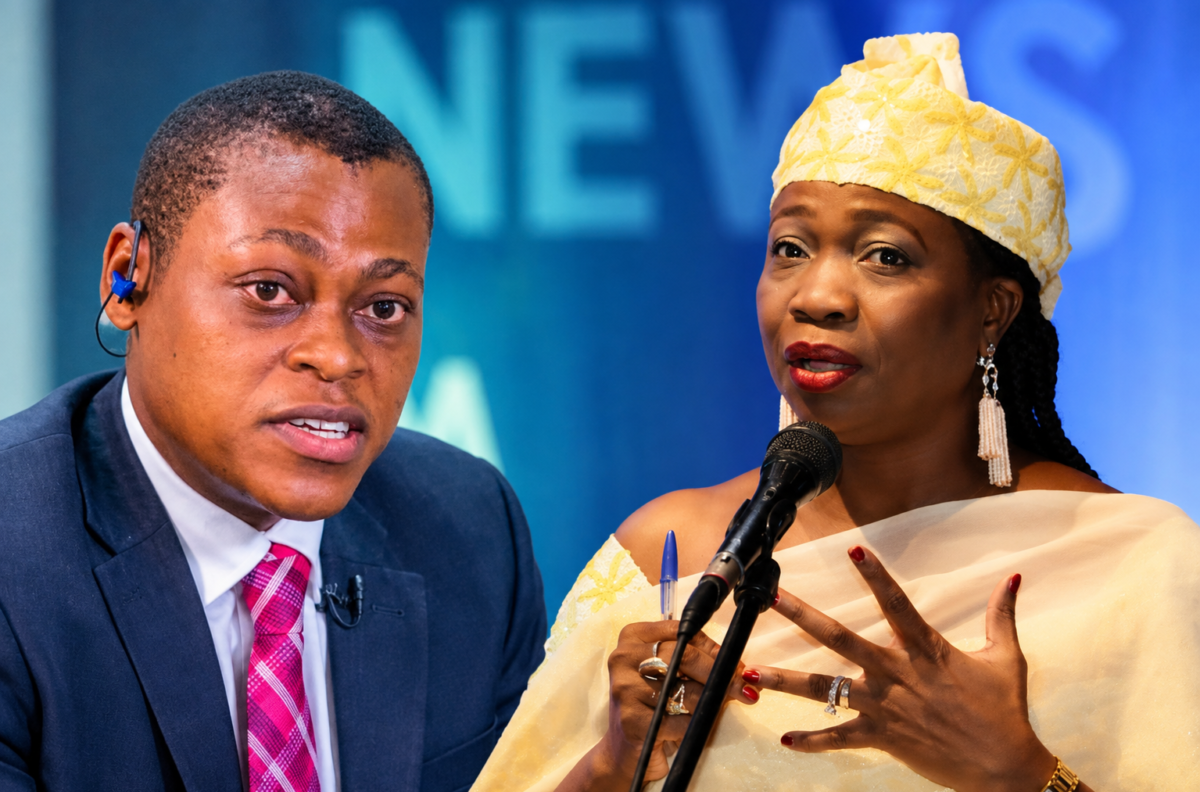
When a government official blocks a journalist on social media, it can be dismissed as a personal disagreement. But when the journalist is trying to raise questions about the treatment of a Nigerian citizen, the incident raises a bigger question: what happens to accountability when the people responsible for public institutions shut out the people asking questions?
That question has emerged following a public disagreement between broadcaster Rufai Oseni and Abike Dabiri-Erewa, Chairman and Chief Executive Officer of the Nigerians in Diaspora Commission (NiDCOM), over the case of a Nigerian identified as Ekene, who is being held at a deportation detention centre in India.
Oseni said he had raised Ekene’s case with NiDCOM and provided the commission with his contact details after Dabiri-Erewa directed him to use official channels. He later said Ekene confirmed that neither NiDCOM nor the Nigerian mission had contacted him. Oseni subsequently criticised the commission’s response publicly.
Dabiri-Erewa acknowledged that she had blocked Oseni on X, explaining that she had blocked him and others because of what she described as the increasingly “toxic” nature of the platform. She also maintained that NiDCOM had responded through its official channel after receiving the information.
The disagreement may look like another social media quarrel between two public figures. But it raises a more important issue about the relationship between government officials, journalists and the public.
What happens when officials block journalists?
A government official is also a private individual with personal boundaries. Holding public office does not mean that an official must allow every person to contact them through a personal social media account.
An official can also reasonably block someone for threats, harassment, abuse or persistent conduct that goes beyond legitimate criticism.
The question becomes different, however, when social media is being used as part of the official’s public communication.
Government officials increasingly use platforms such as X to announce decisions, respond to citizens, defend government policies and provide updates about issues under their supervision.
When that happens, the platform can become an important route through which journalists monitor public officials and seek information.
That does not mean journalists have an automatic legal right to remain on an official’s personal account. But it does raise a question of principle: should disagreement with a journalist become a reason to shut down a channel through which questions about public business are being raised?
A journalist’s job is not to please officials
The role of journalism in a democracy is not simply to reproduce statements from government officials.
Journalists are expected to ask questions, challenge claims, seek clarification and bring issues affecting citizens to public attention.
Nigeria’s constitutional framework protects freedom of expression and the press, while Section 22 of the 1999 Constitution places a responsibility on the media to hold government accountable to the people. Media Rights Agenda has also argued that government officials who obstruct the media in carrying out its constitutional functions undermine democratic accountability.
That responsibility can sometimes produce uncomfortable interactions.
A journalist may ask a question an official does not like. A report may expose an administrative failure. A broadcaster may publicly criticise a government agency.
None of those things automatically makes the journalist an enemy of the government.
In fact, criticism is one of the mechanisms through which public institutions can be forced to explain their actions.
But does every journalist deserve direct access?
This is where the debate needs some balance.
A public official is not required to respond to every post on social media. Journalists also do not have an unlimited right to an official’s personal attention.
An official can direct media enquiries to a ministry, department or agency’s designated communication channel. In fact, that can be preferable when an issue requires documentation or a formal response.
That is partly what Dabiri-Erewa says happened in the Ekene case. She said Oseni was directed to send the detainee’s details through NiDCOM’s official email and that the commission subsequently issued a response through that channel.
NiDCOM has also defended its broader handling of the case, saying India had previously offered an amnesty to undocumented Nigerian migrants and that more than 4,000 Nigerians returned home under the programme. The commission said those who failed to regularise their status or leave during the grace period were subsequently detained.
So the issue is not whether Dabiri-Erewa was personally obligated to answer every message from Rufai on X.
The more important question is whether official channels remained accessible and responsive when a journalist was raising a matter involving Nigerians in distress.
What makes the Rufai-Dabiri dispute different?
The timing is what makes the incident worth examining.
Oseni was not merely complaining that an official had ignored his opinion. He was raising the case of a Nigerian who was reportedly being held at a deportation centre in New Delhi alongside more than 200 other Nigerians.
According to Oseni, he supplied Ekene’s contact information to NiDCOM and later said Ekene had not been contacted. He then challenged the commission publicly.
Dabiri-Erewa disputed the handling of the matter and pointed to the commission’s official response.
That disagreement is legitimate territory for public scrutiny.
If NiDCOM received the information, what action did it take?
When did it make contact?
If it did not make contact, why?
If the case required intervention from Indian authorities, what steps had been taken?
And if the journalist’s account was inaccurate, what evidence did the commission have to demonstrate otherwise?
Those are questions that do not disappear because one of the people asking them has been blocked on social media.
Blocking a journalist does not end accountability
This may be the most important point.
A journalist’s access to one government official’s X account is not the same thing as access to government.
NiDCOM has official communication channels. The Nigerian High Commission in India has its own diplomatic responsibilities. Government agencies are still answerable through formal institutions, the media and, ultimately, the public.
So blocking a journalist does not legally or practically remove an official’s obligation to explain decisions made in public office.
But it can create a perception problem.
When a public official blocks a journalist immediately after a dispute over a matter of public interest, members of the public can reasonably wonder whether criticism is being treated as harassment or whether the official simply does not want to engage with difficult questions.
That perception matters.
What does it say about the government they represent?
This is where the issue moves beyond Dabiri-Erewa and Rufai.
Government officials are individuals, but they also occupy offices that belong to the public.
The conduct of a senior official therefore inevitably contributes to how citizens perceive the institution.
An official who responds to criticism with facts, documents and explanations communicates confidence in the institution.
An official who refuses to engage legitimate questions may create the opposite impression, even where the official’s underlying position is correct.
The same applies to journalists.
A journalist who uses evidence and asks legitimate questions strengthens accountability. A journalist who relies on insults, harassment or misinformation weakens it.
The solution, therefore, is not for officials to tolerate abuse in the name of press freedom. Neither is it for journalists to expect unrestricted access to every official’s personal account.
The healthier model is one where officials can establish boundaries without using those boundaries to avoid legitimate scrutiny, while journalists can challenge government without turning criticism into personal abuse.
The bigger issue is accountability
The Rufai-Dabiri dispute began with one Nigerian in an Indian detention centre.
It has now raised a broader question about how government officials deal with journalists in the social media era.
Officials do not have to agree with journalists. Journalists do not have to agree with officials.
But where public business is concerned, disagreement should not replace explanation.
The public ultimately needs answers, not access to a particular person’s X account.
And when a government official blocks a journalist, the most important question is therefore not simply “Why was the journalist blocked?”
It is:
“Even after the block, can the public still get answers?”