

Gladys Adaeze Okafor: What will happen to Nigerian woman arrested in US for voting illegally?

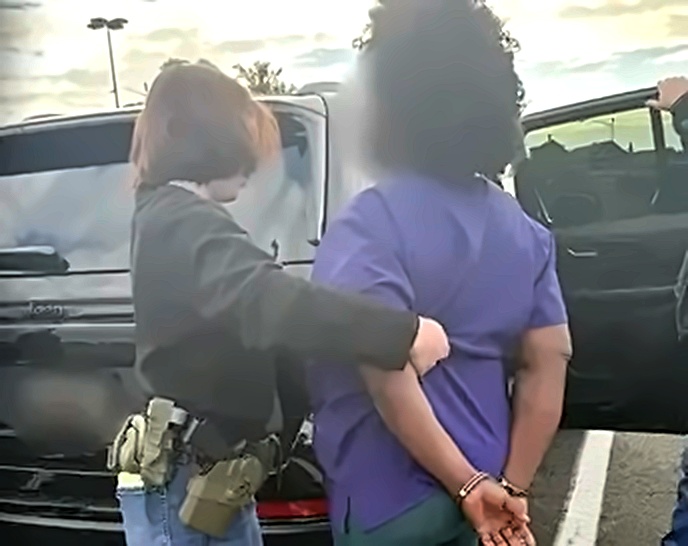
Gladys Adaeze Okafor, a 56-year-old Nigerian woman living in Massachusetts as a lawful permanent resident, has been arrested and charged in the United States after authorities accused her of illegally voting in federal elections.
Okafor, who is not a US citizen, allegedly registered to vote after falsely declaring that she was an American citizen and later cast ballots in the 2022 midterm elections and the 2024 presidential primary, according to US federal prosecutors.
But beyond the arrest, what could happen to the Nigerian woman if the allegations against her are proven in court?
The case carries potential criminal and immigration consequences, including imprisonment, a fine and possible removal from the United States.
What is Gladys Okafor accused of?
According to the US Department of Justice, Okafor was born in Nigeria and became a lawful permanent resident of the United States in December 2022.
Prosecutors allege that she was not a US citizen and had not applied for US citizenship.
In July 2022, she allegedly submitted a voter registration card in Lynn, Massachusetts, and certified that she was a US citizen.
She allegedly submitted another voter registration form in October 2023 and again indicated that she was a US citizen.
Authorities say she subsequently voted in the 2022 midterm election and the 2024 presidential primary.
The allegations are now before the federal court, and Okafor remains presumed innocent unless she is found guilty.
Why is the alleged offence illegal?
US federal law prohibits non-citizens from voting in elections held to elect the president, vice president, presidential electors and members of Congress.
The prohibition is contained in 18 U.S.C. §611, which makes it unlawful for an alien to vote in specified federal elections, subject to limited exceptions.
That means holding a US green card does not give a person the right to vote in federal elections.
A lawful permanent resident can live and work in the United States, but permanent residency is different from US citizenship.
In Okafor’s case, prosecutors are alleging something more than simply casting a ballot while being ineligible. They say she repeatedly certified on voter-registration forms that she was a US citizen.
What punishment could she face?
If convicted of the federal charge, Okafor faces a maximum sentence of one year in prison and a fine of up to $10,000, according to reporting on the federal case and the Justice Department’s charging information.
That is the maximum statutory penalty, not an indication that she will necessarily receive the maximum sentence.
The actual outcome would depend on the proceedings before the federal court, including the evidence, any plea agreement and the court’s sentencing decision.
The federal law itself provides for a fine, imprisonment for not more than one year, or both for unlawful voting covered by the statute.
Could Gladys Okafor be deported?
Yes, possible removal from the United States is another major consequence.
US immigration law contains provisions dealing specifically with non-citizens who unlawfully vote.
Section 237(a)(6)(A) of the Immigration and Nationality Act provides grounds for deportability where a non-citizen has voted in violation of a federal, state or local law, subject to the statutory provisions and exceptions.
Legal guidance citing a Board of Immigration Appeals precedent explains that unlawful voting can have serious immigration consequences for non-citizens.
The Justice Department has also indicated that Okafor may be subject to deportation after any sentence imposed in the criminal case.
So even if the criminal punishment were limited to a fine or a relatively short prison term, the case could still threaten her ability to remain legally in America.
Does being a green-card holder protect her from deportation?
No.
A green card gives a person lawful permanent resident status, but it does not make the person a US citizen.
Permanent residents can lose their status or become subject to removal proceedings if they commit certain offences or fall within specified grounds of deportability.
That is why the immigration consequences could be particularly significant for Okafor if prosecutors establish the allegations against her.
The US Citizenship and Immigration Services policy materials also identify unlawful voting as a matter relevant to immigration and naturalisation decisions.
What happens to her case now?
Okafor was arrested on September 16, 2026, and was expected to make her first appearance in federal court in Boston.
That appearance is not a trial.
At this stage, prosecutors have brought allegations against her and the court must determine how the case proceeds.
The government will have to establish the elements of the offence in court if the case goes to trial.
Okafor remains presumed innocent unless and until she is found guilty.
Why does the citizenship claim matter?
One of the more significant aspects of the allegations is that prosecutors say Okafor did not merely vote despite being ineligible.
They allege that she affirmatively identified herself as a US citizen on voter-registration forms.
According to the reported case details, she made the certification in 2022 and again in 2023.
That alleged certification is important because federal law does not simply ask whether someone physically cast a ballot. The circumstances surrounding registration and the person’s citizenship status can create additional legal issues.
The Justice Department has been prosecuting a number of cases involving alleged non-citizen voting and false citizenship claims in 2026.
Could the case affect her US citizenship application?
Okafor has reportedly not applied for US citizenship.
But if she were to seek naturalisation in the future, an unlawful-voting allegation could create serious problems.
USCIS guidance specifically addresses unlawful voting when assessing issues related to naturalisation and good moral character.
This means the consequences of the case could extend beyond the immediate criminal proceedings.
What happens if she is convicted?
If Okafor is convicted, there are potentially three separate consequences to watch.
First is the criminal punishment. She could face up to one year in prison, a fine of up to $10,000, or both under the federal voting-by-alien statute.
Second is her immigration status. A conviction or qualifying finding of unlawful voting can expose a non-citizen to removal proceedings under US immigration law.
Third is the effect on any future attempt to become a US citizen. Unlawful voting can create immigration and naturalisation problems, making the allegation potentially significant long after the criminal case ends.
However, none of these outcomes should be treated as already decided.
Okafor has been charged, not convicted.
Her case must still go through the US federal court process, where the allegations will be tested.
For now, the central question is not simply why a Nigerian green-card holder allegedly voted in a US election.
It is what the US justice and immigration systems will do next if prosecutors prove that Gladys Adaeze Okafor knowingly registered and voted while claiming to be an American citizen.