

From Okpebholo’s Warning to Benue Roadblock: On What Basis Can Peter Obi Be Stopped From Entering a Nigerian State?

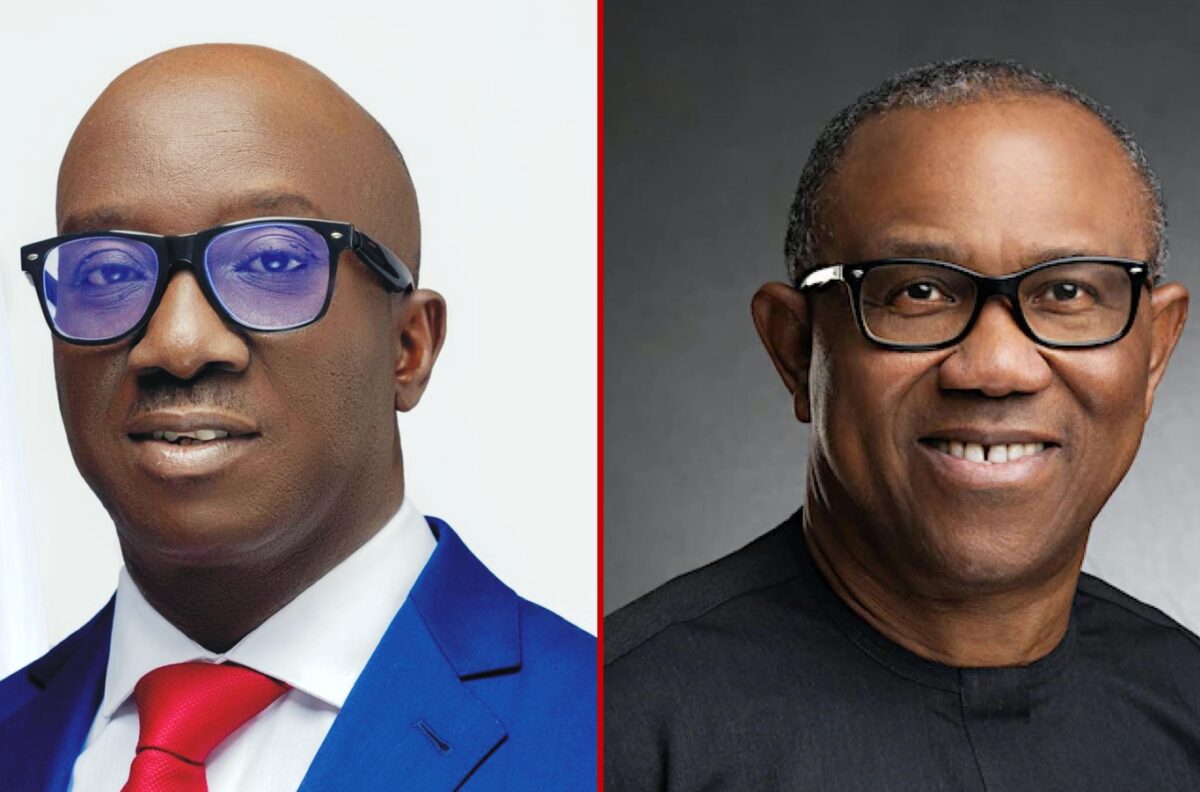
The question of whether Peter Obi can freely move across Nigeria has resurfaced after the presidential candidate of the Nigeria Democratic Congress (NDC) was reportedly stopped by youths during a visit to Benue State on Tuesday, September 8, 2026.
Obi was heading towards Yelwata to visit families affected by the killings in the community when his convoy was blocked along Gboko Road in Makurdi.
Videos from the scene showed a crowd barricading the road as some youths chanted, “We don’t want Peter Obi.” The incident reportedly disrupted traffic and prevented Obi’s convoy from proceeding for some time.
Speaking at the scene, Obi said he had travelled to Benue to sympathize with victims of the killings but was prevented from continuing his journey.
He alleged that the youths had been mobilised and claimed he was told that a government aide was behind the decision to block the road.
However, the Benue State Government has denied involvement.
The Chief Press Secretary to Governor Hyacinth Alia, Kula Tersoo, said the government was unaware of Obi’s visit and insisted that the administration does not patronise thugs.
The Benue State Police Command also said it was aware of Obi’s movement to Yelwata and that police operatives provided security for his convoy. The command said the reason some youths blocked the convoy remained unknown and that the incident was being investigated.
The incident therefore raises a bigger question: on what legal basis can Peter Obi, or any Nigerian citizen, be prevented from entering or moving through a state?
What does the Constitution say?
Nigeria’s 1999 Constitution is clear on freedom of movement.
Section 41(1) states that every Nigerian citizen is entitled to move freely throughout Nigeria and reside in any part of the country.
That right is not absolute. The Constitution recognises circumstances in which movement may be restricted by law, particularly in relation to criminal proceedings and other constitutionally permitted limitations.
But the important point is that such restrictions must have a legal foundation.
This issue became prominent in 2025 when Edo State Governor Monday Okpebholo warned Obi not to enter Edo without notifying him or obtaining security clearance.
Okpebholo linked the warning to violence that occurred around the time of Obi’s previous visit to the state and said the situation would not be tolerated.
The warning attracted criticism from lawyers and civil society figures. One legal argument was that a governor could not, by personal pronouncement, suspend a citizen’s constitutional right to move freely around Nigeria.
The Benue incident now brings the same question back into the national conversation.
A governor has responsibility for security within his state, and authorities can impose lawful restrictions where there is a genuine security threat. But that is different from a politician simply deciding that a particular opposition figure should not enter the state.
In Obi’s case, there is currently no indication from the police or the Benue State Government that he was under any legal restriction preventing him from entering or moving within Benue.
Instead, what happened on Tuesday was that a group of youths physically blocked his convoy.
Whether the protesters acted independently, were mobilised by political actors, or were connected to anyone in government remains a matter requiring evidence. Obi’s allegation and the government’s denial should therefore be treated separately from the established fact that his convoy was blocked.
Beyond Peter Obi, however, the incident raises a troubling democratic question.
If an opposition politician can be prevented from reaching communities in a state because some group decides they do not want him there, what happens to political competition when the 2027 election season becomes more intense?
Nigeria’s democracy cannot depend on which political party controls a particular state before determining whether an opposition figure can move freely within it.
The Constitution provides the starting point: Nigerian citizens have a right to move throughout the country.
The question now is whether that right can be effectively determined by roadblocks, political warnings or the preferences of those controlling – or claiming to control – the political space in a state.