

Air Peace, Ibom Air… Airlines with Most Delayed Flights in Nigeria you Should Know

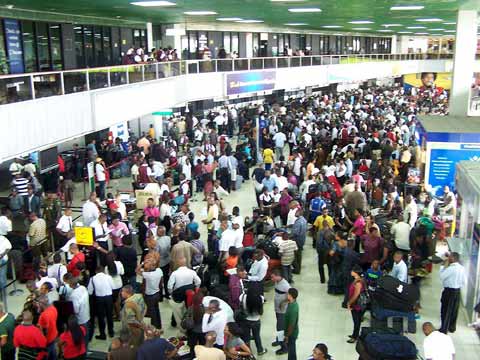
Credit: Vanguard photos
Nearly six out of every 10 domestic flights operated by Nigerian airlines in August 2026 were delayed, according to the latest data from the Nigeria Civil Aviation Authority (NCAA).
The regulator’s August 2026 flight disruption summary showed that 15 domestic airlines operated 7,961 flights during the month, of which 4,765 were delayed.
Another 36 flights were cancelled.
The figures mean that 59.9 per cent of domestic flights recorded by the NCAA were delayed in August, making punctuality a major issue for passengers travelling within the country.
Air Peace recorded the highest number of delayed flights, while United Nigeria Airlines recorded the highest percentage of delayed operations.
But the figures also reveal that flight disruption in Nigeria is not limited to one carrier.
Airlines with most delayed flights in August
The NCAA data ranked the airlines according to the number of delayed flights recorded during the month.
The 10 airlines with the highest number of delays were:
1. Air Peace – 1,330
2. United Nigeria – 943
3. Enugu Air – 582
4. ValueJet – 435
5. Ibom Air – 254
6. Aero Contractors – 246
7. Rano Air – 216
8. Max Air – 204
9. Arik Air – 188
10. Overland Airways – 139
The figures are contained in the NCAA’s original August disruption table.

Air Peace had the largest number of delayed flights, with 1,330, while United Nigeria followed with 943.
Enugu Air recorded 582 delays and ValueJet had 435.
Ibom Air, which recorded 254 delayed flights, ranked fifth by the number of delayed operations.
Air Peace had the most delayed flights
Air Peace recorded 1,330 delayed flights out of 1,864 operations in August, according to the NCAA.
That means 71.4 per cent of its flights were delayed.
The airline also recorded 108 of the 235 flights across the sector that experienced delays of three hours or more.
However, the number should be considered alongside the airline’s total operations.
Air Peace operated more flights than any other carrier in the NCAA’s August report. Therefore, its position at the top of the delay table does not automatically mean it had the highest rate of delays.
That distinction is important when comparing airlines.
United Nigeria had the highest delay rate
United Nigeria Airlines recorded 943 delayed flights from 1,231 operations, giving it a delay rate of 76.6 per cent.
That was higher than Air Peace’s 71.4 per cent.
United Nigeria also recorded eight cancellations, the highest number among the airlines in the NCAA’s table.
The difference shows why looking only at the number of delayed flights can be misleading.
Air Peace had more delayed flights because it operated more flights overall, but a greater proportion of United Nigeria’s operations were delayed.
What about Ibom Air and the other airlines?
Ibom Air ranked fifth by the absolute number of delayed flights, with 254 delays from 560 operations.
That represented a delay rate of about 45.4 per cent.
Aero Contractors recorded 246 delays from 469 operations, while Rano Air had 216 delays from 503 flights.
Max Air recorded 204 delays from 336 operations, giving it a delay rate of about 60.7 per cent.
Arik Air recorded 188 delays from 301 operations, while Overland Airways had 139 delays from 239 flights.
The figures show that the frequency of delays varied considerably among airlines operating in Nigeria during the month.
Not all delays lasted for hours
Although 4,765 flights were delayed, the NCAA figures show that most disruptions lasted less than two hours.
Of the total delays, 2,801 lasted between 16 minutes and one hour.
Another 1,322 flights were delayed between one and two hours.
However, 407 flights experienced delays of between two and three hours, while 235 were delayed for at least three hours.
That means 642 flights were delayed for more than two hours in August.
The sector recorded only 36 cancellations, meaning delays were by far the more common form of disruption during the month.
For passengers, however, even a delay that does not result in cancellation can create problems, particularly when it causes them to miss connecting flights, appointments or other scheduled activities.
Why are so many Nigerian flights being delayed?
The NCAA’s monthly summary provides the figures but does not assign a specific cause to every delayed flight.
However, recent statements from the regulator and airlines point to several factors.
NCAA Director-General Capt. Chris Najomo has raised concerns about crew shortages and airline scheduling, urging operators to ensure their published schedules match the aircraft and crew available to operate them.
The regulator has also identified adverse weather, flight diversions and airport operating restrictions as factors capable of disrupting schedules.
Airlines have separately pointed to aircraft availability and technical problems.
At a recent meeting with the NCAA, Air Peace Chief Operating Officer Oluwatoyin Olajide said the airline had 20 aircraft, but five were grounded at the time.
According to New Telegraph’s report on the NCAA meeting with Air Peace and Max Air, Air Peace cited issues including bird strikes, cracked windshields, delays in obtaining spare parts, weather and airport night operating restrictions among factors affecting its operations.
That does not establish that these factors caused all 1,330 of Air Peace’s delays. The NCAA data does not provide that level of detail.
Crew shortages are also affecting airlines
Aircraft availability is only part of the problem.
Max Air told the NCAA that it had three serviceable Boeing 737 aircraft available for domestic operations but was operating only two because of crew shortages.
The airline subsequently adjusted its schedule to reflect its available capacity, according to New Telegraph.
The issue has placed greater attention on the need for airlines to ensure that their schedules are realistic.
When an airline has fewer aircraft or crew than required to operate its published timetable, a delay on one flight can affect subsequent flights using the same aircraft or crew.
Weather can also throw schedules off
Weather is another factor that can disrupt flights even when an airline has sufficient aircraft and crew.
In August, an Air Peace Lagos-Asaba flight was diverted back to Lagos after poor visibility made landing unsafe, according to New Telegraph’s report on the incident.
A diversion does not necessarily affect only the flight involved.
If an aircraft arrives late at its next destination, passengers scheduled to use that aircraft for another route may also face delays.
This is one reason why disruptions can spread across an airline’s schedule during a busy operating day.
Umza Air had one of the lowest delay rates
The NCAA table also shows that some airlines recorded substantially lower delay rates.
Umza Air had 52 delayed flights from 403 operations, representing about 12.9 per cent of its flights.
XE Jet recorded 40 delays from 127 operations, while Binani recorded 22 from 57 flights.
The differences demonstrate that the August disruption figures were not uniform across the domestic aviation sector.
They also provide a useful reminder that an airline’s total number of delays should always be considered alongside the number of flights it operated.
What the figures mean for Nigerian passengers
For passengers, the statistics translate into a familiar experience: longer waits at airports and uncertainty over when flights will actually depart.
The scale of the disruption also raises questions about airline scheduling, aircraft availability and how quickly passengers are informed when something goes wrong.
The NCAA has responsibilities beyond simply recording the figures. The regulator also provides information on passenger rights covering issues such as delays, cancellations and denied boarding.
For airlines, the challenge is to reduce avoidable disruptions and ensure passengers receive timely information when delays are unavoidable.
The August figures show that the problem cannot be reduced to one airline.
Air Peace had the highest number of delayed flights, but United Nigeria had the highest delay rate among the major operators in the table.
And behind the numbers are wider challenges involving aircraft availability, crew shortages, weather, airport restrictions and scheduling.
For Nigerian travellers, the bigger question is no longer simply which airline had the most delays?
It is whether the country’s airlines and aviation regulators can make domestic air travel more predictable.