

Dangote Refinery Faces Fresh Petrol Competition as 6 Marketers Get Import Approval

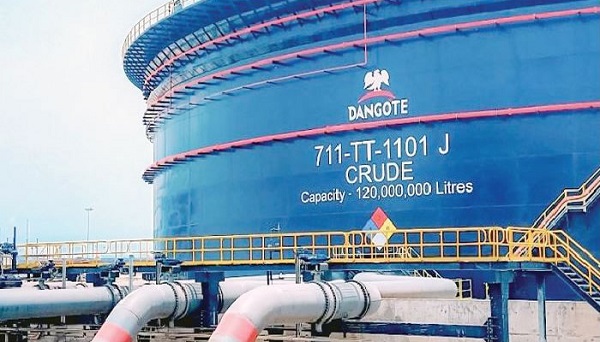
Photo credit: The Nations Newspaper
Dangote Refinery will continue to face competition from imported petrol after Nigeria’s downstream petroleum regulator approved another 830,000 metric tonnes of Premium Motor Spirit (PMS) imports for six oil marketers.
The Nigerian Midstream and Downstream Petroleum Regulatory Authority (NMDPRA) issued the latest approvals on September 18, 2026, allowing Matrix Energy, A.A. Rano, AYM Shafa, NIPCO, Pinnacle Oil and Bono Energy to import petrol during the fourth quarter.
The development means imported petrol will remain part of Nigeria’s fuel supply mix despite the growing contribution of domestic refineries, particularly the Dangote Petroleum Refinery.
For Dangote Refinery, the significance goes beyond the volume of petrol entering the country.
The refinery has become a major source of domestic petrol, but the government’s decision to maintain an import window means it must continue competing with foreign-sourced products for a share of the Nigerian market.
Dangote Refinery remains Nigeria’s major petrol supplier
The latest approvals do not mean Nigeria has returned to its previous heavy dependence on imported petrol.
NMDPRA data reported by The Guardian showed that domestic refiners supplied nearly 80% of the petrol available in Nigeria during the first six months of 2026, while imports accounted for just over 20%.
Dangote Refinery has been responsible for a substantial part of that domestic supply.
NMDPRA’s July data showed that Dangote produced about 25.9 million litres of petrol per day, supplied approximately 25.8 million litres daily to the domestic market and exported another 3.4 million litres per day. The refinery operated at an average capacity utilisation of 71.09% that month.
The figures show why the refinery has changed the structure of Nigeria’s downstream market, even though imports have not disappeared.
Six marketers get another route to petrol
The six companies approved for the latest import allocation are:
- Matrix Energy
- A.A. Rano
- AYM Shafa
- NIPCO
- Pinnacle Oil
- Bono Energy
The same companies had previously received import approvals during 2026.
Their combined allocation increased from 180,000 metric tonnes in the first quarter to 720,000 tonnes in the second quarter, with the latest approval maintaining an import allocation for the final quarter of the year.
For these marketers, the approvals provide an alternative to sourcing all their petrol from domestic refiners.
That is particularly relevant because Dangote Refinery previously stopped supplying petrol to the six companies after they obtained active import licences.
Why the import approvals matter to Dangote
The latest development creates a more complicated market for Dangote Refinery.
A marketer with an import licence can source petrol internationally instead of relying entirely on locally refined PMS. That gives the company another option when negotiating supply, price and delivery arrangements.
In early September, reports indicated that Dangote Refinery had decided to prioritise petrol sales to marketers without active import licences and stop supplying the six licensed importers. The affected companies included the same six firms that have now received the latest Q4 allocations.
The result is a clearer split in the market: some marketers can source petrol from Dangote and other domestic suppliers, while the six licensed companies have regulatory approval to bring in imported PMS.
This does not automatically mean imported petrol will be cheaper than Dangote’s product.
Imported petrol is not automatically cheaper
Nigeria’s downstream market is deregulated, meaning the prices of petrol can respond to crude oil prices, foreign exchange rates, transportation costs and international product prices.
Recent data also shows that imports can become more expensive when international fuel markets tighten.
The Guardian reported that the latest 830,000-tonne approval comes as international gasoline markets face tighter supply conditions and higher prompt-market prices.
That could give Dangote an advantage at times when its locally refined petrol is competitively priced against imported cargoes.
However, the presence of import licences means marketers are not completely dependent on one domestic refinery for supply.
Petrol imports had already risen in July
The importance of the new approvals becomes clearer when compared with recent supply data.
NMDPRA’s July figures showed domestic petrol supply fell to 25.8 million litres per day, while imports increased to 19.7 million litres per day.
Total petrol supply was 45.5 million litres per day during the month, while daily consumption stood at 35.7 million litres.
According to figures cited by the Centre for the Promotion of Private Enterprise (CPPE), imported petrol accounted for about 43.3% of PMS receipts in July, compared with 35.8% in June and 12.4% in May.
The organisation has argued that import approvals should be tied to clearly verified domestic supply gaps rather than allowing imports to operate as a parallel source of supply where local production is adequate.
Dangote’s dispute with the government continues
The import approvals also come while Dangote Refinery is involved in a broader dispute with the Federal Government over petrol import licences.
The refinery has challenged the continued issuance or renewal of import licences, arguing that imports should not continue where domestic refiners can adequately meet national demand.
The government and other industry players have maintained that imports remain a legitimate tool for ensuring adequate fuel supply and preventing shortages.
NNPC Limited has argued that the Petroleum Industry Act does not impose a blanket prohibition on petrol imports and that imports can remain necessary to guarantee national supply.
The latest approvals therefore extend an existing policy approach rather than introducing petrol imports to a market that had already become fully dependent on domestic refining.
What the new approvals mean for petrol buyers
For consumers, the immediate implication is that Nigeria will continue to have both domestically refined and imported petrol in the market.
That could provide additional supply options for marketers, but it does not by itself guarantee lower pump prices.
Petrol prices will continue to depend on factors including the cost of crude oil, refinery prices, international petrol prices, foreign exchange, transportation and other downstream costs.
The new approvals could, however, preserve competition between domestic and imported supply.
For Dangote Refinery, the challenge is therefore not simply producing enough petrol. It also has to remain competitive in a market where the government continues to allow selected marketers to source PMS from outside Nigeria.
Dangote’s position has changed the market, but imports remain
The latest 830,000-tonne allocation shows that Dangote Refinery’s emergence has dramatically changed Nigeria’s fuel market without completely eliminating petrol imports.
Before the expansion of domestic refining, Nigeria depended heavily on imported PMS. The growth of Dangote and other domestic refiners has reduced that dependence, but NMDPRA’s latest decision shows that the government still considers imported petrol part of its supply strategy.
For the remainder of 2026, the Nigerian petrol market will therefore continue to involve a combination of domestic refining and imported supply.
The balance between the two will remain important for Dangote Refinery, oil marketers and ultimately Nigerian consumers.