

Why China is sending Military scholars and not its Defence Minister to Asia’s biggest security summit

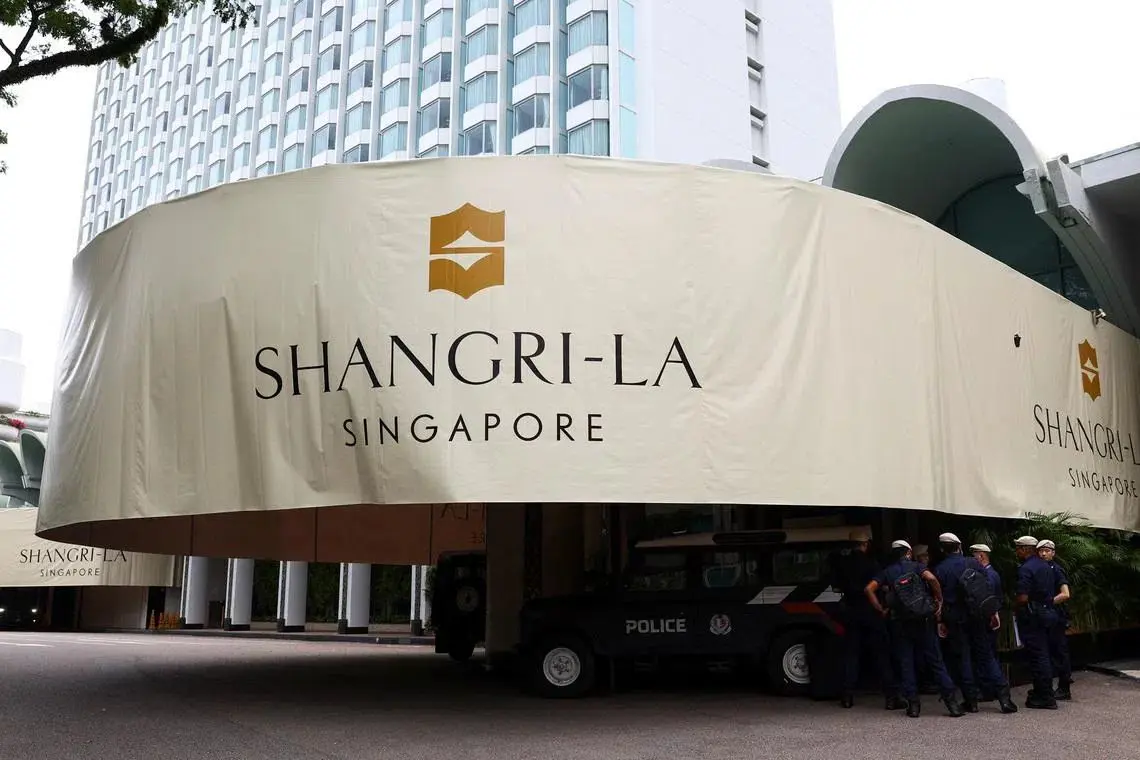
China sends military delegation to Singapore security summit. Image Credit: REUTERS
China has confirmed it will send a delegation of military experts and scholars to the upcoming in Singapore, a move that is already attracting global attention amid rising geopolitical tensions in the Asia-Pacific region.
The annual Shangri-La Dialogue, regarded as Asia’s premier defence and security summit, officially opens on Friday in Singapore and is expected to bring together senior military officials, policymakers, and defence experts from across the world.
However, China’s decision to once again exclude Defence Minister Dong Jun from the forum has sparked renewed discussions over Beijing’s diplomatic strategy and evolving approach to international security engagement.
China Confirms Delegation Of Military Experts
Speaking during a regular press briefing in Beijing, Chinese Defence Ministry spokesman announced that the Chinese delegation would consist of scholars and experts from the country’s top military institutions.
According to Chinese authorities, the delegation will be led by Major General Meng Xiangqing of the National Defense University.
Other delegates are expected to include specialists from the People’s Liberation Army Academy of Military Science and the Chinese Navy.
Chinese officials said the delegation’s primary objective is to strengthen regional dialogue, improve trust among participating countries, and present China’s security perspectives on major Asia-Pacific issues.
Beijing also stressed that it remains committed to “openness and inclusiveness” in regional defence cooperation despite growing tensions with Western powers.
Why Dong Jun’s Absence Is Generating Attention
The absence of Defence Minister Dong Jun has become one of the most discussed aspects of China’s participation in the summit.
This marks the second consecutive year the Chinese defence chief will skip the Shangri-La Dialogue, a forum traditionally viewed as an important venue for direct communication between global military powers.
Last year, reports surfaced alleging that Dong Jun was under investigation for corruption, claims Chinese authorities strongly denied and described as “pure fabrications.”
Although Beijing has not officially linked his absence to those earlier allegations, analysts believe the decision reflects China’s increasingly cautious diplomatic posture at international defence forums.
The summit has historically served as a rare opportunity for direct engagement between Chinese and American defence officials, particularly during periods of strained relations.
READ ALSO
United States Expected To Play Major Role At Summit
While China is sending scholars instead of top political officials, the United States is expected to maintain a strong presence at the summit.
US Defense Secretary Pete Hegseth is scheduled to attend the dialogue, where discussions are expected to focus heavily on regional security concerns, maritime disputes, military cooperation, and strategic competition in the Indo-Pacific.
The forum comes at a time when tensions remain high over issues involving the South China Sea, Taiwan, cybersecurity, and military alliances across the region.
Security analysts say China’s choice to send military scholars rather than senior political leaders could indicate a deliberate attempt to reduce direct political confrontation while still maintaining influence within regional defence conversations.
China’s Strategy In Asia-Pacific Defence Diplomacy
China has increasingly promoted alternative platforms for international security engagement in recent years.
Beijing organizes its own major defence forum known as the Xiangshan Forum, often viewed as China’s answer to the Shangri-La Dialogue.
The Chinese government says its approach prioritizes mutual respect, cooperation, and non-interference in domestic affairs.
At Thursday’s briefing, spokesman Jiang Bin emphasised that Chinese delegates attending the Singapore summit would work toward “building trust, clarifying doubts, forging consensus, and deepening cooperation.”
Observers say the participation of academics and military scholars may allow China to communicate its security priorities in a more controlled and less politically sensitive environment.
Why The Shangri-La Dialogue Matters Globally
The Shangri-La Dialogue has become one of the world’s most influential security forums since its launch in 2002.
Hosted annually in Singapore, the summit regularly attracts defence ministers, military commanders, intelligence experts, and strategic analysts from dozens of countries.
It often serves as a platform for major policy announcements, bilateral meetings, and discussions about global security challenges.
This year’s summit is expected to feature intense conversations around military modernization, regional conflicts, economic security, and the future of global alliances.
China’s participation, despite the absence of its defence minister, signals that Beijing still considers the forum strategically important as competition for influence in the Asia-Pacific continues to intensify.
FAQ
What is the Shangri-La Dialogue?
The Shangri-La Dialogue is Asia’s leading international security and defence summit held annually in Singapore. It brings together military leaders, defence ministers, and policymakers from around the world.
Why is China attending the Shangri-La Dialogue?
China says it is participating to strengthen defence cooperation, promote dialogue, and explain its security initiatives in the Asia-Pacific region.
Who is leading China’s delegation?
The Chinese delegation is being led by Major General Meng Xiangqing of the National Defense University.
Why is China not sending Defence Minister Dong Jun?
Chinese authorities have not provided a detailed explanation. However, this is the second consecutive year Dong Jun has skipped the summit amid ongoing international scrutiny.
What issues are expected to dominate the summit?
Key discussions are expected to focus on Indo-Pacific security, US-China relations, Taiwan, maritime disputes, military modernization, and regional stability.
Who is Pete Hegseth?
Pete Hegseth is the current United States Defense Secretary and is expected to represent the US at the summit.
What is the Xiangshan Forum?
The Xiangshan Forum is China’s own international defence summit and is often viewed as Beijing’s alternative to the Shangri-La Dialogue.
Why is the Asia-Pacific region strategically important?
The Asia-Pacific is a major global economic and military hub, making it central to international trade, security alliances, and geopolitical competition.
Are US-China relations worsening?
Relations between the United States and China remain tense over issues including Taiwan, trade, military activity, and regional influence.
What message is China trying to send by dispatching scholars instead of politicians?
Analysts believe China may be attempting to maintain diplomatic engagement while reducing direct political confrontation at high-level international defence forums.