

Brazil election result: Lula wins as Bolsonaro challenges

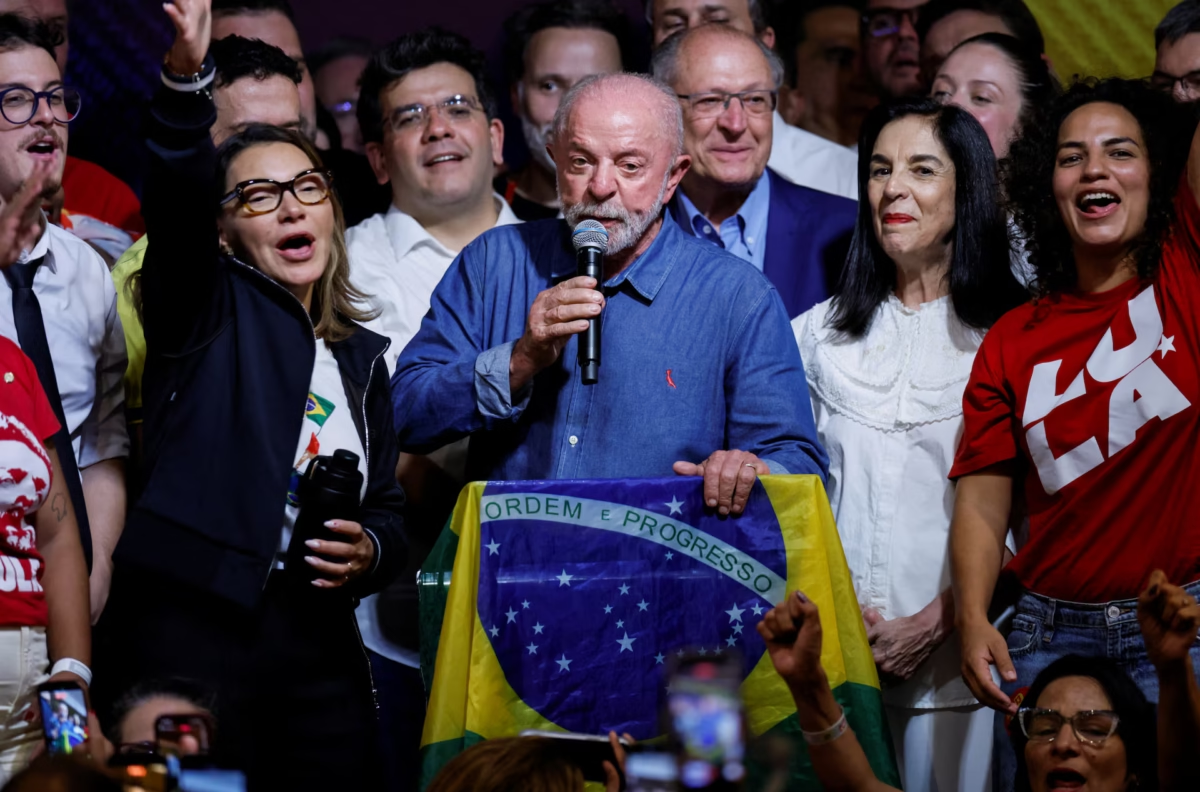
The Brazil election result is official: Luiz Inácio Lula da Silva has won a fourth, non-consecutive presidential term, defeating Flávio Bolsonaro in Sunday’s runoff. The electoral court recorded 64,256,232 votes for Lula and 59,826,041 for Bolsonaro, a margin of 4.43 million. Bolsonaro says he plans to challenge the result after objecting to a late change in voting hours.
Brazil election result: how the vote changed
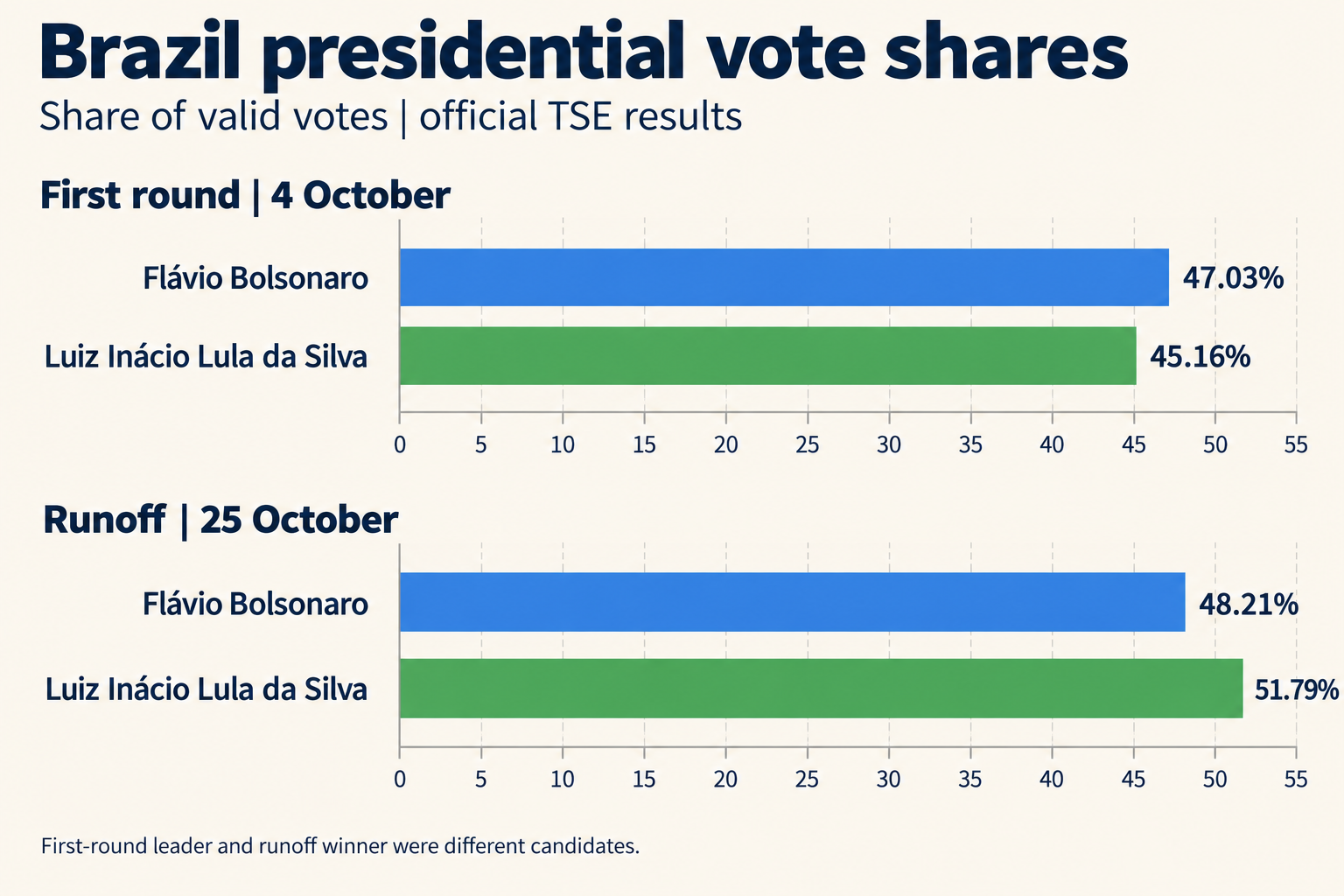
The first round on 4 October left Bolsonaro ahead with 47.03% of valid votes, against Lula’s 45.16%, according to the TSE’s first-round tally. Neither had a majority, so the two advanced to a runoff on 25 October. In that second vote, Lula secured 51.79% and Bolsonaro 48.21%.
The comparison shows a 1.87-point first-round lead for Bolsonaro becoming a 3.58-point runoff lead for Lula. The final gap was about 4.43 million votes. That is the scale of the reversal; the percentages alone do not explain why individual voters changed their choices, and the election authority has not attributed the outcome to any single issue.
The runoff drew about 128.2 million voters from more than 158 million eligible electors. The TSE put abstention at roughly 19.2%, down from 21.08% in the first round. Those figures describe turnout, not the reasons people voted for either candidate. For a broader look at the governing questions, see CrispNG’s next-term analysis.
What Bolsonaro is challenging
Bolsonaro has objected to a two-hour extension at some polling stations. The TSE’s account says a Supreme Court order, issued shortly before the scheduled close, extended voting from 17:00 to 19:00 at sections that were still open. Many electronic ballot boxes had already closed and could not be reopened, so officials temporarily paused the receipt of results bulletins while they adjusted the count. The court says its technical teams then advanced the totalisation and announced the result.
Reuters and the Associated Press reported that Bolsonaro said he would seek annulment, arguing that the late order affected the election. That is his allegation, not a finding that the voting or count was unlawful. Reports said the legal route he would use was not clear; as of his public statement, a filed court petition had not been identified.
Brazil’s Constitution provides one route to contest an elected mandate: a case may be filed in the Electoral Courts within 15 days of the winner’s formal certification, and it must be supported by evidence of economic abuse, corruption or fraud. That standard matters. A candidate’s objection to a court order does not, by itself, establish one of those grounds or reverse a certified result.
What we don’t know yet
It remains unclear whether Bolsonaro will file a case, which legal argument he will pursue, or what evidence he will submit. The TSE’s official summary describes the timing and operational effects of the voting extension, while Bolsonaro disputes its fairness; a court has not yet resolved that disagreement.
Nor is there a ruling that the extension changed the result. The final totals show a margin of more than four million votes, but the size of the margin alone cannot settle a legal claim. The Electoral Court would need to assess the evidence and any procedural challenge through the applicable legal process.
The next scheduled milestone is the formal presentation of election certificates by 18 December, followed by the presidential inauguration on 5 January 2027. Any challenge and the Electoral Court’s response will determine whether the dispute moves beyond public statements before that handover.
Sources
- TSE final result
- TSE first-round tally
- Reuters report
- Associated Press report
- Brazil Constitution
- TSE election calendar