

Before You Convert Your Car to CNG, Understand These 5 Hidden Costs

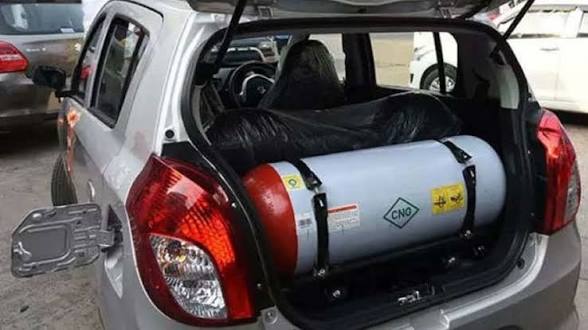
Compressed natural gas (CNG) offers Nigerian motorists a way to reduce fuel expenses, but the cost of conversion is only the beginning. From refuelling difficulties to maintenance expenses, several factors determine whether switching from petrol will deliver meaningful savings.
Nigeria’s push for compressed natural gas as a cheaper alternative to petrol is facing a practical challenge: converting a vehicle does not guarantee that its owner can consistently access the fuel.
That problem came into focus in Niger State in October 2026 when motorists protested at an NNPC mega station in Minna over a reported breakdown that had disrupted CNG supplies for three months.
The incident highlights an important consideration for motorists weighing the switch. Although CNG can reduce fuel expenses, the financial benefits depend on more than the price of gas at the pump.
Before converting a car, here are five costs and challenges worth considering.
1. The Initial Cost of Converting Your Car
The first expense is installing the equipment needed to run a vehicle on CNG.
Depending on the vehicle, conversion system, equipment specifications and installer, the cost can run into hundreds of thousands of naira or more. Motorists should obtain current quotations from qualified installers rather than relying on a single advertised price.
The upfront payment also affects how quickly a driver can recover the investment.
For example, a motorist who spends ₦800,000 on conversion needs to save that amount through lower fuel expenses before the investment breaks even. If the switch saves ₦40,000 monthly, it would take 20 months to recover the initial cost, assuming the savings remain constant and excluding additional expenses.
The calculation becomes less favourable if the vehicle spends significant time off the road or the driver frequently returns to petrol.
2. Refuelling Difficulties and Lost Working Hours
Access to CNG is another factor that can determine whether conversion makes financial sense.
A motorist who lives or works far from an operational refuelling station may have to travel extra kilometres to obtain gas. Long queues, supply interruptions and station breakdowns can add further inconvenience.
For commercial drivers, the consequences extend beyond fuel expenses.
Time spent searching for gas or waiting to refuel is time that could have been used to transport passengers or goods. The resulting loss of income can reduce the savings achieved by buying cheaper fuel.
The Minna protest illustrates the potential consequences of a prolonged interruption. When a station becomes unavailable, motorists who depend on it may struggle to use the fuel system they paid to install.
Before converting a vehicle, drivers should identify operational CNG stations along their regular routes and consider whether alternative refuelling points are available.
3. Maintenance and Equipment Costs
A CNG conversion introduces additional equipment that requires proper installation, inspection and maintenance.
The exact requirements depend on the system fitted to the vehicle. Motorists should ask installers about recommended servicing intervals, replacement components, inspection requirements and warranty coverage before committing to a conversion.
Equipment quality also matters. An unusually cheap conversion package may not offer the same assurance as a properly installed system using suitable components.
Drivers should therefore consider the qualifications of the installer and the availability of after-sales support, not just the initial quotation.
These expenses do not mean CNG systems are inherently unreliable. Rather, they show why motorists need to understand the responsibilities associated with the particular system they choose.
4. Returning to Petrol When CNG Is Unavailable
Some converted vehicles can operate on petrol as well as CNG, depending on the conversion system. This flexibility can be useful when gas is unavailable, but it also means motorists may still face petrol expenses.
Consider a commercial driver who planned to rely primarily on CNG to reduce daily fuel costs. If the nearest station runs out of gas or shuts down for repairs, the driver may have to buy petrol to continue working.
Repeated interruptions can make monthly fuel expenses less predictable and delay the recovery of the conversion investment.
Motorists should confirm whether their chosen system supports petrol operation, how switching between fuels works and what expenses may arise when CNG cannot be obtained.
The key consideration is not simply whether gas is cheaper than petrol. It is whether the driver can use that cheaper fuel often enough to achieve the expected savings.
5. The Availability of Reliable Refuelling Infrastructure
Nigeria’s CNG programme depends on more than the number of vehicles converted. It also requires refuelling stations that are accessible, operational and capable of meeting demand.
In October 2026, the Federal Government reported that more than 120,000 vehicles had been converted under the national initiative, alongside the development of additional refuelling infrastructure.
However, the number of converted vehicles or announced stations does not, by itself, establish how reliably motorists can obtain CNG in their locations.
A station may be too far from a driver’s regular route, experience supply interruptions or become temporarily unavailable because of equipment faults. Each situation affects the practical value of conversion.
The Minna incident therefore raises a broader question about the relationship between vehicle conversions and dependable fuel access.
For motorists, the relevant measure is not simply whether CNG stations exist in Nigeria. It is whether they can obtain the fuel conveniently and consistently where they live and work.
Is Converting Your Car to CNG Worth It?
CNG conversion can reduce fuel expenses, particularly for motorists who travel frequently and have dependable access to refuelling stations. However, the savings vary according to the vehicle, conversion cost, driving pattern, fuel consumption and local availability.
Before making the switch, motorists should compare the full conversion cost with realistic monthly fuel savings, account for maintenance and consider the cost of travelling to refuelling stations.
They should also confirm that the installation meets applicable safety requirements and that qualified technicians can maintain the system.
Ultimately, cheaper fuel is only part of the calculation. The real value of converting a car to CNG depends on whether the savings can outweigh the upfront investment and the costs of using the system over time.