
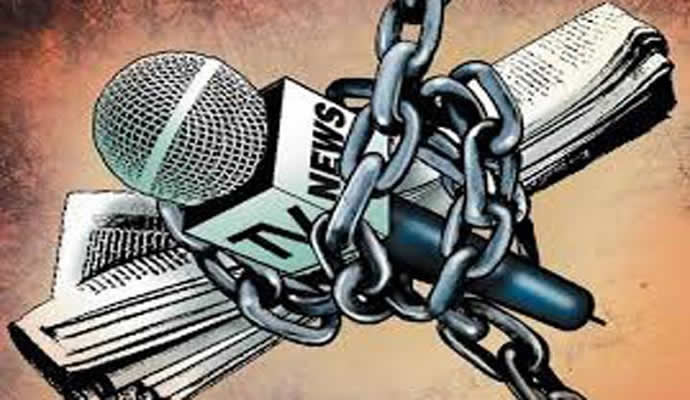
From journalists arrested over their publications to reporters abducted on assignment and media professionals found dead after going missing, the past five years have exposed the dangers of practising journalism in Nigeria. The growing concern is not only the attacks themselves, but also the failure to secure justice for victims.
A journalist can disappear after leaving the newsroom, be arrested over a report or face violence while covering an event. These are not hypothetical dangers in Nigeria. Documented cases between 2022 and 2026 show how journalists have faced threats from security agencies, political actors and armed criminals.
The scale of the problem is reflected in reports by Media Rights Agenda (MRA). Its annual reviews recorded 20 arrest-and-detention incidents in 2022, 18 in 2023 and 17 in 2024. These figures cover attacks on media freedom and freedom of expression, including incidents involving journalists and other people. They should not be mistaken for a count of individual journalists arrested.
The organisation also recorded five abduction and kidnapping incidents in 2022, none in 2023 and six in 2024. Its three-year analysis further documented two fatalities in 2023 and one in 2024.
Journalists have disappeared after facing arrest
One case that illustrates the danger is that of Daniel Ojukwu, an investigative journalist with the Foundation for Investigative Journalism (FIJ).
Ojukwu went missing in Lagos on May 1, 2024. His colleagues later discovered that police had detained him under the Cybercrime Act. His arrest followed an investigation into an alleged ₦147 million payment involving public funds. He was released on May 10 after spending nine days in detention.
His case returned to public attention in November 2026. A court remanded him at Kuje Prison over 12 alleged violations of the Cybercrime Act linked to his reporting. The Committee to Protect Journalists (CPJ) has called for the charges to be dropped.
Read also: GovSpend Media Fellows Demand Release of FIJ Journalist Daniel Ojukwu
Ojukwu is not the only journalist whose disappearance raised alarm. In March 2024, armed men abducted Segun Olatunji, editor of FirstNews, from his Lagos home. He was released on March 28 after being held for about two weeks. Amnesty International reported that the abduction followed an article alleging nepotism involving a senior intelligence official.
Some journalists never returned alive
The danger has also extended to journalists covering events outside their newsrooms.
In September 2023, Hamisu Danjibga, a Voice of Nigeria reporter in Zamfara State, went missing. His body was discovered in a soakaway behind his house three days later. The Nigeria Union of Journalists called for a thorough investigation, but the circumstances surrounding his death raised serious concerns.
In October 2024, Kolawole Omoniyi, a member of the MultiChoice SuperSport media crew, was killed by armed men along the Isseke-Orlu Road in Anambra State. He was travelling with colleagues from Lagos to Uyo to cover the Super Eagles’ Africa Cup of Nations qualifying match against Libya.
The attackers also abducted seven members of the crew. Security operatives rescued six of them, while the search continued for the remaining colleague, according to Media Rights Agenda’s report.
These cases show that the risks are not confined to investigative reporting or disputes with public officials. Journalists can also face deadly violence while travelling to cover sporting events and other assignments.
Abduction and detention remain concerns
In October 2025, Salis Manaja, a multimedia journalist with Image Merchants Promotion Limited, publishers of PRNigeria and Economic Confidential, was kidnapped while travelling from Abakaliki to Ilorin for a fellowship programme. He was released after a ransom was paid, according to MRA’s 2025 report.
The same report documented 86 incidents involving journalists, media organisations and citizens in 2025. Arrests and detentions accounted for 38 cases, while physical assaults accounted for 21. These figures cover a broader group than journalists alone.
In 2026, CPJ reported the disappearance and subsequent detention of Secret Reporters journalist Stanley Ugagbe. It also reported the November remand of Ojukwu, showing that detention over journalistic work remains a current concern.
Who protects journalists when they are attacked?
Beyond the number of incidents, the response to attacks raises another question: how often do victims get justice?
MRA’s 2025 annual report stated that none of the 86 incidents it documented resulted in a successful investigation or prosecution of perpetrators. The organisation also identified the Nigeria Police Force as the agency involved in the highest number of reported violations.
Read also: Who Keeps Watch Over the Watchdog?
The pattern raises concerns about accountability and the protection available to media professionals. Journalists are expected to investigate public institutions, expose wrongdoing and report events without fear. Yet, when they become victims of attacks, investigations and prosecutions often fail to provide answers.
The figures from MRA, CPJ and other press freedom organisations do not produce one complete national count of every journalist arrested, abducted, missing or killed between 2022 and 2026. Their different methods and reporting categories make a single combined figure unreliable.
However, the documented cases reveal a troubling reality: Nigerian journalists face risks both while reporting and after their work attracts unwanted attention. Protecting the press therefore requires more than public statements. It requires credible investigations, prosecution of perpetrators and safeguards that allow journalists to do their jobs without fear of arrest, abduction or death.