

Who keeps watch over the watchdog?

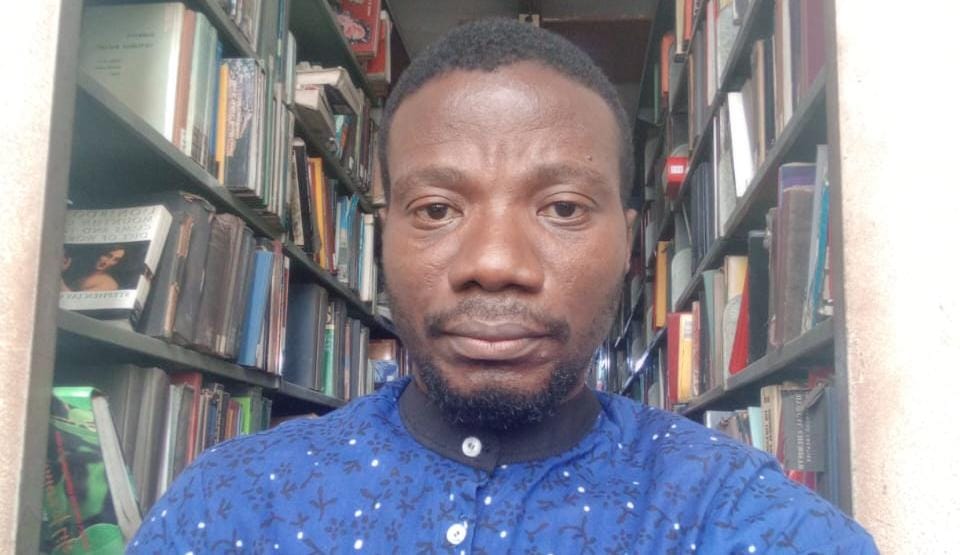
As Osun state goes to the polls, the Safety of Journalists Must Not Be an Afterthought.
It is now a matter of hours before the people of Osun State go to the polls to elect the next governor of the State of the south west state.
On Saturday, August 15, 2026, more than 2.3 million eligible voters are expected to head out to the 3,763 polling units, across 332 wards in the 30 Local Government Areas of the state popularly known as the State of the “Omoluabi” — a Yoruba expression broadly associated with good character, responsibility, civility and honour.
But beneath the excitement, political calculations, campaign rhetoric and last-minute mobilisation is another sentiment that deserves attention: many residents simply want the election to come and go peacefully.
They want to vote.
They want their votes counted.
They want the result announced.
And, above all, they want to return home alive.
That should be the most basic expectation in any democracy.
Unfortunately, Nigeria’s electoral history gives us sufficient reason not to take that expectation for granted.
WHEN POLITICS BECOMES VIOLENCE
In Osun state, campaigns have reached their crescendo. Political ambitions have hardened into expectations, and expectations can sometimes degenerate into desperation.
History has taught us that this is precisely the period when vigilance must increase.
The Armed Conflict Location & Event Data Project (ACLED), in its assessment of Nigeria’s 2023 election, documented more than 200 violent events involving political party members and supporters in the 12 months preceding the election, resulting in nearly 100 reported fatalities. Unarmed civilians were the targets in about 80 per cent of those incidents.
Perhaps more relevant to Osun is the fact that nearly one in ten of those violent incidents occurred in the state during the period examined.
Nigeria’s broader electoral history is equally troubling.
ACLED notes that political violence has repeatedly spiked around election periods since the return to democratic rule in 1999. The post-election violence of 2011 was particularly devastating, with an estimated 800 people killed. Hundreds more were reportedly killed during the 2015 and 2019 election cycles.
These numbers are not merely statistics.
Behind every number is a voter, a political supporter, a police officer, an electoral official, a journalist, a father, a mother, a son or a daughter.
And this is why the safety of everyone involved in Saturday’s election must be treated as a matter of national importance.
THEN THERE ARE THE JOURNALISTS
There is, however, one group whose safety deserves particular attention because of the nature of its responsibility.
The journalists.
Reporters.
Correspondents.
Photojournalists.
Camera operators.
Producers.
Drivers.
Editors.
And the countless media workers who will leave their homes on election morning to document what happens across Osun State.
They must be at polling units.
They must be at collation centres.
They must follow candidates.
They must speak to voters.
They must report incidents.
They must verify claims.
They must document the process.
They must tell the story.
This is the essence of journalism in a democracy.
But here lies the uncomfortable question:
How safe will these men and women be?
The journalist is often called the watchdog of democracy.
But who watches over the watchdog?
WILL THE PEN SURVIVE THE GUN?
The journalist’s most powerful weapon is information.
The pen.
The microphone.
The camera.
The recorder.
The notebook.
Today, increasingly, the mobile phone.
But what happens when that journalist carrying a camera encounters someone carrying a gun?
Can the pen confront the gun?
Can a press card stop a bullet?
Can a microphone protect a reporter from an angry mob?
Can a camera prevent a political thug from attacking the person holding it?
These are not hypothetical questions.
Nigeria has already seen what can happen.
During Nigeria’s 2023 presidential and federal elections, the Committee to Protect Journalists documented at least 14 journalists and media workers who were detained, harassed or attacked.
Then, during the governorship and state assembly elections a few weeks later, CPJ reported that at least 28 journalists and media workers were obstructed, harassed or attacked across the country.
Among those incidents were journalists who were beaten, chased away from polling locations, detained, assaulted and had equipment seized or damaged.
In one disturbing incident in Lagos, a television crew was reportedly attacked by unidentified men after using a drone to film voting stations.
In Ogun State, journalists were reportedly chased by individuals, including a masked man carrying an axe, after they were seen filming a polling station.
These incidents should not be dismissed as isolated occupational hazards.
They are warnings.
And warnings are useful only when they are heeded. And if these could happen in a relatively peaceful poll, how much should be expected in an election in a state where the many deaths have been reported even during campaign and off-campaign grounds?
A society that allows journalists to be intimidated, attacked or killed loses more than journalists. It loses information. It loses accountability. It loses part of its democratic memory.
THE JOURNALIST IS NOT THE ENEMY
This distinction must be made particularly clear during elections.
A journalist standing at a polling unit with a camera is not necessarily a political operative.
A reporter asking difficult questions is not necessarily an enemy of a political party.
A photojournalist recording an incident is not necessarily attempting to disrupt the election.
A television crew broadcasting an event is not automatically working against anyone.
Journalists are there to document.
Their work may sometimes be uncomfortable.
Their questions may expose contradictions.
Their cameras may capture conduct that political actors would rather remain unseen.
But that is precisely why journalism is indispensable to democracy.
As George Orwell famously observed, “Journalism is printing what someone else does not want printed; everything else is public relations.”
That responsibility can be uncomfortable.
It can also be dangerous.
Which is precisely why it must be protected.
WHAT ARE THE PROFESSIONAL BODIES DOING?
As the countdown continues, now into hours, some difficult but necessary questions must be asked.
What is the Nigeria Union of Journalists (NUJ) doing to prepare journalists for the security realities of Saturday’s election and demand their protection?
What conversations have taken place with the Independent National Electoral Commission (INEC) regarding media access and journalist safety?
What assurances have been obtained from the Nigeria Police Force, Department of State Services and other security agencies?
What role are the Nigeria Guild of Editors (NGE), the National Broadcasting Commission (NBC) and other relevant professional and regulatory institutions playing?
Are media organisations conducting proper risk assessments for reporters and camera crews?
Do journalists know which areas may be considered high-risk?
Do newsrooms have emergency communication protocols?
Are there designated emergency contacts?
Are journalists being deployed in pairs or teams where the risk warrants it?
Do media organisations have plans for evacuating personnel if violence erupts?
And perhaps the most practical question:
Should media organisations provide appropriate protective equipment, including ballistic vests and protective helmets, to journalists assigned to areas where credible security assessments indicate a heightened risk of violence?
These questions should not be interpreted as an invitation for journalists to operate like soldiers.
Far from it.
They are questions about reasonable preparation.
The Committee to Protect Journalists itself advises journalists covering elections to take preventive measures to protect themselves physically, digitally and psychologically. It specifically recognises elections as periods when journalists can face heightened risks of attack, harassment and detention.
If journalists are expected to enter potentially volatile environments in the public interest, then their employers and professional institutions have a corresponding duty to prepare them properly, especially in Osun state which has seen pre-election violence ahead of Saturday poll.
SECURITY AGENCIES ALSO HAVE A ROLE
The responsibility does not rest solely with media organisations.
Security agencies must understand that journalists are an essential component of the democratic process.
During an election, the police and other security personnel have a duty to maintain order.
Journalists have a duty to report.
Those responsibilities should complement rather than contradict each other.
Security personnel should be trained to recognise legitimate journalistic activity and should not automatically regard cameras, microphones or questions as acts of provocation.
At the same time, journalists must understand legitimate security restrictions and avoid conduct that unnecessarily places themselves or others in danger.
There must be communication.
There must be mutual respect.
There must be accountability.
And where journalists are attacked, there must be investigations and consequences.
Because impunity encourages repetition.
THE WATCHDOG NEEDS PROTECTION
There is something profoundly ironic about a democracy asking journalists to monitor the electoral process while failing to adequately protect them while they do so.
The journalist cannot guarantee the outcome of an election.
The journalist does not count the ballots.
The journalist does not announce the winner.
The journalist does not determine who becomes governor.
But the journalist can ensure that what happens is recorded.
And what is recorded can be investigated.
What is investigated can be challenged.
What is challenged can be corrected.
That is one of the foundations upon which accountable democracy rests.
So, as Osun approaches election day, the responsibility belongs to everyone.
Political parties must restrain their supporters. Enough of the war songs from party leaders at state and national level.
Candidates must reject violence unequivocally.
Security agencies must protect citizens and media workers.
INEC must ensure an environment in which accredited journalists can perform their legitimate duties.
Media organisations must prepare their personnel adequately.
Professional bodies must advocate for the safety and rights of journalists.
And journalists themselves must exercise courage without abandoning caution.
Because no story is worth a human life.
No political victory is worth a life.
No election is worth a life.
WHO KEEPS WATCH OVER THE WATCHDOG?
Osun deserves an election defined not by bloodshed but by ballots.
Not by intimidation but by participation.
Not by guns but by the people’s voices.
Not by fear but by democracy.
And the journalists who will spend election day documenting that democracy deserve to go home safely to their families when the work is done.
The question, therefore, remains:
Who keeps watch over the watchdog?
Perhaps that question should be answered before the first ballot is cast.
Because when the guns begin to speak, the pen may not be enough.
And when it comes to the safety of journalists, citizens and electoral officials alike, the wisdom remains timeless:
It is better to be safe than to be sorry.
Timothy-Crown Aderibigbe is a journalist and media researcher
[email protected]