

Judge Alvin Hellerstein ruling explained: What it means for Trump 34-count hush money conviction

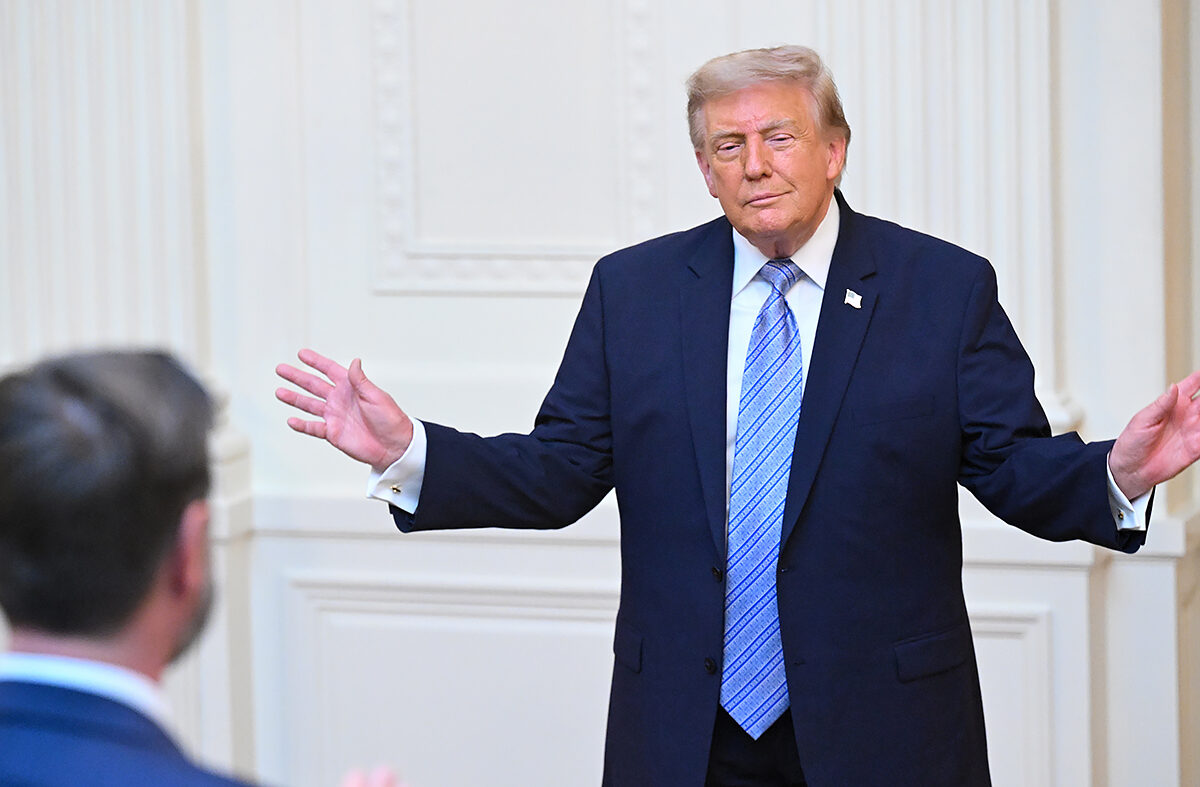
President Trump gestures after speaking in the East Room of the White House, Thursday, July 16, 2026, in Washington, D.C. Image Credit: Saul Loeb/Pool via AP
President Donald Trump has suffered another legal setback in his long-running effort to challenge his New York criminal conviction after a federal judge rejected his latest attempt to move the hush money case from state court to federal court.
Judge Alvin Hellerstein ruled that Trump’s second effort to transfer the case did not present legally sufficient grounds for removal. The decision means the case remains tied to New York’s state court system as Trump continues to appeal his conviction on 34 felony counts of falsifying business records.
The latest ruling comes after a federal appeals court directed Hellerstein to take another look at Trump’s request in light of the US Supreme Court’s landmark presidential immunity decision. After reconsidering the arguments, Hellerstein reaffirmed his earlier position and denied Trump’s motion.
Trump’s legal team has said it plans to appeal the decision.
What Did Judge Alvin Hellerstein Decide in Trump Hush Money Case?
Judge Alvin Hellerstein rejected Trump’s attempt to move his criminal hush money case to federal court for a second time.
According to the decision, Hellerstein found that the grounds raised by Trump for another attempt at removal were neither sufficiently new nor legally adequate. The judge also concluded that Trump had failed to demonstrate the necessary good cause and diligence required to support the latest request.
Hellerstein ultimately reaffirmed his previous ruling, writing that Trump’s motion was denied.
The decision is significant because moving the case into the federal court system could potentially have given Trump another legal route to challenge his conviction.
Instead, the ruling leaves the criminal case within the state court framework while Trump’s broader appeal continues.
Why Did Trump Want the Hush Money Case Moved to Federal Court?
Trump’s lawyers have argued that the US Supreme Court’s 2024 presidential immunity decision affected the legal basis of his criminal conviction.
The Supreme Court’s ruling established broad protections against prosecution for a president’s official acts. Trump has argued that some of the evidence and testimony used during his prosecution should have been protected under that legal principle.
His legal team sought to use that argument as part of its effort to move the criminal case from New York state court into the federal court system.
A federal appeals court later instructed Judge Hellerstein to reconsider Trump’s removal request in light of the Supreme Court’s immunity ruling.
After reviewing the matter again, however, Hellerstein concluded that the arguments did not justify moving the case.
Trump Was Convicted on 34 Felony Counts
Trump’s criminal conviction stems from allegations involving business records connected to a $130,000 payment to adult film actress Stormy Daniels, whose legal name is Stephanie Clifford.
Trump was convicted of 34 felony counts of falsifying business records in connection with the payments.
The conviction became one of the most consequential legal developments involving a former and current US president, drawing intense attention to questions surrounding presidential power, criminal accountability and the limits of presidential immunity.
Trump has continued to challenge the conviction and is pursuing an appeal.
The latest federal court ruling does not overturn the conviction. Instead, it addresses the separate question of whether the case can be transferred from New York’s state court system into federal court.
READ ALSO
Can the Trump Administration demolish the Kennedy Center? The legal fight explained
How the Supreme Court Presidential Immunity Decision Became Part of the Case
Trump’s latest legal argument was connected to the Supreme Court’s 2024 decision on presidential immunity.
That ruling established sweeping protections against criminal prosecution for actions considered official presidential acts. Trump has argued that the decision should affect the admissibility of some evidence and testimony used in his hush money prosecution.
The appeals court’s decision to send the issue back to Judge Hellerstein gave Trump’s legal team another opportunity to argue for federal jurisdiction.
Hellerstein’s latest ruling, however, shows that the federal judge did not believe Trump’s arguments met the legal standard required to remove the case.
The judge’s decision means Trump’s effort to use federal court as a potential avenue for challenging the conviction has suffered another setback.
Trump’s Lawyers Plan to Appeal Alvin Hellerstein Decision
Trump’s legal team has indicated that it intends to appeal Judge Hellerstein’s latest ruling.
That means the legal battle over the hush money conviction is expected to continue.
The planned appeal will focus on the federal court decision denying Trump’s request to remove the case. Separately, Trump remains involved in efforts to challenge the underlying conviction.
The case continues to attract national attention because it involves several major legal questions, including the relationship between state criminal prosecutions and federal authority, as well as the impact of presidential immunity on criminal cases involving a sitting or former president.
What Happens Next in Trump’s Hush Money Case?
The immediate next step is expected to involve Trump’s planned appeal of Hellerstein’s decision.
The federal judge’s ruling does not end Trump’s efforts to challenge his criminal conviction. It only rejects his latest attempt to move the prosecution into federal court.
Trump remains convicted of the 34 felony counts while his appeal process continues.
Future court decisions could further examine Trump’s arguments surrounding presidential immunity and whether any part of the evidence used in the prosecution should be affected by the Supreme Court’s ruling.
For now, Judge Alvin Hellerstein’s decision represents another major legal obstacle for Trump as he continues his fight against the New York hush money conviction.
FAQ: Alvin Hellerstein Hush Money Decision and Trump’s Federal Court Bid
Who is Judge Alvin Hellerstein?
Alvin Hellerstein is the federal judge who considered Donald Trump’s request to move his New York criminal hush money case from state court to federal court.
What did Judge Alvin Hellerstein decide about Trump’s hush money case?
Judge Hellerstein rejected Trump’s latest attempt to move the criminal case to federal court. He reaffirmed his earlier decision and found that the grounds presented for a second removal were not new or legally sufficient.
Why did Trump want to move his hush money case to federal court?
Trump’s legal team argued that the US Supreme Court’s presidential immunity decision affected evidence and testimony used in the prosecution. His lawyers sought to move the case into federal court as part of their broader legal challenge.
Did the federal court overturn Trump’s hush money conviction?
No. Judge Hellerstein’s decision did not overturn Trump’s conviction. The ruling dealt with Trump’s attempt to transfer the case from state court to federal court.
Is Trump still convicted of 34 felony counts?
Yes. Trump remains convicted of 34 felony counts of falsifying business records as he continues to challenge the conviction through the legal process.
What was the Stormy Daniels payment?
The criminal case involved a $130,000 payment to adult film actress Stormy Daniels, whose legal name is Stephanie Clifford. The charges against Trump concerned business records connected to that payment.
What did the Supreme Court presidential immunity ruling say?
The 2024 Supreme Court decision established broad protections against criminal prosecution for presidential actions considered official acts. Trump has argued that the ruling affects some evidence and testimony used in his criminal case.
Why did the appeals court ask Judge Hellerstein to reconsider the case?
A federal appeals court directed Judge Hellerstein to reconsider Trump’s request after the Supreme Court issued its presidential immunity ruling.
What happens after Judge Hellerstein rejected Trump’s request?
Trump’s attorneys have said they plan to appeal Judge Hellerstein’s decision. Trump’s separate efforts to challenge the underlying conviction are also continuing.
Can Trump’s hush money conviction still be overturned?
Trump is appealing his conviction, meaning the legal process remains ongoing. Whether the conviction could eventually be overturned will depend on future court decisions.
Why is the Alvin Hellerstein decision important?
The ruling is important because it blocks Trump’s latest attempt to shift his criminal case into the federal court system. It also addresses Trump’s efforts to apply the Supreme Court’s presidential immunity ruling to his New York prosecution.
What is Trump’s next legal move?
According to the report, Trump’s lawyers plan to appeal Judge Hellerstein’s decision rejecting the latest federal court removal attempt.