
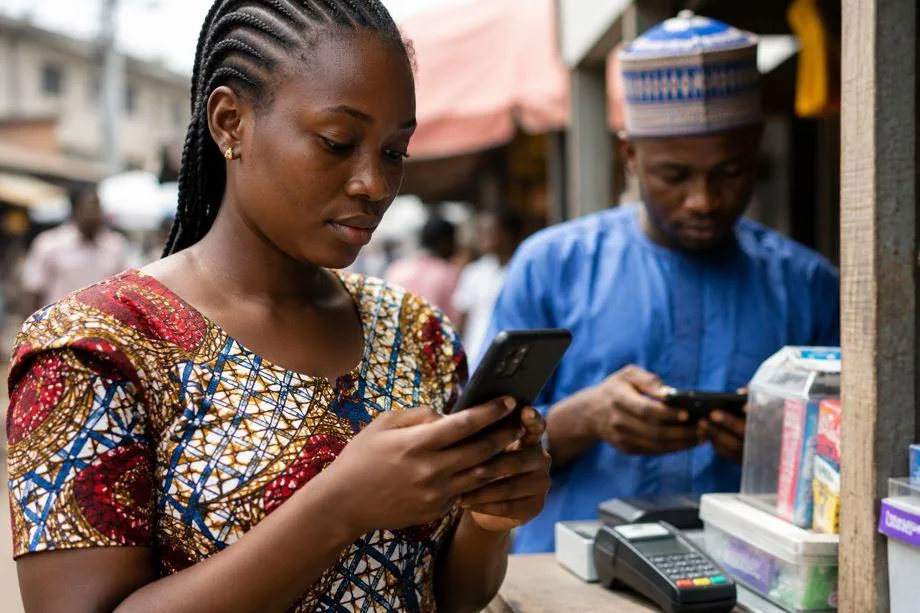
One of the most important features of the Federal Government’s ₦50,000 relief programme is its reliance on mobile phones rather than physical cash distribution centres.
The National Emergency Relief and Stabilisation Intervention (NERSI) allows selected beneficiaries to accept payments through USSD services, meaning a smartphone or internet connection is not compulsory.
This arrangement could improve access for vulnerable Nigerians who do not use banking applications.
However, it also raises questions about digital literacy, telephone ownership, identity verification and the ability to convert wallet balances into cash.
Why is NERSI using mobile wallets?
According to the official NERSI website, the programme is designed to transfer financial support directly to selected beneficiaries.
Rather than requiring recipients to visit government offices to collect cash, the ministry works with five approved financial service providers.
These institutions create or activate wallets linked to beneficiaries’ telephone numbers and identity records.
The arrangement is intended to make payment faster and reduce reliance on intermediaries.
Can someone with a basic phone receive ₦50,000?
Yes.
The ministry explicitly states that beneficiaries do not need smartphones or mobile data to access the programme.
A basic phone capable of receiving SMS messages and using USSD services can support the required process.
For example, someone using a conventional button phone can receive a selection notification and dial the designated provider’s code.
However, the person must still be selected through the programme’s records.
Owning a compatible phone does not guarantee eligibility.
What if the beneficiary has never used OPay or Moniepoint?
An existing account with one of the providers is not presented as a compulsory selection condition.
The ministry says the payment process involves opening or activating a wallet for the selected beneficiary.
This means someone who has not previously used a particular payment application may still be contacted through that provider.
The recipient should follow genuine instructions from the designated institution.
They should not download an unfamiliar application merely because an unsolicited message tells them to do so.
Can someone receive the grant without a conventional bank account?
The programme’s mobile-wallet structure is designed to reduce dependence on conventional bank accounts.
The ministry says recipients can access their support through approved digital financial service providers.
However, individual providers may apply identity-verification requirements under relevant financial regulations.
The government’s FAQ does not explain every possible verification scenario.
Therefore, beneficiaries should confirm any additional requirements directly with their designated providers.
What about Nigerians without a BVN?
The ministry says wallets are linked to telephone numbers and NINs.
It does not expressly establish BVN possession as a universal requirement for selection.
However, this does not guarantee that every beneficiary can complete all transactions without additional checks.
A person should distinguish between the government’s selection criteria and the financial institution’s account-verification obligations.
The ministry also warns that no official should ask beneficiaries to disclose their BVNs through unsolicited calls or messages.
What if someone cannot read an SMS?
The government’s guidelines do not provide a detailed procedure specifically for beneficiaries who cannot read or understand payment instructions.
Such individuals may require assistance.
However, assistance creates a potential security risk if another person gains access to the beneficiary’s PIN or OTP.
A trusted helper can explain instructions without taking control of confidential credentials.
Where possible, the beneficiary should seek assistance through the provider’s official customer-support channel.
Can older Nigerians use the programme?
The published NERSI guidelines do not establish a general age-based exclusion for older adults.
Selection is described as based on poverty and vulnerability criteria.
However, the ministry has not published detailed procedures for beneficiaries who experience difficulties using mobile financial services because of age, disability or limited digital literacy.
The existence of USSD access reduces some barriers but does not eliminate all of them.
What if a beneficiary loses their phone?
The recipient should contact the mobile network operator to determine how to recover the telephone number.
They should also notify the relevant financial provider if their wallet may be exposed to unauthorised access.
The ministry’s FAQ provides guidance for lost SIM cards, but it does not explain every situation involving permanently changed numbers.
Beneficiaries should avoid allowing strangers to take control of their accounts while offering assistance.
How can beneficiaries withdraw cash?
The ministry says recipients can transfer money from their wallets to POS agents and collect cash.
Depending on the provider, other supported withdrawal or transfer options may be available.
POS agents may charge ordinary withdrawal fees.
Recipients should confirm charges and transaction details before authorising payments.
The bigger issue: Financial inclusion is not just about technology
Allowing payments through basic phones is an important accessibility measure.
However, meaningful financial inclusion also requires reliable mobile networks, accurate identity records, accessible customer support and protection against fraud.
A person may have a compatible phone but still struggle to use the programme because of an outdated number or an unresolved wallet problem.
The effectiveness of NERSI therefore depends not only on how quickly money is transferred but also on whether vulnerable recipients can access it safely.
A smartphone, mobile data and an existing banking application are not compulsory for NERSI participation, but selection, identity verification and secure access to a working telephone number remain important.