

29 countries British citizens can enter without a visa for up to 90 days

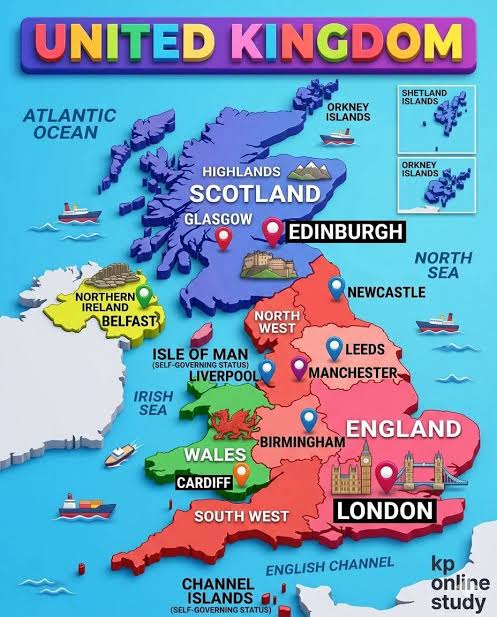
British citizens planning holidays, short business trips or other eligible visits to Europe can travel to 29 Schengen countries without applying for a traditional visa, provided they meet the conditions for visa-free travel.
The countries cover some of Europe’s most popular destinations, including France, Germany, Italy, Spain, Greece, Portugal and Switzerland.
However, visa-free does not mean British travellers can stay indefinitely.
Under the post-Brexit travel arrangement, UK passport holders can generally spend a maximum of 90 days in any 180-day period across the Schengen area for short visits. The 90-day allowance applies to the Schengen area as a whole, rather than giving travellers 90 days in each individual country.
This means a British citizen who spends 30 days in France, 20 days in Spain and another 40 days in Italy has used the full 90-day allowance.
The UK government has published guidance explaining the countries covered and the requirements travellers should know before making a trip.
29 European countries British citizens can visit without a visa
According to the UK government’s official travel guidance, British citizens can make eligible short visits to the following 29 Schengen countries without a visa:
1. Austria
2. Belgium
3. Bulgaria
4. Croatia
5. Czechia
6. Denmark
7. Estonia
8. Finland
9. France
10. Germany
11. Greece
12. Hungary
13. Iceland
14. Italy
15. Latvia
16. Liechtenstein
17. Lithuania
18. Luxembourg
19. Malta
20. Netherlands
21. Norway
22. Poland
23. Portugal
24. Romania
25. Slovakia
26. Slovenia
27. Spain
28. Sweden
29. Switzerland
The European Commission also confirms that the Schengen area currently consists of 29 countries, comprising 25 EU member states and four non-EU countries — Iceland, Norway, Switzerland and Liechtenstein.
British travellers can therefore move between several of these countries during one trip without applying for separate Schengen visas, provided their total time in the area stays within the 90-day limit.
For the full official guidance, travellers can check the “UK government’s travel guidance for the EU and Schengen area”.
What does the 90-day rule actually mean?
The 90-day rule is one of the most important things British travellers need to understand.
A British passport holder can generally stay in the Schengen area for up to 90 days during any rolling 180-day period for eligible short visits.
It is not a simple three-month allowance that resets every time someone leaves Europe.
Instead, immigration authorities look backwards over the previous 180 days and calculate how many days the traveller has spent in the Schengen area.
For example, if someone spends 60 days travelling around France, Spain and Italy, they have 30 days remaining within the applicable 180-day period.
Travelling from France to Spain does not restart the clock because both countries are within Schengen.
The same applies if the traveller moves through several other Schengen countries.
The European Commission provides an official short-stay calculator that travellers can use to check whether their planned visit falls within the 90/180-day requirement.
British citizens can visit several countries on one trip
One of the benefits of the Schengen arrangement is that travellers can visit multiple member countries during the same journey.
A tourist could, for instance, fly into France, travel by train to Belgium and the Netherlands, continue to Germany and then visit Italy before returning to the UK.
The traveller does not receive a separate 90-day allowance for each country.
The days spent in all Schengen countries are combined.
This is why someone planning a long European holiday needs to keep track of entry and exit dates rather than simply counting the number of days spent in each country.
Ireland and Cyprus are different
There is an important detail behind the 29-country list.
Ireland and Cyprus are not part of the Schengen area.
Ireland operates under the Common Travel Area arrangements involving the UK and Ireland, while Cyprus has its own entry rules.
The UK government says British citizens can stay in Cyprus for up to 90 days in a 180-day period without a visa, and time spent in Cyprus does not count towards the 90-day Schengen allowance.
This means a British traveller could potentially spend time in the Schengen area and then visit Cyprus without having those Cyprus days deducted from the Schengen 90-day calculation.
Travellers should still check the latest entry requirements before departure because individual countries can impose additional conditions.
British travellers now face new border checks
Although British citizens do not generally need a traditional visa for short Schengen visits, travelling to Europe is no longer exactly the same as it was before Brexit.
The European Union has introduced the Entry/Exit System (EES) for non-EU nationals travelling to the Schengen area.
The UK government says the system started operating in October 2025 and involves the digital recording of travellers’ entry and exit information. Depending on the circumstances and border point, British travellers may have their fingerprints and facial image recorded.
The purpose of EES is to replace the traditional system of manually recording travellers’ movements and help authorities identify overstays and strengthen border controls.
The UK government advises British travellers to allow additional time at the border because the new procedures can take longer, particularly while the system is being implemented.
Travellers do not need to apply for an EES visa.
Instead, the registration takes place as part of the border process where applicable.
What is ETIAS and will British citizens need it?
Another European travel system that British travellers should know about is the European Travel Information and Authorisation System, commonly known as ETIAS.
ETIAS is not a traditional visa. It is a travel authorisation system for nationals who can enter participating European countries without a visa.
The UK government currently says ETIAS is expected to begin in autumn 2026, but travellers do not need to take action yet and the EU will announce the specific launch date before the system starts.
This means British citizens should be careful about websites currently claiming to offer an official ETIAS application.
The UK government specifically warns that websites selling ETIAS applications before the system opens are fraudulent and advises travellers to use the official EU website when applications eventually begin.
Recent reporting indicates that the timetable has been subject to further changes, so travellers should check the latest official EU and UK guidance before paying anyone for an application.
Does visa-free travel allow British citizens to work in Europe?
No.
The 90-day visa-free arrangement is primarily for eligible short visits such as tourism and certain other activities.
It does not automatically give a British citizen the right to take up employment in a European country.
The UK government says travellers may need a visa or permit if they intend to work or stay for more than 90 days. The rules can differ from one country to another.
Someone planning to relocate to Spain, work in Germany, study for an extended period in France or take up employment in another European country therefore needs to check the specific immigration requirements of that country.
The same applies to anyone planning a stay that goes beyond the short-stay limit.
British travellers should check their passport before travelling
Visa-free access does not mean every passport will automatically qualify regardless of its condition.
Travellers should check their passport validity and the entry requirements of the country they intend to visit before booking a trip.
The UK government advises travellers to check the requirements of individual countries because additional rules can apply depending on the purpose of travel and the traveller’s circumstances.
This becomes particularly important for people who have already spent substantial time in Europe during the previous six months.
A traveller who has already used most of the 90-day allowance may not be entitled to another long stay simply because they have returned to the UK.
What British citizens should remember before travelling
The main points are straightforward:
– British citizens can generally visit the 29 Schengen countries without a traditional visa for eligible short stays.
– The maximum stay is generally 90 days in any 180-day period.
– The 90 days applies across the Schengen area, not separately to each country.
– Ireland and Cyprus are outside Schengen and have separate arrangements.
– New digital border procedures under EES may require fingerprints and facial images.
– ETIAS is expected to introduce an additional travel authorisation requirement for visa-exempt travellers, but the exact launch date should be checked with official EU guidance.
– Visa-free tourism does not automatically give a British citizen permission to work or live in another European country.
– Travellers should check the latest entry requirements before departure.
For British citizens planning a European holiday, the biggest change is therefore not the disappearance of visa-free access but the additional border and travel-authorisation systems introduced since Brexit.
The ability to travel to 29 Schengen countries for short visits remains, but travellers now need to pay closer attention to the 90/180-day rule, biometric border checks and the forthcoming ETIAS system.