

2027: House of Reps aspirant endorses Mbah, Tinubu’s re-election

The ancient town of Nsukka witnessed a political earthquake on Saturday, May 2nd, 2026, as thousands of stakeholders, traditional rulers, and youth groups from all local government areas in the Enugu North Senatorial District converged for a mega rally at Nsukka Township Stadium to formally endorse Governor Peter Mbah and Bola Ahmed Tinubu for a second term in office.
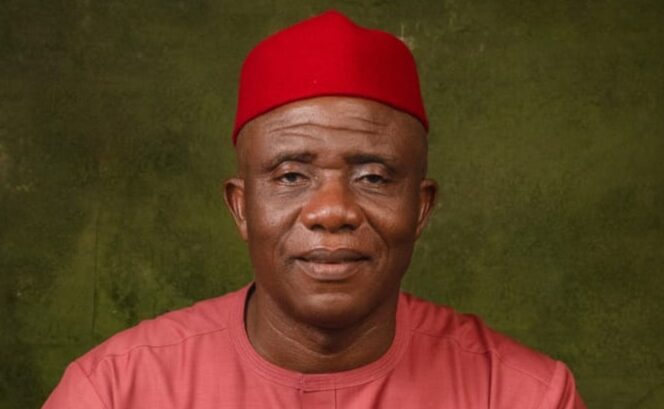
The atmosphere was electric, characterized by a sea of supporters asserting that the “Tomorrow is Here” mantra of the current administration has already yielded transformative results. Amidst the high-profile attendees, one voice resonated with particular strategic clarity: Sir Engr. Ucheonwu Prince Henry-Hart, a frontline aspirant for the Igbo-Etiti/Uzo-Uwani Federal Constituency seat in the House of Representatives under All Progressives Congress (APC)
In an exclusive interview with Degavoice media on the sidelines of the rally, Sir Engr. Henry-Hart provided a deep dive into his political philosophy and his reasons for backing Governor Peter Ndubuisi Mbah.
According to Engr. Ucheonwu, “Mbah is a performing Governor who is focused on achievements. All of us are with him. I’m here for his endorsement… Mbah’s wise governance has brought good democratic dividends and good political structure. Enugu state is APC and APC is Enugu state.”
His assertion underscores a shift toward performance-based politics over narrow partisanship. By praising Governor Mbah’s “wise governance,” he highlights the tangible infrastructure and economic reforms that have reached the grassroots. His “Enugu is APC” remark signals a strategic alignment aimed at ensuring Enugu remains connected to the center, facilitating a seamless flow of federal resources to the state.
Furthering his chats with Degavoice, he stated, “I have been in politics from 1999. I am a grassroot politician who resides in his community to do politics. I am not an abroad politician but one at the base.”
This is a direct appeal to the electorate’s desire for accessibility. By distinguishing himself from “abroad politicians”—those who only appear during election cycles— Engr. Ucheonwu positions himself as a relatable leader who shares the daily realities of his constituents. His longevity in the game since 1999 suggests a deep institutional memory and a proven track record of loyalty.
Uzo-Uwani sits on a literal goldmine. Engr. Ucheonwu focus on oil exploration in Iga and surrounding areas marks him as a developmental-minded aspirant. He views the legislative seat not just as a political office, but as a platform to lobby so as to unlock the economic potential of his local government, which would provide jobs and royalties for his constituency and the entire state.
“Since the discovery of oil in my LG, only Mbah has spoken about it for exploration. It is my intention to facilitate the accelerate exploration for the benefit of the constituent state and the federation.”
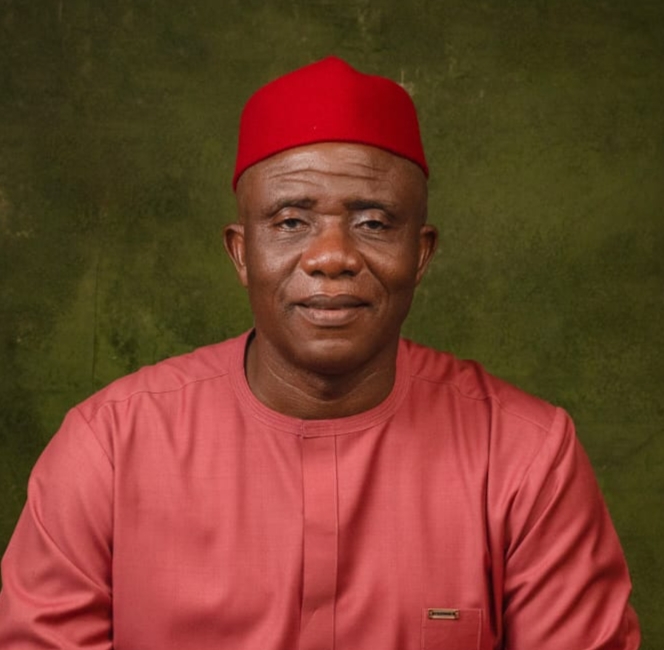
His most poignant point perhaps is his belief in political rotation based on capacity. He champions the “Zoning plus Capacity” model. He advocates for the Iga community—a minority but significant cultural bloc within Uzo-Uwani—to be given a sense of belonging. It is a call for inclusive governance that ensures no group is marginalized in the power-sharing formula of the constituency.
“I support zoning but it must be based on capacity. Iga community in Enugu state should be considered this time around for equity and fairness.”
The Representation Gap: Why Uzo-Uwani’s Turn is Now
Since 1999, the Igbo-Etiti/Uzo-Uwani Federal Constituency has navigated various legislative cycles, with representation largely concentrated in one wing of the constituency. Historically, the seat has been occupied by notable figures such as Hon. Martins George Oke, Hon. Stella Ngwu and Stainless Chijioke Nwodo; (Labour Party – LP) stayed for some months before he was removed by court—all representing the Igbo-Etiti axis under the PDP banner. While Hon. Paul Eze (Okpogu) provided representation for Uzo-Uwani between 2011 to 2015, the pendulum naturally and as a matter of equity and justice should swing back to Uzo-uwani
As the 2027 cycle approaches, the argument for an Uzo-Uwani candidate—specifically one from the Iga community of Enugu state like Sir Engr. Henry-Hart—is rooted in the principle of “Brotherly Rotation.” For the constituency to remain united and progress equitably, the representation must reflect the diversity of its people. Henry-Hart’s candidacy represents a bridge toward balancing these scales of power.
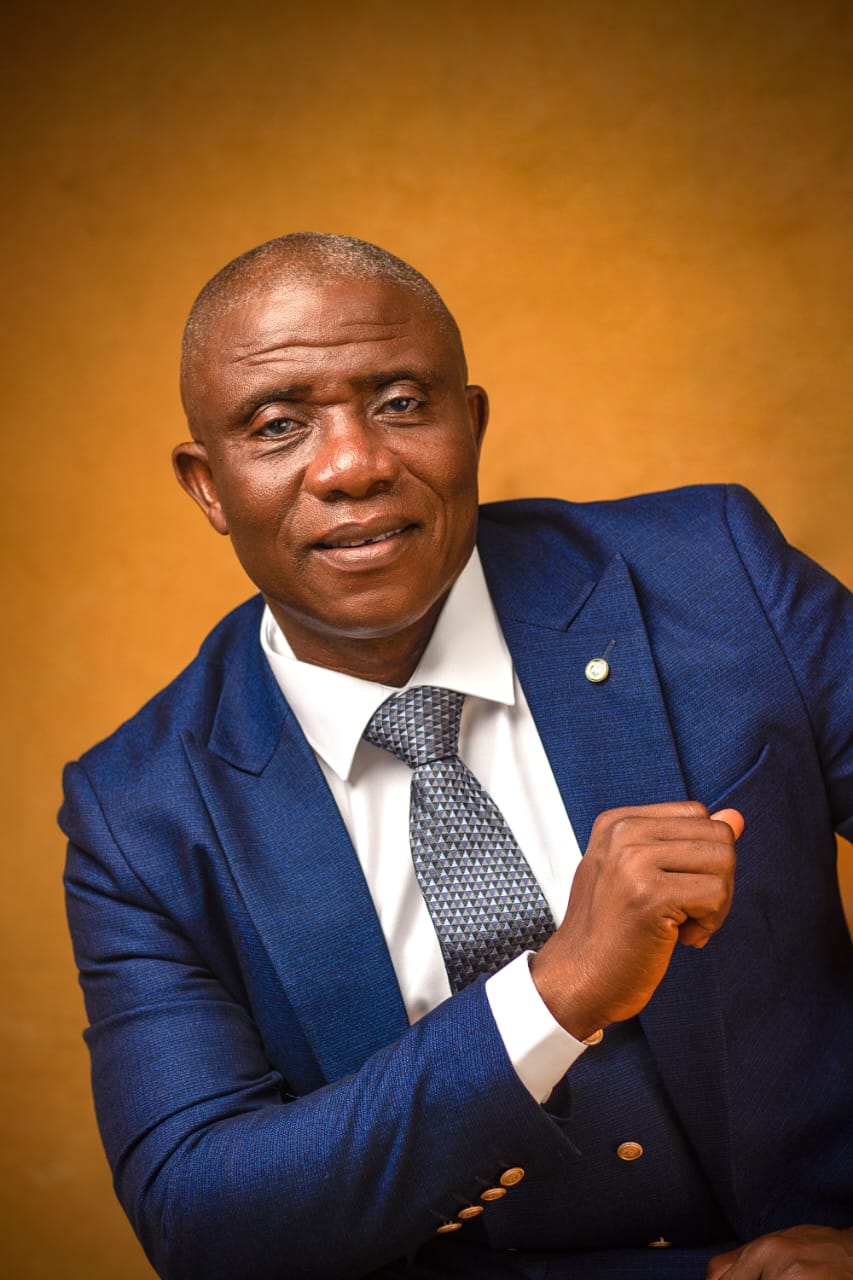
Profile of a Technocrat: Why Sir Engr. Henry-Hart?
Sir Engr. Ucheonwu Prince Henry-Hart is not a typical politician; he is a refined technocrat with a resume that speaks of excellence and international exposure.
Academic Excellence: A graduate of Mechanical Engineering from Ambrose Alli University, he holds an M.Sc. in Occupational Health and Safety Management from the prestigious Loughborough University, UK. His education spans across Obafemi Awolowo University and other international institutions, making him one of the most intellectually equipped aspirants in the race.
Professional Prowess: With over 30 years of experience in the Upstream Oil and Gas sector, Henry-Hart has functioned as a high-level Executive in Quality, Health, Safety, Security, and Environment (QHSSE). His career at the major oil and gas firms in Nigeria and beyond has equipped him with the ability to navigate complex regulatory environments.
Leadership & Business Acumen: A member of over 13 professional bodies and a participant in the Authentic Leadership Course at Lagos Business School, he possesses the “corporate grit” needed to attract investments to Nsukka Cultural Zone.
As the Nsukka mega rally concluded, the message was clear: while the zone stands firmly behind Governor Mbah, they are also looking for new, capable legislative leaders. Sir Engr. Henry-Hart, with his blend of grassroots loyalty and global expertise, stands out as the ideal choice to bridge the gap between the people’s needs and the corridors of federal power in 2027.