

10 Things Your Smartphone Can Do That Most People Never Use

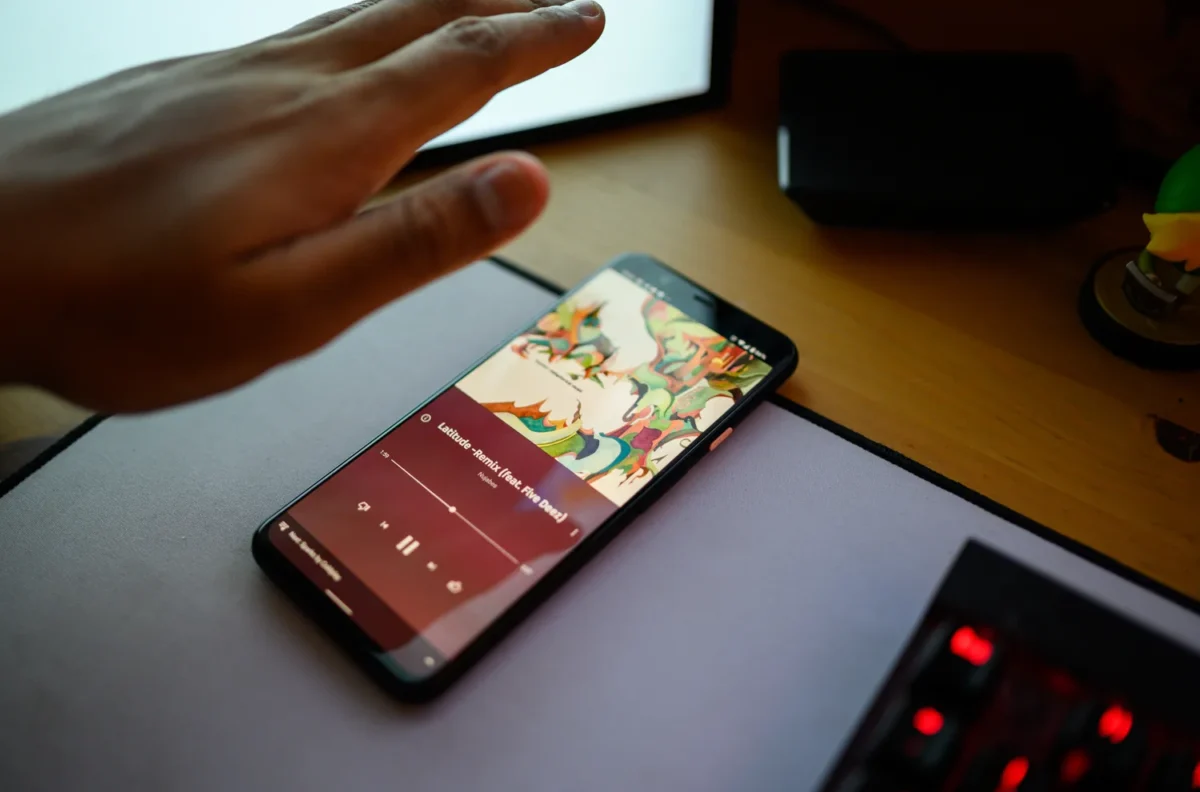
Things Your Smartphone Can Do That Most People Never Use
Your smartphone can probably do far more than you use it for.
Most people rely on their phones for calls, messaging, social media, photos, banking, navigation and streaming. Beneath those familiar functions, however, are tools that can turn a phone into a document scanner, translator, measuring device, personal safety tool and even a remote control for other devices.
Some of these features have been available for years but remain buried inside apps or settings. Others have become more useful as smartphone operating systems have added artificial intelligence, visual recognition and accessibility tools.
The exact features vary between iPhone and Android devices, but these 10 capabilities are worth checking before downloading another app.
1. Your Phone Can Scan Documents Without a Scanner
A smartphone camera can do much more than take photographs.
On supported iPhones and Android devices, built-in scanning tools can detect the edges of a document, straighten the page and create a digital copy. The resulting file can then be saved or shared electronically.
That can be useful when dealing with receipts, school assignments, forms, handwritten notes, contracts or other paperwork.
Instead of taking a normal photograph and hoping the page is readable, a document-scanning function can automatically correct perspective and make the result look closer to a traditional scan.
2. You Can Copy Text From a Photograph
A photograph does not always have to remain just an image.
Modern smartphones can recognize text inside photographs and allow users to copy, search, translate or share it. On iPhones, Apple’s Live Text feature can identify text in photos and through the camera. Many Android phones offer similar functionality through Google’s visual recognition tools.
That means a phone camera can effectively become a portable text extractor.
Take a picture of a printed notice, menu, book page or sign, and the phone may allow you to select the words rather than manually typing them.
3. Your Camera Can Translate What It Sees
Translation is another capability hiding inside smartphone cameras.
Supported phones can recognize foreign-language text and translate it directly from an image or through the camera view.
This becomes particularly useful while traveling. A restaurant menu, street sign, transportation notice or product label can be translated without requiring the user to type every word into a translation app.
The technology is also useful for people learning languages because they can quickly identify unfamiliar words in their surroundings.
4. Your Smartphone Can Measure Objects
Some smartphones can function as basic measuring tools using augmented reality and camera sensors.
On compatible iPhones, Apple’s Measure app can estimate the dimensions of objects and distances. Android users can also find measurement features depending on their device and available apps.
The results should not replace professional measuring equipment where precision matters, but they can be useful for everyday questions.
Need to know whether a piece of furniture might fit through a doorway? Want a rough measurement of a table or wall? Your phone may already have the tool you need.
5. You Can Use Your Phone as a Personal Safety Device
Smartphones increasingly include emergency and safety functions that many owners never configure.
Depending on the device, users may be able to set up emergency contacts, Medical ID information, emergency calling, location sharing and automatic detection features.
Some phones can also detect situations such as serious crashes and automatically initiate emergency procedures.
These tools are particularly important because they can operate when a person may not have enough time to manually open an app or search through contacts.
The exact options depend on the phone model, operating system and country.
READ ALSO
7 Ways AI Is Transforming Students and Young Professionals
10 AI Features Coming to Smartphones Soon
6. Your Phone Can Read Text Aloud
Accessibility tools are not only designed for people with disabilities.
Smartphones can read selected text or content displayed on a screen aloud, making them useful when someone wants to listen rather than read.
This can help with long messages, webpages, documents and other written material.
Screen readers and text-to-speech tools can also make phones easier to use for people with visual difficulties, reading challenges or situations where their hands are occupied.
On supported devices, users can adjust speech speed and other settings to make the experience more comfortable.
7. You Can Turn Your Phone Into a Hotspot
A smartphone can share its mobile internet connection with another device through a personal hotspot.
This is particularly useful when a laptop or tablet has no Wi-Fi connection but the phone has mobile data.
Once enabled, compatible devices can connect to the phone much like they would connect to a wireless router.
Users should remember that hotspot connections can consume significant mobile data and battery power, particularly when streaming video or downloading large files.
8. Your Phone Can Identify Objects, Plants and Other Things
Modern visual-recognition tools can analyze what the camera sees.
Depending on the phone and software, users may be able to identify plants, animals, landmarks, products and other objects by pointing the camera at them or uploading a photograph.
This has turned the smartphone camera into a basic visual search tool.
It can be useful when someone encounters an unfamiliar plant during a trip, wants to identify a landmark or simply wants more information about something they see.
The results should still be treated as suggestions rather than unquestionable identification, particularly when safety or professional decisions are involved.
9. You Can Use Your Phone as a Remote Control
The smartphone in your pocket can sometimes control other devices.
Many smart televisions, streaming devices, speakers and smart-home products have companion apps that allow a phone to function as a remote.
Some Android phones also include infrared hardware, allowing certain models to control compatible appliances such as televisions and air conditioners.
Even when infrared is unavailable, Wi-Fi and Bluetooth connections can turn a phone into a control center for compatible smart devices.
That can make the physical remote surprisingly unnecessary.
10. Your Smartphone Can Automate Repetitive Tasks
Automation is one of the most powerful smartphone features that many users never explore.
On iPhone, Apple’s Shortcuts app can combine actions into automated routines. Android devices offer automation options through built-in tools and third-party applications, with capabilities varying by manufacturer.
An automation could perform several actions from a single command.
A routine might open a particular app, send a message, activate a setting or perform another supported action. The possibilities depend heavily on the operating system and permissions.
The real benefit is not having another feature to play with. It is reducing the number of repetitive steps required to perform everyday tasks.
Why Most Smartphone Owners Never Discover These Features
The problem is not necessarily that smartphones hide these capabilities deliberately.
Modern phones have become so feature-packed that many useful tools sit several menus away from the functions people use every day.
A person can own the same smartphone for years without opening accessibility settings, automation tools or advanced camera features.
Software updates also continually add capabilities, meaning the phone a person bought two or three years ago may be able to do considerably more today.
There is another factor: most people learn their phones by habit.
They open the apps they already know and repeat the same actions. Unless a new feature becomes popular on social media or appears prominently in an update, it can remain invisible.
The Smartphone Is Becoming More Than a Communication Device
The modern smartphone has gradually absorbed functions that once required separate gadgets.
A calculator replaced a dedicated device. Navigation apps reduced dependence on standalone GPS units. Cameras replaced many compact digital cameras. Mobile payment tools have reduced the need to carry physical cards in some markets.
The same pattern is continuing.
Scanning, translation, visual search, accessibility, automation and safety tools are pushing smartphones further into roles once handled by specialized equipment.
The result is that the most useful feature on a phone may not be the newest one.
It could be the tool already sitting inside the settings menu that you have never opened.
Frequently Asked Questions
What are some hidden features on smartphones?
Commonly overlooked capabilities include document scanning, text recognition, live translation, object identification, measuring tools, emergency features, accessibility tools, mobile hotspots and automation.
Can my phone scan documents?
Many modern smartphones can scan documents using built-in camera or notes applications. The exact process depends on the device and operating system.
Can a smartphone copy text from a picture?
Yes. Many newer smartphones can recognize text in photographs and allow users to copy, search, translate or share it.
Can my phone translate text using the camera?
Supported smartphones can recognize and translate text through camera or visual-search features. Availability and supported languages vary by device.
Can a smartphone measure distance?
Some phones can estimate distances and object dimensions using augmented reality and camera-based measurement tools. These measurements are generally intended for convenience rather than professional precision.
Can I use my phone as a hotspot?
Yes, most modern smartphones with compatible cellular service can share their mobile data connection through a personal hotspot.
Can my smartphone identify plants?
Many smartphones can use visual-search or recognition tools to identify plants and other objects from photographs. Results should be verified when accurate identification is important.
How can I automate tasks on my phone?
iPhone users can use Apple’s Shortcuts and automation features. Android phones offer automation capabilities that vary by manufacturer, operating system and available apps.
Does every smartphone have these features?
No. Smartphone capabilities vary according to the model, operating system, software version, region and available hardware. Older or entry-level devices may not support some functions.
How can I find features I am not using on my phone?
Explore your phone’s Settings, Camera, Accessibility, Notes, Assistant, Shortcuts and connected-device menus. Searching the Settings app for terms such as “scan,” “translate,” “automation,” “emergency” or “accessibility” can also uncover useful tools.