

Why Poland revoked Volodymyr Zelensky’s highest honour: WWII Army unit dispute sparks major diplomatic row

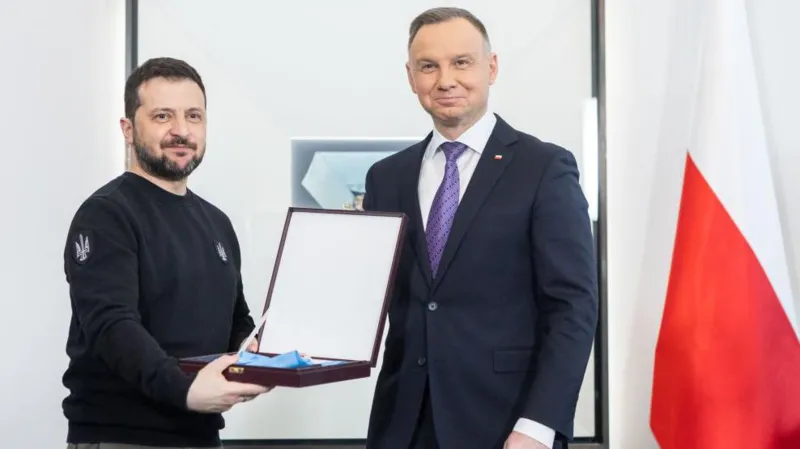
Zelensky was presented with the Order of the White Eagle by then-President Andrzej Duda in 2023. Image Credit: NurPhoto via Getty Images
A major diplomatic dispute has erupted between Poland and Ukraine after Polish President Karol Nawrocki revoked the prestigious Order of the White Eagle honour previously awarded to Ukrainian President Volodymyr Zelensky.
The move comes amid growing tensions over Ukraine’s decision to name a military unit after the Ukrainian Insurgent Army (UPA), a World War II-era nationalist force that remains one of the most controversial historical subjects in Eastern Europe.
While both countries continue to cooperate against Russian aggression, the dispute highlights how historical memory can still influence modern geopolitics, even among close allies.
Poland Revokes Zelensky’s Order of the White Eagle
President Nawrocki announced that Zelensky would be stripped of the Order of the White Eagle, Poland’s highest state distinction, which had been awarded by former Polish President Andrzej Duda in 2023.
The Polish leader said the decision was prompted by Ukraine’s recent move to name a military formation “Heroes of the Ukrainian Insurgent Army.”
According to Nawrocki, honoring the UPA was unacceptable because many Poles associate the group with atrocities committed against ethnic Polish civilians during World War II.
In a statement, the Polish president described Ukraine’s decision as “outrageous,” “incomprehensible,” and “deeply disappointing,” arguing that it undermines years of trust built between Warsaw and Kyiv.
Why the UPA Remains So Controversial
The dispute centers on the legacy of the Ukrainian Insurgent Army, commonly known as the UPA.
For many Ukrainians, the UPA symbolizes resistance against foreign domination and the struggle for Ukrainian independence. The organization fought against Soviet forces and, at various points, confronted both Nazi Germany and Polish authorities during and after World War II.
However, Poland views the group’s legacy very differently.
Polish historians and officials accuse the UPA of carrying out massacres of ethnic Poles in the Volhynia region between 1943 and 1945. Warsaw estimates that approximately 100,000 Polish civilians were killed during those attacks, which Poland officially describes as genocide.
Because of this historical interpretation, any official glorification of the UPA remains highly sensitive in Polish politics.
Zelensky’s Decision Triggers Political Backlash
The controversy began when Zelensky approved the naming of a Ukrainian military unit in honor of the UPA, describing the move as an effort to preserve the historical traditions of Ukraine’s national military heritage.
The decision immediately sparked criticism across Poland’s political spectrum.
President Nawrocki argued that nations seeking closer integration with Europe must be willing to confront difficult chapters of their own history. He suggested that historical accountability is an important component of Ukraine’s long-term ambitions to join the European Union.
The Polish president emphasized that remembering victims of wartime atrocities is a moral obligation that cannot be ignored for political convenience.
READ ALSO
Kyiv under fire as Russia launches Massive Strike ahead of Trump-Zelensky Peace Talks
Ukraine Condemns Poland’s Move
Ukraine responded sharply to the revocation.
Ukrainian Foreign Minister Andrii Sybiha described Poland’s decision as a “strategic mistake” and warned that it could damage relations between two countries that have cooperated closely since Russia launched its full-scale invasion of Ukraine in 2022.
Sybiha argued that decisions regarding Ukraine’s historical figures should be made by Ukrainians, not foreign governments.
In protest, he announced plans to return a Polish award he had received in 2022, calling Warsaw’s decision “unjustified,” “impulsive,” and “disrespectful.”
Zelensky himself has not publicly commented on the controversy.
Donald Tusk Urges Both Sides to Calm Tensions
Amid the escalating row, Polish Prime Minister Donald Tusk sought to ease tensions.
Tusk acknowledged that Ukraine’s decision had caused understandable concern in Poland but warned against allowing historical disputes to undermine the strategic partnership between the two nations.
The Polish prime minister stressed that the conflict benefits only Russian President Vladimir Putin and urged both sides to focus on shared security interests rather than deepening divisions.
His intervention comes as Poland prepares to host the upcoming Ukraine Recovery Conference in Gdansk, an event expected to attract thousands of political and business leaders focused on Ukraine’s reconstruction and future economic development.
Will the Dispute Affect Poland’s Support for Ukraine?
Despite the dramatic nature of the decision, Polish officials insist that support for Ukraine’s defense against Russia remains unchanged.
Nawrocki specifically stated that revoking Zelensky’s honour does not alter Poland’s commitment to assisting Ukraine.
Poland remains one of Kyiv’s most important allies, having welcomed millions of Ukrainian refugees, facilitated military aid deliveries, and advocated for stronger Western support throughout the war.
However, the dispute demonstrates how unresolved historical grievances continue to shape relations between neighboring countries, even during periods of close strategic cooperation.
Historical Memory Meets Modern Geopolitics
The Zelensky honour controversy reflects a broader challenge facing Eastern Europe: balancing contemporary security partnerships with conflicting interpretations of history.
For Ukraine, the UPA represents a symbol of national resistance and independence. For Poland, the same organization is associated with some of the darkest chapters of wartime violence against Polish civilians.
As Ukraine continues its push toward European Union membership and deeper integration with Western institutions, historical disputes such as this are likely to remain a sensitive issue in relations with some of its closest partners.
For now, both governments appear determined to prevent the disagreement from damaging broader cooperation, but the row has exposed underlying tensions that continue to influence Polish-Ukrainian relations decades after World War II.
FAQ
Why did Poland revoke Volodymyr Zelensky’s highest honour?
Poland revoked Zelensky’s Order of the White Eagle after Ukraine named a military unit after the Ukrainian Insurgent Army (UPA), a group that Poland accuses of massacring ethnic Polish civilians during World War II.
What is the Order of the White Eagle?
The Order of the White Eagle is Poland’s highest state honour. It is awarded to individuals who have made exceptional contributions to Poland or international relations.
When was Zelensky awarded the Order of the White Eagle?
Zelensky received the award in 2023 from then-Polish President Andrzej Duda in recognition of his leadership and cooperation with Poland during the Russia-Ukraine war.
What is the Ukrainian Insurgent Army (UPA)?
The UPA was a Ukrainian nationalist military organization active during and after World War II. It fought for Ukrainian independence but remains highly controversial because of allegations involving ethnic violence.
Why is the UPA controversial in Poland?
Poland holds the UPA responsible for the deaths of tens of thousands of ethnic Poles during the Volhynia massacres between 1943 and 1945, events Warsaw officially classifies as genocide.
How does Ukraine view the UPA?
Many Ukrainians view the UPA as a symbol of resistance against Soviet domination and a force that fought for national independence.
Who is Karol Nawrocki?
Karol Nawrocki is Poland’s president. He ordered the revocation of Zelensky’s honour, citing concerns about the glorification of the UPA.
Has Zelensky responded to the decision?
As of the latest reports, Zelensky has not publicly commented on Poland’s decision to revoke the honour.
What did Ukraine’s foreign minister say?
Foreign Minister Andrii Sybiha condemned the move, calling it a strategic mistake and arguing that only Russia benefits from growing tensions between Poland and Ukraine.
Will this affect Poland’s support for Ukraine?
Polish officials have stated that military, humanitarian, and political support for Ukraine against Russia will continue despite the disagreement.
What role has Poland played in supporting Ukraine?
Poland has been one of Ukraine’s strongest allies since Russia’s full-scale invasion in 2022, providing refugee support, military assistance, and diplomatic backing.
Could the dispute affect Ukraine’s EU membership ambitions?
While not an immediate obstacle, historical disputes with neighboring countries could complicate diplomatic relations during Ukraine’s European integration process.
What are the Volhynia massacres?
The Volhynia massacres were wartime killings that occurred between 1943 and 1945 in the Volhynia region. Poland estimates that around 100,000 ethnic Poles were killed by UPA units.
Why is Donald Tusk calling for calm?
Prime Minister Donald Tusk believes the dispute benefits Russia and has urged both Poland and Ukraine to preserve their strategic partnership despite disagreements over historical issues.
Why is this story attracting international attention?
The controversy involves two key European allies during an ongoing war and highlights how unresolved World War II history continues to shape modern international relations.