

William Ruto sparks outrage after mocking Nigerians’ English amid Tinubu tensions

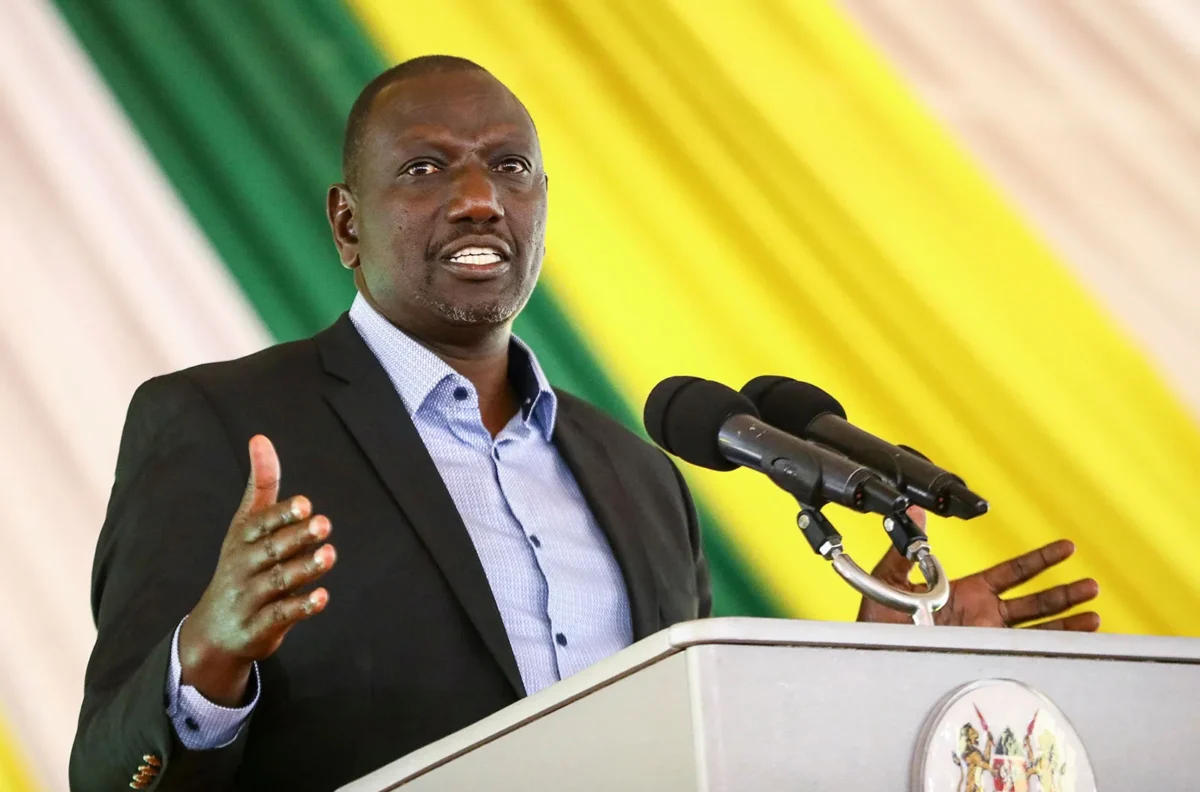
William Ruto, Kenya’s then-deputy president and president-elect, William Ruto, speaking during a press conference held two days after he was declared the winner of the August 9 election, Nairobi, August 17, 2022. Image Credit: Britannica
Kenyan President William Ruto is under intense scrutiny following controversial remarks about Nigerians’ spoken English, sparking a wave of backlash across Africa and beyond. The comments, made during a diaspora engagement in Italy, have ignited debates on language, identity, and regional rivalry, while also drawing in Nigeria’s President Bola Tinubu amid rising economic and political tensions.
What William Ruto Said About Nigerians’ English
During a public address to Kenyans living in Italy, Ruto praised Kenya’s education system and claimed the country produces some of the “best English speakers in the world.” He then made a controversial comparison, suggesting that Nigerian accents can be difficult to understand.
According to reports, the Kenyan leader remarked that listening to a Nigerian speak English might require “a translator,” prompting laughter from the audience. The statement quickly went viral, drawing widespread criticism on social media platforms.
The remarks were interpreted by many as dismissive and culturally insensitive, especially considering Nigeria’s global influence in literature, media, and academia.
Backlash Across Africa and Social Media Reactions
The reaction to Ruto’s comments was swift and intense. Nigerians and other Africans took to social media to condemn what they described as an unnecessary and divisive statement.
Prominent voices argued that English, as a colonial language, should not be used as a benchmark for intelligence or national superiority. Critics also pointed out that Nigeria’s linguistic diversity, featuring over 500 indigenous languages, naturally shapes its unique accents and speech patterns.
Some commentators referenced Nigeria’s literary giants, including Nobel laureate Wole Soyinka and authors like Chinua Achebe and Chimamanda Ngozi Adichie, as evidence of the country’s strong command of English.
Others urged African leaders to focus on pressing domestic challenges such as unemployment, inflation, and infrastructure rather than engaging in rhetoric that fuels division.
Link to Tinubu’s Earlier Remarks and Regional Tensions
The controversy comes shortly after President Bola Ahmed Tinubu suggested that Nigerians were economically better off than citizens of other African countries, including Kenya. Ruto’s comments are widely seen as a response to that statement.
This exchange highlights an ongoing rivalry between the two nations, often reflected in online debates over economic performance, cultural influence, and global perception.
While both countries face economic challenges, Nigeria with inflation and power supply issues, and Kenya with rising debt and cost-of-living pressures, the verbal sparring has shifted attention toward national pride and identity.
READ ALSO
Understanding the Linguistic Differences
Experts note that variations in English accents across Africa are shaped by local languages and cultural contexts. Nigeria’s rich linguistic diversity influences its cadence and pronunciation, while Kenya’s mix of Bantu, Nilotic, and Cushitic languages creates a different speech pattern.
These differences, linguists argue, are not indicators of proficiency but rather reflections of cultural identity. As such, comparing accents as “better” or “worse” is widely considered reductive.
Ruto’s Silence and Mixed Reactions in Kenya
As of now, there has been no official clarification from Ruto’s office regarding the remarks. However, reactions within Kenya have been mixed.
Some supporters argue that the comments were made in jest and taken out of context, while others acknowledge that the tone may have been inappropriate given the diplomatic sensitivities involved.
Broader Implications for African Unity
The incident has reignited conversations about African unity and the lingering effects of colonial influence. Analysts warn that such statements, even if unintended, risk deepening divisions rather than fostering collaboration.
With both Nigeria and Kenya playing significant roles in Africa’s economic and political landscape, observers stress the importance of constructive dialogue over public criticism.
FAQ
What did William Ruto say about Nigerians?
William Ruto stated during a speech that Nigerian-accented English can be difficult to understand and joked that a translator might be needed, which sparked backlash.
Why are people criticizing William Ruto?
Critics argue that his comments were dismissive and promote unnecessary division, especially given Africa’s shared colonial history and linguistic diversity.
Is Nigerian English different from Kenyan English?
Yes, both are influenced by indigenous languages. Nigerian English reflects over 500 local languages, while Kenyan English is shaped by Bantu, Nilotic, and Cushitic languages.
Did Bola Tinubu respond to William Ruto?
There has been no direct official response yet, but Ruto’s comments are believed to be linked to Tinubu’s earlier statement comparing Nigeria’s economy to other African nations.
Why do African countries argue about English accents?
Such debates often stem from colonial legacy, national pride, and cultural identity rather than actual language proficiency.
Is English a measure of intelligence in Africa?
No. Experts widely agree that English proficiency or accent does not determine intelligence or capability.
What impact could this controversy have?
It may strain public perception between Nigerians and Kenyans, but it also opens dialogue on unity, identity, and respectful communication.
Are language differences common in Africa?
Yes. Africa is highly diverse linguistically, and variations in English accents are natural and culturally significant.
Was Ruto joking or serious?
Some supporters claim it was humor, but critics argue that public figures should be cautious due to the potential impact of their words.
What should people learn from this incident?
The situation highlights the importance of cultural sensitivity, unity, and responsible leadership communication in a diverse continent like Africa.