

Warren Buffett issues stark Stock Market warning as S&P 500 nears historic highs: What investors should know before the next market correction

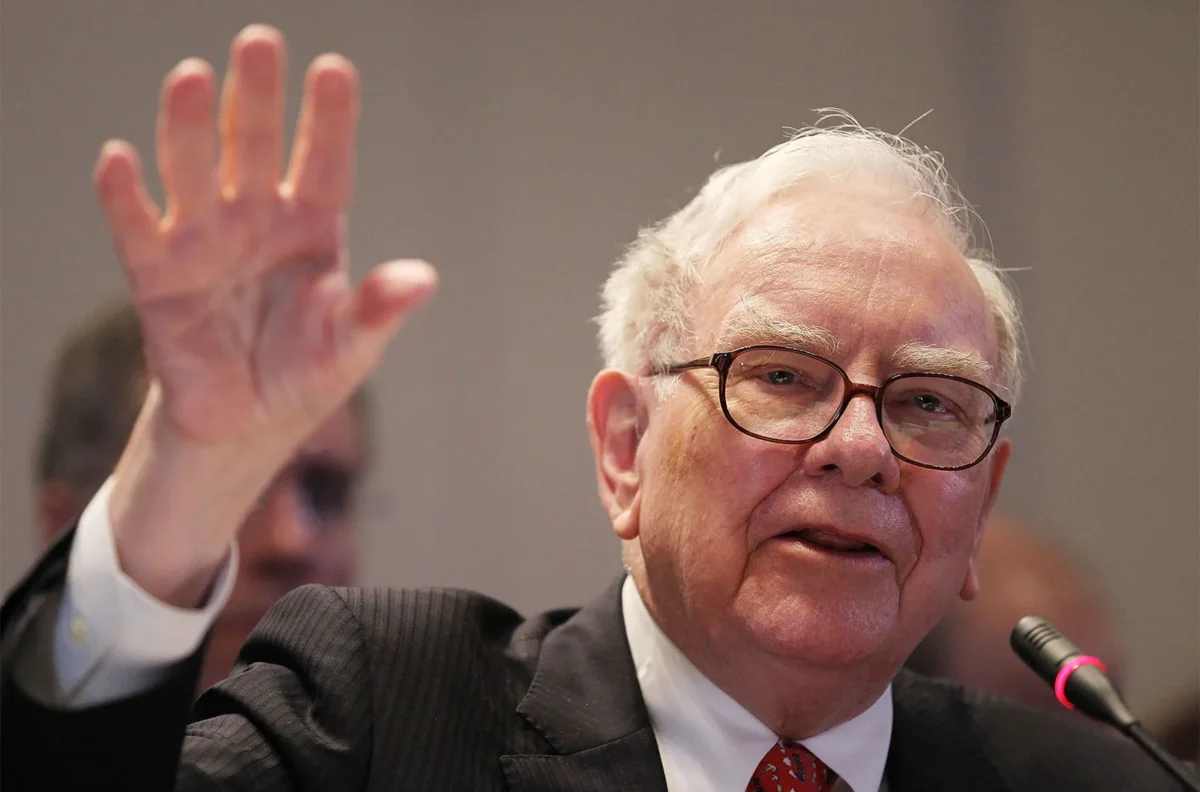
Warren Buffett warns of growing stock market speculation. Image Credit: Mario Tama—Getty Images/Thinkstock
As U.S. stock markets continue to hover near record highs, legendary investor and Berkshire Hathaway chairman Warren Buffett has delivered a cautionary message that is capturing the attention of Wall Street and everyday investors alike.
Speaking during Berkshire Hathaway’s annual meeting, Buffett warned that excessive speculation is becoming increasingly common in financial markets. His remarks come as major indexes such as the S&P 500 and Nasdaq Composite remain elevated after years of strong gains, fueling concerns that investor enthusiasm may be pushing asset prices beyond sustainable levels.
The billionaire investor’s comments have reignited debate over whether markets are becoming overheated and what investors should expect if history repeats itself.
Warren Buffett’s Eight-Word Warning to Investors
Buffett’s latest caution centered on what he views as growing speculative behavior in today’s market environment.
Drawing one of his trademark comparisons, Buffett described the stock market as a place where genuine investing exists alongside gambling. He warned that “the casino has gotten very attractive to people,” suggesting that many market participants are increasingly focused on short-term gains rather than long-term value creation.
According to Buffett, investors are displaying one of the strongest risk-taking attitudes he has witnessed in years. While he emphasised that investing itself remains a valuable wealth-building tool, he argued that the prices of many assets are becoming difficult to justify based on fundamentals.
The warning reflects Buffett’s long-standing philosophy that disciplined investing should be based on business quality, earnings potential, and long-term growth rather than speculation and market hype.
Why Market Valuations Are Raising Concerns
One factor driving concern among analysts is the elevated level of stock market valuations.
A widely followed measure known as the Shiller CAPE Ratio has climbed above 41, approaching levels historically associated with periods of extreme market optimism.
The CAPE Ratio compares stock prices with inflation-adjusted earnings over a 10-year period and is often used to evaluate whether markets appear undervalued or overvalued.
The last time the ratio approached similar levels was during the late stages of the dot-com bubble in the early 2000s. That period was followed by a significant market decline as technology stocks collapsed and investor sentiment shifted.
Although valuation metrics cannot accurately predict when a correction may occur, they often provide insight into potential risks facing investors.
What History Says About Market Corrections
Financial historians note that periods of elevated valuations are frequently followed by increased market volatility.
However, history also provides a more reassuring lesson. While stock market downturns can be painful in the short term, major indexes have consistently recovered over time.
Since the year 2000, despite multiple crises including the dot-com crash, the global financial crisis, and the COVID-19 pandemic, the S&P 500 has generated cumulative returns exceeding 700%.
This long-term resilience supports Buffett’s investment philosophy of remaining invested in strong businesses rather than attempting to predict short-term market movements.
READ ALSO
Bill Gates breaks silence on Epstein ties, says Financier used extramarital affairs to pressure him
Why Strong Companies Usually Survive Market Downturns
Buffett’s warning is not necessarily a prediction of an imminent crash. Instead, it highlights the importance of investment quality during uncertain periods.
Historically, companies with strong balance sheets, sustainable earnings, competitive advantages, and solid management teams have demonstrated greater resilience during economic slowdowns.
In contrast, businesses driven primarily by speculation, hype, or unrealistic growth expectations often experience the most severe declines when investor sentiment changes.
Market corrections tend to separate fundamentally strong companies from weaker businesses, making quality and discipline increasingly important for investors.
Long-Term Investing Remains Buffett’s Core Message
Despite his cautionary tone, Buffett continues to advocate for long-term investing rather than fear-driven decision-making.
The Berkshire Hathaway leader has repeatedly emphasised that investors should focus on owning quality assets for extended periods and avoid reacting emotionally to market fluctuations.
His latest comments suggest that while market risks may be rising, investors who remain disciplined, diversified, and focused on long-term fundamentals are likely to be better positioned to navigate future volatility.
As valuations remain elevated and speculation continues to attract attention, Buffett’s message serves as a reminder that successful investing is built on patience, not predictions.
Bottom Line
Warren Buffett’s latest market warning arrives at a time when stock prices are near historic highs and investor optimism remains strong. His concern is not necessarily that a crash is imminent, but that speculative behavior is becoming increasingly widespread.
History shows that periods of excessive enthusiasm can create risks, yet it also demonstrates that quality investments and long-term discipline remain among the most reliable strategies for building wealth. For investors navigating today’s market environment, Buffett’s advice may be more relevant than ever.
FAQ: Warren Buffett Market Warning 2026
What did Warren Buffett recently warn investors about?
Warren Buffett warned that many investors are behaving more like gamblers than long-term investors. He said speculative activity is increasing and that asset prices for many investments are beginning to look excessively high.
What does Buffett mean when he says “the casino has gotten very attractive”?
Buffett uses the term “casino” to describe speculative trading where investors focus on short-term profits instead of long-term business value. He believes many investors are taking excessive risks in pursuit of quick gains.
Is Warren Buffett predicting a stock market crash?
No. Buffett did not explicitly predict a stock market crash. Instead, he cautioned that current market conditions show signs of excessive speculation and elevated valuations.
Why are investors concerned about stock market valuations?
Investors are concerned because valuation indicators such as the Shiller CAPE Ratio are approaching levels previously seen before major market corrections, including the dot-com bubble.
What is the Shiller CAPE Ratio?
The Shiller CAPE Ratio measures stock market valuation by comparing current prices to inflation-adjusted average earnings over a 10-year period. Higher readings can indicate that stocks are expensive relative to historical norms.
Is the stock market overvalued in 2026?
Some analysts believe the market is overvalued based on historical valuation metrics. However, there is no guarantee that high valuations will immediately lead to a correction.
What happens when markets become highly speculative?
Highly speculative markets often experience greater volatility. Prices can rise rapidly during optimistic periods but may also fall sharply if investor sentiment changes.
What stocks tend to perform best during market downturns?
Companies with strong finances, stable earnings, competitive advantages, and consistent cash flow often perform better during economic downturns than highly speculative companies.
How does Warren Buffett recommend investing during uncertain times?
Buffett recommends focusing on quality businesses, maintaining a long-term perspective, avoiding emotional decisions, and staying invested through market cycles.
Should investors sell their stocks because of Buffett’s warning?
Buffett has not advised investors to sell stocks. His message emphasizes caution, valuation awareness, and maintaining disciplined long-term investment strategies.
What can investors learn from previous market corrections?
Previous corrections show that markets can experience temporary declines but have historically recovered over time. Investors who remain patient and focused on fundamentals often benefit in the long run.
Why do Warren Buffett’s market warnings receive so much attention?
Buffett is one of the most successful investors in history. His investment philosophy and market insights have influenced generations of investors, making his comments closely watched by financial markets worldwide.