

Mail ballots, voter data and lawsuits: Why Trump’s new postal voting plan is facing backlash

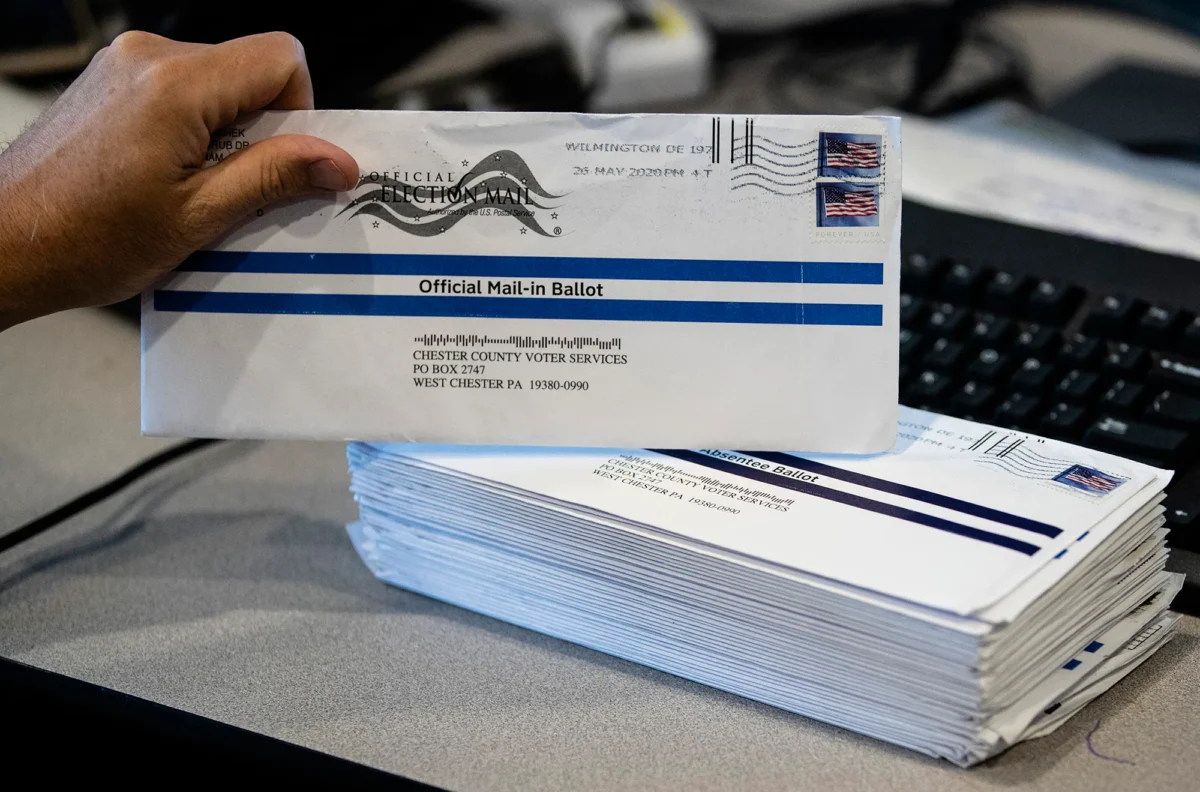
In this May 28, 2020, file photo, mail-in primary election ballots are processed at the Chester County Voter Services office in West Chester, Pa. (Matt Rourke/AP)
A fierce legal and political battle is unfolding across the United States after the Trump administration proposed new rules that could significantly reshape how mail-in ballots are handled ahead of the 2026 midterm elections.
The controversy centers on a new U.S. Postal Service (USPS) proposal designed to implement President Donald Trump’s March 2026 executive order targeting mail-in voting. Critics argue the plan could limit access to postal voting, force states to share sensitive voter information with federal agencies, and create unprecedented federal involvement in election administration.
Meanwhile, the White House insists the measures are necessary to strengthen election integrity and voter confidence.
USPS Proposal Could Change How Mail Ballots Are Delivered
Under the proposed USPS regulations, states that conduct mail voting would be required to provide voter lists and additional ballot-tracking information to the Postal Service.
The proposal would require election offices to submit lists of voters receiving mail ballots along with unique ballot identifiers. States that fail to comply could potentially face disruptions in ballot delivery through USPS.
Election officials warn that such requirements could place significant administrative burdens on state and local governments, particularly smaller jurisdictions with limited resources.
The proposal would also introduce new standards for ballot envelope design and tracking systems, potentially requiring election offices to redesign existing mail voting infrastructure.
Democratic States Launch Lawsuits Against Trump Administration
The proposal has already triggered a wave of legal challenges.
Twenty-three Democratic-led states, the District of Columbia, voting rights organizations, and Democratic Party groups have filed lawsuits seeking to block implementation of the executive order and related USPS regulations.
Opponents argue that election administration is primarily a state responsibility under the U.S. Constitution and that the federal government lacks authority to impose such requirements unilaterally.
State officials from Oregon, Maine, California, Washington, and other states with extensive mail voting programs have expressed concern that the rules could effectively undermine postal voting systems that millions of Americans rely on.
Several plaintiffs contend that the proposed regulations could disenfranchise eligible voters if ballot delivery becomes contingent upon compliance with federal data-sharing requirements.
READ ALSO
DHS Voter Data Collection Plan Faces Scrutiny
The controversy extends beyond USPS operations.
President Trump’s executive order also directs the Department of Homeland Security (DHS) to develop state-by-state citizenship information systems intended to assist election verification efforts.
Initially, federal court filings suggested DHS might integrate voter information from USPS to monitor mail ballot activity and investigate potential election irregularities.
However, the administration recently appeared to soften that position, with new court filings describing discussions between DHS and USPS as preliminary and subject to further legal and policy review.
The shift came amid growing criticism from voting rights groups and privacy advocates who warned that federal collection of voter information could raise constitutional and privacy concerns.
Election Officials Question Practical Challenges
Beyond legal concerns, election administrators are questioning whether the proposal can realistically be implemented before the November 2026 midterm elections.
Experts note that USPS would need to build entirely new systems capable of receiving, processing, and managing voter data from all 50 states.
Many local election offices use different databases, formats, and ballot management systems, creating significant logistical challenges for nationwide standardization.
Election administrators also point to funding concerns, noting that many jurisdictions would need substantial investments to redesign ballot envelopes, upgrade technology, and comply with new federal requirements.
Smaller counties and rural election offices could face particularly difficult compliance burdens.
Trump Administration Defends Election Integrity Measures
The White House has defended the initiative as part of a broader effort to strengthen election security.
Administration officials argue that ensuring accurate voter information and improved ballot tracking will increase public confidence in election outcomes.
Trump has repeatedly criticised mail-in voting over the past several years, arguing that stronger safeguards are necessary despite multiple studies and investigations finding little evidence of widespread voter fraud.
Administration representatives remain confident that the executive order and related regulations can withstand legal scrutiny and be implemented before the 2026 midterm elections.
What Happens Next?
The future of the USPS proposal now largely rests with the courts.
Federal judges are expected to hear additional arguments throughout the summer as lawsuits move forward. Appeals courts could issue key rulings before election preparations intensify later this year.
At stake is not only the future of postal voting in the United States but also broader questions about federal authority, voter privacy, election administration, and access to the ballot box.
As legal challenges continue, election officials across the country are preparing for what could become one of the most consequential voting rights disputes ahead of the 2026 midterm elections.
FAQ
What is postal voting?
Postal voting, also known as mail-in voting or absentee voting, allows eligible voters to cast ballots through the mail instead of voting in person at polling stations.
What is Trump’s 2026 postal voting executive order?
President Donald Trump’s March 2026 executive order seeks to impose new requirements on mail voting systems, including voter verification measures and data-sharing requirements involving USPS and federal agencies.
Why are states suing the Trump administration over postal voting?
Twenty-three states and several voting rights groups argue that the executive order exceeds presidential authority and interferes with states’ constitutional responsibility to administer elections.
Can USPS stop delivering mail ballots?
Under proposed regulations, USPS could potentially refuse to process ballots from states that fail to meet certain federal requirements. However, the rules face ongoing legal challenges and have not been fully implemented.
What voter information would states have to provide?
The proposal would require states to provide lists of voters receiving mail ballots along with tracking information and other election-related data.
Is mail-in voting legal in the United States?
Yes. Mail-in voting is legal in all U.S. states, although eligibility rules and procedures vary by state.
Is mail voting secure?
Election experts generally consider mail voting secure when proper safeguards are in place. Numerous audits and studies have found little evidence of widespread voter fraud associated with mail ballots.
What role does DHS play in the proposal?
The Department of Homeland Security has been directed to develop systems that could help states verify citizenship information and potentially support election integrity efforts.
Could voter privacy be affected?
Critics argue that sharing voter information with federal agencies could raise privacy concerns. The administration says any data use would comply with applicable laws and protections.
When could the new rules take effect?
The administration hopes to implement the measures before the November 2026 midterm elections, but ongoing court cases could delay or block the changes.
Which states could be most affected?
States that heavily rely on mail voting, including Oregon, Washington, California, Colorado, Utah, Nevada, Hawaii, and Vermont, could experience the greatest operational impact.
What happens if courts block the executive order?
If courts rule against the administration, existing state mail voting systems would likely continue operating under current election laws and procedures.