

The Math Problem With Governor Eno’s ₦10 Million Akara Business Claim

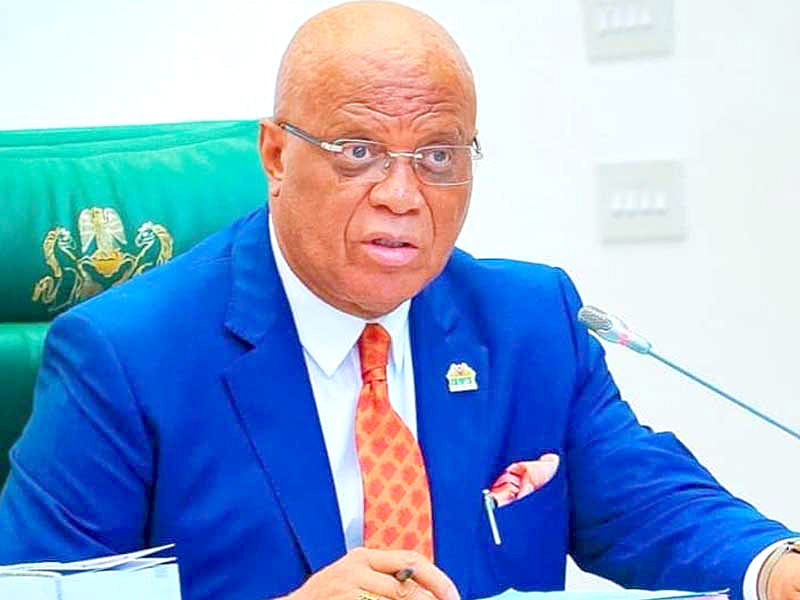
Akwa Ibom State Governor Umo Eno says his old akara and bread business used to bring in at least ₦10 million every month. Nigerians online did the math almost immediately, and the numbers don’t add up as easily as the soundbite suggests.
Speaking at the state’s monthly covenant prayer service on September 2, Eno recalled his life before politics, describing how he sold akara and bread packaged together as an “Akara Burger” to workers, including ExxonMobil staff, heading to their jobs in the morning. He said the business later expanded into a coffee shop. According to Eno, the akara and bread operation alone brought in nothing less than ₦10 million a month.
The claim landed just months after First Lady Oluremi Tinubu drew public attention for encouraging Nigerians to consider small businesses like akara and kuli-kuli using government grants, a comment that had already attracted its own share of mockery online. Eno’s story arrived into a conversation that was, in some ways, already primed to scrutinize exactly this kind of claim.
The Math Behind the Skepticism
A critic identified as Udombon ran the numbers publicly, and the breakdown is the most useful part of this story. If ₦10 million represented pure monthly profit, that works out to roughly ₦333,333 in profit every single day. Assuming a generous ₦100 profit on every piece of akara sold, Eno would have needed to sell about 3,334 pieces daily. At a more modest ₦50 profit per piece, that figure nearly doubles to around 6,667 pieces a day, every day, without fail.
Neither of those numbers accounts for the actual cost of running the business: beans, oil, pepper, onions, firewood or gas, and any staff needed to handle that kind of volume. Udombon also raised a more basic question that Eno’s own account doesn’t resolve: whether the ₦10 million figure refers to profit, total turnover, or combined income across the akara stand, the bread sales, and the coffee shop he says he later added. Those are very different numbers, and the governor’s phrasing doesn’t make clear which one he means.
This isn’t the first time one of Eno’s public financial claims has drawn scrutiny. Udombon has separately challenged a claim the governor made in March, that Akwa Ibom had stopped receiving its 13 percent derivation allocation from September 2025 onward. That claim, Udombon argued, doesn’t square with Federal Account Allocation Committee records, which reportedly show the state received ₦119.82 billion in derivation between September and December 2025, and at least ₦2.934 trillion in total allocations over 38 months of Eno’s administration.
Taken together, the two claims don’t prove anything on their own, but they do form a pattern worth watching: a governor whose public statements about money, whether about a decades-old food stand or the state’s current federal allocations, keep running into numbers that don’t obviously match up.
Very little of this can be independently confirmed. There’s no public record of the shop’s actual daily sales, no tax filings or business accounts in circulation, and Eno’s own account leaves the profit-versus-turnover question open. What’s verifiable is the arithmetic itself: selling thousands of akara pieces a day, every day, from a single stand near an ExxonMobil office run, is a genuinely large operation, and the claim invites exactly the kind of scrutiny it has now received.
Political “humble beginnings” stories are a staple of Nigerian public life, and they’re rarely fact-checked with any rigor because they’re framed as inspiration rather than as a claim. Eno’s akara story followed that same script, until someone did the arithmetic in public. Whether or not the ₦10 million figure holds up, the reaction says something about how much patience Nigerians currently have for politicians presenting round, impressive numbers without the receipts to back them.