

Was it an earthquake, explosion or meteor? What really caused the mysterious boom across Rhode Island

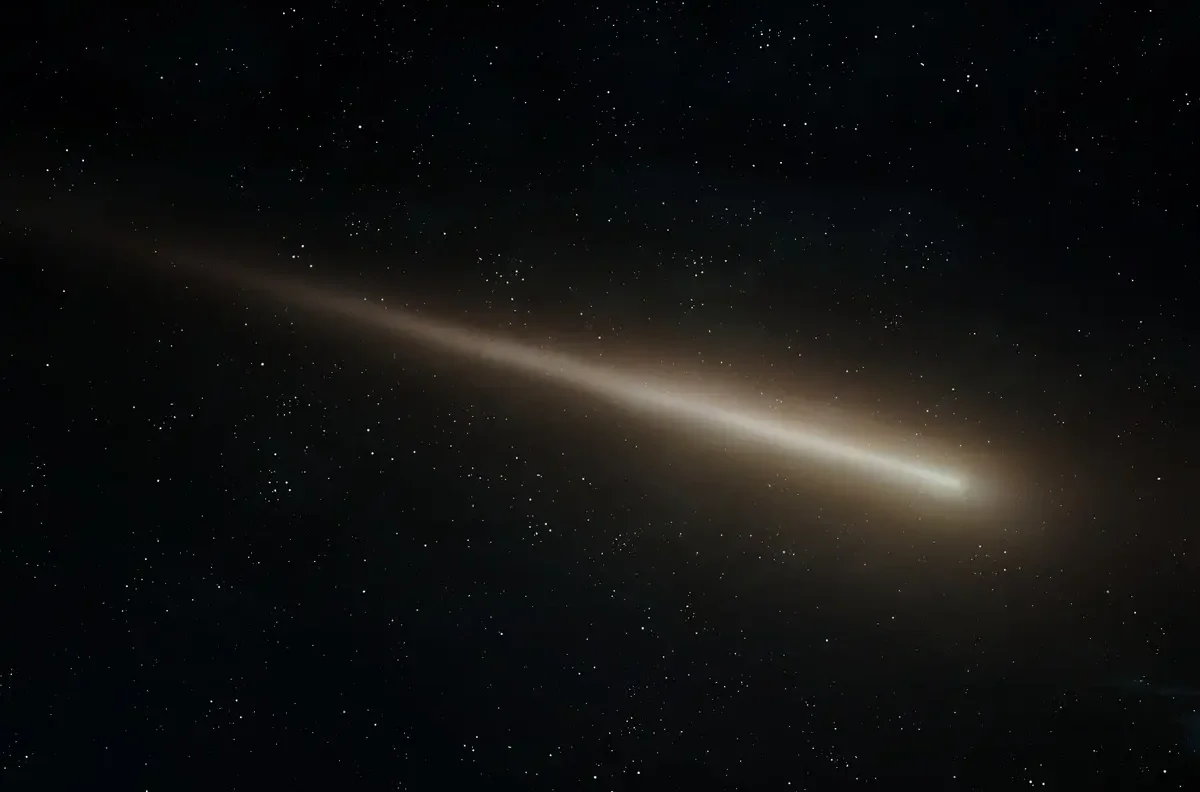
A fireball streaked over Rhode Island Saturday afternoon. Image Credit: Shutterstock
Residents across Rhode Island, Massachusetts, and other parts of New England were startled over the weekend after a powerful explosion-like sound rattled homes, shook windows, and sparked widespread speculation online. Some feared an earthquake, while others wondered whether military aircraft or even extraterrestrial activity was involved.
NASA has now confirmed the cause: a large meteor, often referred to online as the “Rhode meteor,” exploded high above the region after entering Earth’s atmosphere at extraordinary speed.
The dramatic event created a bright fireball and a powerful sonic boom that was heard across multiple states, making it one of the most significant meteor incidents reported in the United States in 2026.
What Happened During the Rhode Meteor Event?
According to NASA, the meteor entered Earth’s atmosphere shortly after 2 p.m. on Saturday and rapidly traveled across the skies over New England.
The space rock was estimated to be approximately 5 feet (1.6 meters) in diameter, weighing about 5.6 metric tons. NASA reported that it entered the atmosphere at speeds exceeding 42,000 miles per hour, while other preliminary analyses suggested portions of the object may have reached velocities as high as 75,000 mph before fragmentation.
As the meteor plunged through the atmosphere, it generated intense friction and heat, eventually breaking apart roughly 31 to 40 miles above Earth. The explosion released energy equivalent to approximately 230 tons of TNT, creating a shock wave that produced the loud boom heard throughout the region.
Sonic Boom Heard Across Massachusetts and Rhode Island
Reports flooded social media as residents described hearing a sudden blast that shook homes, rattled windows, and startled pets.
Witnesses from Boston, Ipswich, Cape Cod, and even areas of Rhode Island reported hearing the unusual noise.
Meteor experts explain that when large meteors travel faster than the speed of sound, they compress air in front of them, creating powerful pressure waves similar to those generated by supersonic aircraft. When those waves reach the ground, people hear what is commonly known as a sonic boom.
The event was so powerful that weather and satellite monitoring systems detected atmospheric signatures consistent with a meteor explosion.
Where Did the Meteor Land?
NASA believes the meteor fragmented over New England before debris fell into Cape Cod Bay off the Massachusetts coast.
Scientists described the event as a meteorite fall, meaning portions of the original space rock likely survived the fiery descent through the atmosphere.
However, experts say recovery efforts are unlikely because the suspected landing area lies underwater. NASA indicated the debris landed in waters approximately 34 meters deep.
Astronomers often refer to ocean meteorite falls humorously as “fishy squishers” because the fragments disappear into water rather than landing on accessible land.
READ ALSO
Is NASA about to end an ISS mission early? Inside the medical scare aboard the space station
Why Scientists Are Paying Close Attention
Although no injuries or property damage were reported, scientists are studying the event closely because meteor observations provide valuable information about the origins of the solar system.
Researchers can analyze eyewitness reports, videos, satellite data, and trajectory calculations to estimate the meteor’s composition, speed, and possible origin.
Experts note that meteorites are essentially natural time capsules, carrying material that formed billions of years ago during the early development of the solar system.
The Rhode meteor also joins a growing list of notable fireball events reported across North America in 2026, including significant meteor explosions over Ohio and Texas earlier this year.
Was the Rhode Meteor Dangerous?
Authorities and space agencies emphasised that the meteor posed no significant threat to the public.
While the sonic boom was dramatic, the object disintegrated high above the Earth’s surface. Most meteors burn up harmlessly in the atmosphere before reaching the ground.
Scientists stress that events like this are relatively common on a global scale, though only a small number are large enough to create visible fireballs and audible shock waves.
The incident serves as a reminder that Earth regularly encounters small objects from space, most of which never cause harm.
NASA Confirms No Impact Threat
Following the explosion, NASA reassured the public that there is no evidence of any ongoing threat associated with the meteor.
The agency continues to monitor near-Earth objects and maintains sophisticated tracking systems capable of identifying potentially hazardous asteroids long before they approach Earth.
For now, the Rhode meteor will likely be remembered as one of the most spectacular natural sky events witnessed by New England residents in recent years, a brief but powerful reminder of the dynamic activity constantly occurring beyond our planet.
FAQ
What was the Rhode meteor?
The Rhode meteor was a large space rock that entered Earth’s atmosphere over New England and exploded before reaching the ground, creating a bright fireball and a powerful sonic boom.
Why did people hear a loud boom in Rhode Island?
The boom was caused by a sonic shock wave generated when the meteor traveled through the atmosphere at extremely high speeds and broke apart.
Did a meteor hit Rhode Island?
No. NASA believes the meteor fragmented in the atmosphere and any surviving debris fell into Cape Cod Bay off the Massachusetts coast.
Where did the meteor land?
Scientists believe meteorite fragments landed in Cape Cod Bay after the meteor broke apart above New England.
How fast was the meteor traveling?
NASA estimates the meteor entered Earth’s atmosphere at approximately 42,000 mph, with some analyses suggesting speeds up to 75,000 mph before fragmentation.
Was anyone injured by the meteor?
No injuries or significant damage were reported from the event.
Could the meteor have caused an earthquake?
No. The shaking people experienced was caused by atmospheric shock waves from the sonic boom, not seismic activity.
How big was the meteor?
NASA estimates the meteor was about 5 feet (1.6 meters) in diameter and weighed approximately 5.6 metric tons.
Can meteorites be recovered from Cape Cod Bay?
Recovery is possible in theory but difficult because the debris is believed to have fallen into deep water.
Are meteor explosions common?
Small meteors enter Earth’s atmosphere daily. However, large fireballs capable of producing sonic booms are much less common and attract significant scientific attention.
Did NASA classify the event as dangerous?
No. NASA stated that the meteor posed no impact threat and disintegrated safely in the atmosphere.
Why are scientists interested in meteorites?
Meteorites contain ancient material from the early solar system and can provide valuable clues about the formation of planets and other celestial bodies.